饶平如《平如美棠》

这一期不过是寻常巷陌的情理,也没什么传奇可言,就是一个世纪来一对普通男女的生活,我们也明知收视不会太好,但还是要做这一期。老先生的孙女舒舒在信中写过“时代是不一样的了,像他的画册里有一页‘相思始觉海非深’那么严重的句子,可能不是每个人都有幸和有勇气可以引到自己身上的”,策划小余回信说:“换了我,我也会问自己,会不会不遗余力长久做一些无望的事。但我想,因为喜欢,所以情愿。时光可以让一个人面目全非,也让另外一些人愈加清晰。”

我问过饶先生,“这画册中写了很多的内容,你最希望后代能够记住什么?”

“一个人做人要忠厚。忠厚的人总归是可以持久的。”

这二字他践行一生,像一点润如酥的雨,落下无形无迹,远看才草色青青,无际无涯。

男人们总是要出门的,这一出仪式想来是在向四方神灵叩拜,请保佑他们在行旅途中舟车平安吧。日后我从军南北,又被命运安排在这里或那里,唯故乡是几十年未曾回,倚松山房也早已毁于兵燹。偶然念起当日插下的一炷炷香,当日的轻烟便是这样脉脉地散入故乡的清平岁月里,带着亲人目光一样的眷眷。

十六岁的一天,我与往常一样在太平桥头吹风,忽然抬眼望去,看傍晚的天光瞬息幻变,从姑山就静矗在这旖旎的绯红色流光中。又低头看脚下桥墩的尖角,只觉好像轮船削尖的船头一般,上游的江水挟着草木的碎屑滚滚而下,至此被劈开为二,随后打几个漩涡,终于涣涣地去了下游。我看得神迷,就在这晦暗不定的天色里起了人生世界之思。其实也不过是常见的少年情志,却让我始终记得了这日。然后数十载人生倾泻而下,在美棠走后,我于二〇〇八年仲夏回南城,特地又到太平桥。当时倚靠的木栏杆如今也和桥面一样砌了水泥。当时的桥头靠近东门城墙的地方有一座颇为高大的茶楼,周边聚集着人流和商贾,挑担的、推车的、背负的,而今人与楼俱往。然而抬眼望去,还能看见从姑山的形状与印象中少年时所见全无二致。低头看桥墩,桥墩也是旧时模样,桥下旴江水也仍是这样滚滚地来,被尖角劈开,再被卷入漩涡,最后淙淙流去,心下顿觉得安宁。山形依旧,流水澹澹,江月年年,星汉灿烂,原都不是为了要衬得人世无常的。

五六分钟以后,我带着迫击炮排也登上观音山顶。日军已溃逃,狭窄的观音山顶空余几个散兵壕。壕中有一具满脸髭须,胸毛袒露的日本兵尸首。地上满是弹壳,山头左侧躺着赵排长,脚边即是敌人尸首。我略一回顾,见此时千山环翠,万籁俱寂,硝烟未散,残阳滴血。但忙又急速下山,继续追敌。

三弟婚事完毕,我的假期也将结束。美棠随家人同返临川,我就带着她的照片回部队。此时六十三旅炮兵营已移回泰州驻地,故我回部队仍走原先的路线:先到九江乘轮船返镇江,不过此次是早晨十点的船次。我站在甲板上看风景,听着汽笛长鸣。江上船只往返,水光闪动帆影,远处红日时现。同样这一江水、一座轮,归途上的我心中所思却和来时殊异。在遇到她以前我不怕死,不惧远行,也不曾忧虑悠长岁月,现在却从未如此真切地思虑起将来。

那时候我们慷慨热情。在巴西饭店我们认识了一对比我们更年轻的夫妇,他们刚好用完了路费,滞留在这里等家里汇钱来。天气相当热,而我们房间后面有一个木制凉台,中有长方条桌和长椅。美棠就常备下水果点心、瓜子花生一类,泡上茶,邀他们上来一起喝茶闲谈,共享旅途乐趣。

有时我们也去大上海和大三元吃饭。店门外灯火通明,霓虹旖旎,点缀着短暂的太平光景。当时的我们都太年轻,看不透这人世间即将发生的剧变。

Economist Aug 30th 2014

What are brands for?

  • Three main components of brand equity: 1) consumers’ awareness; 2) the qualities associated with it; and 3) loyalty; the question is how important how each element is;
  • one analysis shows that awareness matters more than loyalty – brands are “a shorthand for choice”; such “physical and mental availability” are achieved through traditional method of mass marketing, such as television advertising, packaging, and celebrity endorsements, rather through the fashionable targeted sort made possible by the internet;
  • brands have “a reduced role as a quality signal” – now it is easier to find reviews;

Choosing the right pin: Popping property bubbles

  • property valuations look high in many countries: Belgium, Finland, France, and Britain; based on the ratios of prices to rents, or prices to incomes;
  • household debt is also hitting new records, America is now 105% of income after tax, while that of euro-zone is almost 110%;
  • Monetary policies (e.g. in Sweden) turned out to be a bad solution; macroprudential tools, to discipline both banks and borrowers, help to curb the irrational exuberance;
  • A good case study: Netherlands, vs. Belgium;
  • Europe’s property booms tend to be concentrated in capital cities – that makes matters more difficult;

Economist Aug 23rd 2014

Essay: What China Wants

  • Structural reason for China’s subsequent decline: 1) (Mark Elvin) “the high-level equilibrium trap”, cheap labor, efficient administration, easily matched supply and demand, left no incentive to invest in technological improvement; 2) (Kenneth Pomeranz) for Europe, access to cheap commodities, benefits from competition and trade between states;
  • Deep identity crisis after Mao era, when Confucius became the enemy – equivalent of Europeans throwing out any vestiges of Roman law, Greek philosophy or Christian belief;
  • (Lucian Pye) “a civilization pretending to be a state”: imperial view historically; now China has to see itself as a state among others;
  • (Debroah Brautigam) China’s (African) influence / engagement is not imperial but transactional, like what Japanese companies did in the 1980s, “it’s all about perceptions.”
  • Lack of engagement as a rising power – not unusual: it took a world war to draw America onto the world stage;
  • What China wants in East Asia seems akin to a Monroe Doctrine: a decrease in the influence of external powers that would allow it untroubled regional dominance; also America defined an ambitious regional role a hundred years earlier than it actually took on the global role; the difference is – the 19th century America did not have any home-grown challengers, and most of its nations were quite content with the idea of keeping European great powers away;

Unequal before the law? Trust-bursting in China

  • China’s rising antitrust activism, but not even-handed: local firms settled quietly and regulators have been extremely reluctant to take on the biggest state-owned enterprises;
  • one bright spot – progress being made by China’s courts; private antitrust cases handeld by well-trained cadre of judges; (David Evans, U.Chicago) has seen judges in Europe with a weaker grasp of how markets work than those he deals with Chinese cases;
  • final cause of concern – antitrust campaign confuses and conflates differing, and possibly conflicting, policy goals; techno-nationalism, price reductions, etc.

Fixed Rates: The foreign-exchange market

  • FX market is so quiet, multinationals now opt to live with the risk, financial firms pared back, hedge funds left the market;
  • This is largely because the world’s big central banks have replaced yo-yo-ing interest rates with a uniform near-zero level since the financial crisis;
  • Volatility may come back, but probably not the once tidy profit for banks: tiny spreads (enabled by electronic trades); high-frequency traders, etc.
  • The bigger worry: regulators.

Revisiting Ricardo: Why globalization is not reducing inequality within developing countries

  • Ricardo, one of the founding fathers of globalization disciplines: comparative advantages, works well in the first wave of globalization in the 18th century;
  • Eric Mankin, from Harvard University, proposed a “matching theory” to explain the contradictions to Ricardo’s prediction since 1980s – the least skilled cannot match with skilled workers in rich countries; worse, they have lost access to skilled workers in their own economies; the result is growing income inequality;
  • some evidence: typical call-centre employees in India has a bachelor’s degree; Mexico export-oriented firms pay wages 60% higher than non-exporting ones; foreign-owned plants in Indonesia paid white-collar workers 70% more than locally owned firms;

The lessons of Ferguson: Race relations in America

Three things to ponder:

  • The lines between military and local law enforcement have already been blurred;
  • The color matters – it ought to be easier to shift officers between towns, bringing in fresh faces and retain the old hands to be more racially sensitive (background: Ferguson has shifted from 75% white in 1990 to 67% black in 2010);
  • The Policing would be easier and race relations a little more cordial, if America legalized drugs.

Richard Suchenski – Hou Hsiao-hsien

“Also like Life:” The Films of Hou Hsiao-Hsien

by Richard Suchenski

p.8

Hou maps out that political reality neither through abstruse theoretical posturing nor through the ultimately passive framework of “Third World” allegory that Fredric Jameson famously applied to Edward Yang’s The Terrozers, but through the delineation of quotidian life. In addition to the most overt examples – the prominence accorded to eating in almost every film; the many scenes in which translation between  languages and dialects causes confusion; the grandmother who asks Hou surrogate Ah-hsiao to walk back to mainland China with her in A Time to Live and a Time to Die – there are also suggestive markers unobtrusively incorporated into conversation, letters, and intertitles. The causal discussion of the differences between local and mainland tea in Goodbye South, Goodbye or of family naming practices in Dust in the Wind  and The Puppetmaster reveal more about the warp and woof of Taiwanese society at different junctures than a more didactic method ever could.

p.19

Hou pushes this unusual form of sound/image montage even further in A City of Sadness by using the Japanese song “Red Dragonfly” to bridge a series of memories, thereby connecting the perspectives of (Taiwanese) Hinomi, her brother Hinoe, and their Japanese friend Shizuko. At another point in the film, during an exchange of letters between Hinomi and deaf-mute Wen-ching, a recording of the German folk song “Lorelei” leads Wen-ching to recall a Chinese opera performance from his childhood. Beautifully encapsulating the shared mental space of romance, these two sequences also suggest that every point of view shot has an array of counterparts and that the historical experience of individuals and nations is constituted by, and can only be understood through, the interaction of these partial views.

p.25

Films like A City of Sadness include extreme contrasts between the mountainous landscape and moving figures seen in the long shot, but the affinities to landscape paintings like Fan’s are less a product of composition than of viewing method. Hou strives for an active realism that materially involves the audience in the construction of spatiotemporal coherence by employing “a concept from Chinese painting – liu bai, which means that even after a character has left the frame, or even when you have an unexplained space outside the frame … the audience must join together with me to complete the shot.”

p.28

In other ways, however, Hou subtly inverts colonial assumptions. Beginning with the Meiji era writings of authors like Shiga Shigetaka, Taiwan was portrayed as a romantic landscape, the Japanese equivalent to “Italy, Spain, or Egypt.” Works by influential artists like Ishikawa Kin’ichiro prioritized the heat, light, and “characteristic colors of a Southern Country.” By contrast, The Puppetmaster is extraodinarily reliant on darkness and chiaroscuro, with several scenes hovering at the edge of visibility. Like many things in Hou’s work, the visual palette of The Puppetmaster is rooted in realism, accurately reflecting a period in which artificial light was scarce, but it also contributes to a beguilling atmosphere in which mundane and epochal incidents, the “drama, dream, and life” in the Chinese title (戏梦人生), are indelibly mixed.

In Search of Taiwan’s Identity: Nativism and Traditional Aesthetics in A City of Sadness

by Chiao Hsiuing-Ping

p.51

Words appear in the form of text without grammatical pronouns (me, you, etc.), putting the audience into a state of objective substitution and amplifying the sense of narrative multiplicity. Written text is often found in the works of French New Wave directors like Jean-Luc Godard, where it is used largely to block audience identification and to establish dialectical relationships between literature and film. In A City of Sadness, the inserted text is presented in the manner of traditional Chinese poetry, asking the audience to adopt an empathetic and subjective point of view. Artist and critic Chiang Hsun once remarked that, in the Southern Song Dynasty, artists juxtaposed painting and poetry, leaving empty space in composition for text. Written words are used in A City of Sadness not only to express emotion, but also as a modernist device designed to disrupt the continuity so typical of Hollywood cinema.

p.52

The projection of subjectivity onto the outer world, resulting in the convergence of emotions and environment, follows the Chinese poetic tradition of becoming one with objects of the world:” I look, therefore all things are tinted with my color.” The author’s subjective view are concealed in outer objects, thereby avoiding overly dialect and simplistic expressions of emotions.

Moreover, real historical details are integrated into the drama … Audiences who are familiar with this history are able to develop a complex reading of the film: it is a mixture of history, memory, drama, and verisimilitude. The viewing experience is based on the dialectic between illusion and reality.

p.54

In one scene, intellectuals gather in a restaurant criticizing the government for inflation and low salaries; “Something bad is bound to happen. When can the Taiwanese people see the light of the day?” Wen-ching and Hinomi are shown in listening to a record  of “Lorelei,” discussing the romantic fatalism of the old German folk tale. At this point, the film suddenly switches to narrative within a narrative, telling the story of Lorelei. Wen-ching details how the boatman listens to the beautiful song and sees the siren; in a joyful trance, he cares little if his boat is about to crash. “The boat turned over and the boatman died.” The story seemingly has no relevance to the intellectuals in the room, yet, in juxtaposition, it presages the intelligentsia’s fate, that they would soon fall victim to their romantic ideals.

p.55

Shots without controlling subjects or points of view are abundant. Sometimes, they seem fragmented. Parallels to this form of non-linear juxtaposition can be found in poetry. Chinese poetry is full of disparate, seemingly unrelated impressions. More often than not, when the last image appears, the entire picture suddenly seems to be organized in a unified way. Ma Zhiyuan’s dynasty poem “Autumn Thoughts” provides a perfect example:

The poem is composed of fragments and it is only when the final image appears that we realize the subject is a traveler longing for his hometown. The montage effect of unrelated visuals is similar to the treatment of metaphoric images in A City of Sadness. The key idea transcends the actual images or narratives, aspiring to suggestiveness that goes beyond the surface.

Transcending Local Consciousness: The Significance of Hou’s Films for Asian Cinema

by Ni Zhen

p.72

Hou’s poetic narrative approach is rooted in historical interpretation and an awareness of the place of human destiny in the context of historical evolution. The films depicts states of being by obsessively fixating upon the minutiae of life. Passing, quotidian details are transformed by the solicitous contemplation of the long take, which lets time accumulate, extending its fluid nature, and prompting reflection and evocation. Hou often combines these with long shots, providing a more detached and distanced view of narrative events. He seldom switches to closer shots – refusing to manipulate viewers or abuse their emotions – and strives to retain an unperturbed, observational stance.

Unexpected but Fertile Convergence

by Jean-Michel Frodon 

p.79

Hou’s cinema suggests a relationship to both reality and imagination that does not correspond to the Greek and Judeo-Christian patterns that are the core of Western civilization. Instead, Hou’s cinema develops connections between part and whole, the flow of time and the organization of space, reality and representation, the inside and the outside, that relate to a completely different conceptual system – a different philosophy, a different cosmology, a different aesthetic, a different ethic – than the one dominant in the Western world.

A Reinvention of Tradition: Hou Hsiao Hsien’s The Puppetmaster

by Jean Ma

p.90

Li Tien-lu’s childhood and early adulthood overlap with this era, but colonial power is not the focus of the story. Instead, encounters between the Taiwanese and Japanese are woven into a panorama of mundane rural existence, taking place amid an assortment of everyday scenes and random moments. These “slices of life” convey a shift from the representation of history as grand narrative into a more minor key, with history mediated by ordinary life, its grand schemes overshadowed by the personal rather than vice versa.

p.96

The unity of the shot emphasized by Sklar furthermore allows us to think about the intersection of film and drama by way of early cinema’s proximity to theater, in various parts of the world. This proximity encompasses not only the many examples of filmic adaptions of dramatic subjects or screen appearances by stage actors, but also a qualitatively different mode of address, one in which “theatrical display over narrative absorption,” affiliated with a cinema of, in Tom Gunning’s words, “exhibitionist confrontation rather than diegetic integration.”

p.99

In response to such ambiguities, Hou suggests that the simple opposition between an authentic native culture and an oppressively contaminating foreign one must be superceded by a conception of cultural influence and mutation as a dynamic process. Instead of predicating popular value upon indigenous purity, he acknowledges the transformations exacted upon tradition through time, revealing the historical contingency of cultural forms. Such an understanding is reflected in the narrative art of the puppetmaster and displayed not only in the scenes of budai xi but also at several moments when Li himself appears in the film, directly addressing the camera as he turns his narrative skills to the events of his own life. This biographical framework brings into view the centrality of memory, which here serves as a channel between the act of storytelling and history; it is through Li’s stories that history is sifted and reassembled, through his narration that it is passed on to an audience. The role of the puppetmaster as storyteller, then, carves an avenue through which to further explore the film’s historicizing strategies.

p.100

Even as the verification provided by Li’s image transports us beyond the world of diegesis and into the real, however, it simultaneously introduces another fictitious domain, one that we can identify with the work of the storyteller. This work, as part of the puppetmaster’s profession, can be identified with his relay of the oral folk archive of budai xi drama, or to invoke Walter Benjamin’s discussion of the storyteller, with “experience which is passed from mouth to mouth.’ His phrase resonates with Hou’s depiction of budai xias a vehicle through which traditional values “have been disseminated into the people and integrated into their daily lives.” However, the story Li tells here is different from the popular dramas of puppet theater, given that the material which he crafts come from his own past. This requires us accordingly to rethink the status memory – a channel of retrieval, it now permeates the entirety of the storytelling process. Again following Benjamin, we can say that “memory is not an instrument for exploring the pasty but its theater. It is the medium of past experience, just as the earth is the medium in which dead cities lie buried.”

p.103

Given the unevenness of modernization at the global scale, late twentieth century Taiwan might not differ significantly from early twentieth century Europe in its experience of industrialization and the growth of the city, and of the concomitant erosion of older modes of sociality and cultural expression. Indeed, the intense rapidity with which these change took place in Taiwan, augmented by the destabilizing effect of geographic dislocation for its mainland refugee population on the one hand, and of colonial suppression for its longtime residents on the other, indicate that the endangering of tradition – as s loss of history, a proper past, and hence a foreseeable future – is infused with an urgency like that felt by Benjamin in his time. For him, the idea of tradition bears the burden of negotiating historical change and working through the very technologies that threaten to tear the very fabric of experience. The intersection of cinema and storytelling in The Puppetmaster, then, can perhaps also help us to not only “conserve the beauty of our own traditions,” but also “disseminate them using the tools of our age and from our own perspective.” The interlacing of cinema and budai xi at various levels throughout The Puppetmaster speaks to the possibility that the medium of film will perpetuate what Benjamin calls “the chain of tradition which passes a happening  on from generation to generation.”

Who Can Put Out the Flames? On Hou Hsiao-hsien’s Flowers of Shanghai

by Hasumi Shigehiko

p.114

What is surprising upon viewing Flowers of Shanghai, which it seems can only have been filmed with a consciousness of such things, is the fact that Hou, who from the time he first became a self-aware filmmaker with The Boys from Fengkuai systematically went about recounting stories through the stabilizing medium of a fixed camera, here captures the expressions of men and women with a voluptuously moving camera, to the extent of compromising the perfection of his careful compositions. Of course, as is the case in his other films to this point, he still does not make use of close-ups, but the almost imperceptible fluidity of the camera when it tries to isolates a man and woman through reframing, in contrast to the communal compositions of men and women enjoying lively conversation around the dining table, seems to quarantine its subjects from surrounding space in ways that are not to be found in the earlier films shot with a stationary camera.

Three Times Three: A Certain Slant of Light in the Films of Hou Hsiao-hsien

by James Quandt

p.126

The director characteristically employs modernist strategies to celebrate a traditional art form. As he would henceforth, Hou compresses time, sometime conflating past and present within the same frame or leaping a decade in a single cut. Temporal shifts and caesuras between narrative events are abrupt, unmarked, or provisory. He elides central events or leaves them offscreen, collapses fact and fiction, history and performance, moves between a multitude of characters without transitional devices, and fills his compositions with so much quotidian detail that one’s eyes is left to roam a field of potential signifiers that may be mundane, even indifferent, but seem so implicative that they demand deciphering.

Dust in the Wind: A Definitive Hou/New Cinema Work

by Jame Udden 

p.137

In his work of the 1930s, Shen tended to create “plotless, still landscapes of vivid sensory impressions.” Nevertheless, Hou claims that what he learned above all else from Shen was a way of seeing the world: “After reading [Shen’s autobiography], my feelings and field of vision became quite broad. What I really sensed from him is a non-judgmental perspective. It is not sorrowful, and yet it possesses a deep sense of sadness. Shen Congwen does not look at people and human affairs from a particular point of view and criticize. Everything human, all that life and all that death, becomes quite normal under his pen, and all are simply things under the sun.”

p.140

When one compares Hou to other long take masters, whether predecessors such as Mizoguchi Kenji or Jean Renoir, or contemporaries such as Theo Angelopoulos or Bela Tarr, Hou stands out in this respect: the longer his takes become on average, the more static they become. It is typical for long take masters to utilize a mobile camera almost as a substitute for editing. Indeed, the most memorable long takes of a master such as Tarr almost invariably involved incessant tracking shots … Hou does nothing of the sort … Despite such radical stillness, however, Hou’s shots are often teeming with life. His mostly static long takes do not necessarily lead to Brechitian alienation, and they feel nothing like the static long takes of Warhol in the 1960s or Akerman in the 1970s. This is largely because, while the camera does not, Hou’s actors do move often. With each passing film, his staging techniques became more and more complex.

The Unmarried Woman

by Wen Tien-Hsiang

p.149

It has been fifty years since Ozu passed away. Even if he was here to make a film about Yoko today, she would not be another Noriko. Hou’s tribute to Ozu does not come through copies of the low-angle shots Ozu is known for, but rather through an imaginative and spiritual connection to the old master.

p.151

Watching the trains driving past each other, separating, and moving on  – oscillating between closeness and estrangement  – is intriguing, suggesting the trace of our lives or the path of our fates. The trains are like people: they not only travel forward or in parallel with each other, they also turn around and meet up. Nevertheless, they will eventually go their separate ways. The beautiful moment could be regarded neither as a fleeting instant or an eternity.

Hou Hsiao-hsien and Narrative Space

by Abe Mark Nornes

p.157

As for the filmmakers of China, Hong Kong and Taiwan, they curiously default to symmetry when calligraphy enters narrative space. This seems to be quite unconscious. Chines cinematography manuals only give conventional, classical definitions for symmetry: filmmakers use it to evoke the monumental. It is occasionally deployed for this effect, but generally the most mundane mise-en-scene snaps into symmetry when calligraphy is visible … However, with few exceptions, Hou eschews symmetrical mise-en-scene, even for sets decorated in couplets … Calligraphy, when it appears in Hou’s films, gravitates toward the center, even if it is  rarely centered. The axis of the camera is always nudged away, pushing the sign, painting, or couplet slightly to the side.

p.164

The conventional, classical film typically turns space into place through the deployment of a set of normalized cinematic forms … Hou eschews this system for one of his own device, a major reason he richly deserves this book. He does not chop his scenes up with montage, favoring instead then long take … Hou does use the establishing shot, in a sense,. This is because most of his shots look and feel like establishing shots. However, whereas most filmmakers introduce viewers to a new set through a wide view mapping the coordinates between objects in an attempt to achieve a cognitive mastery of space., we could say that Hou by contrast establishes a view. In stead of moving in and around the set, he dwells on that view in long take to allow us to take it in, to settle in as it were, because every time the narrative revisits that space we mour than likely see a variant of that same view.

In Time

by Kent Jones

p.171

In the years since Topaz, the major obsession in cinema has been the ever-increasing accommodation of reality within fiction. The elusive dream of merging the two into one uninterrupted stream haunts the cinema, or at the very least a majority of its more serious practitioners, like a specter. This endlessly repeated gesture of turning toward unpredictability and away from certainty was born in the late 1940s with Roberto Rossellini and Neorealism, spread throughout the world in the 1960s, and has since fully bloomed and hybridized in the digital/HD age.

I think that the Coppola film represents the beginning of a very particular strain in environmentally grounded cinema. The images of the parking lot or the bandstand in The Godfather – extremely specific details of a family wedding rendered in a manner that feels spontaneously generated, shot from a benign distance – feel like they have been summoned from memory. And this is where we approach Hou, who, unsurprisingly, is a particular fan of Coppola’s film. Time and again in Hou’s films, we are invited to linger within and scrutinize a space, a field of activity that contains an element of the story we are being told. Rarely do we have the sense of an individual shot as one legible unit in the tracking of human activity and emotion. Place frequently acquires a unique, resonating power in Hou’s work, and it plays a role that is entirely different from the one it is given in, for instance, Malick’s films, where the divided between the human and the inhuman is continually disclosed and restated; or Kiarostami’s films, in which human adventures guide us through a series of environments whose effects on the characters in question develop like photographs as the action unfolds. For Hou, who is finally as precise as Hitchcock, place has the intensely present but ghostly aspect of memory. The particular magic of Hou’s work can be found in the extremely delicate balance between the ceaseless stream of lived experience and the instant of remembering.

Certain Hou films are explicitly autobiographical; others, like Dust in the Wind, are based on the experiences and memories of others. Some are set in the past and some are set in the present. But all of Hou’s films seem to take place in the interval of quickly passing clarity afforded by the flash of memory. I do not mean to imply that Hou sets everything in the past tense. The question of tense in cinema is far more complicated than it has been made out to be, but in Hou’s work the dividing line between films set in the past and those set in the present is borderline transparent: modern stories like Goodbye South, Goodbye or Cafe Lumiere are infused with the flavor of memory as The Puppetmaster and Flowers of Shanghai. In Hou’s work, the act of filmmaking itself, of capturing moments of time, is directly linked to the action of summoning, recalling.

p.174

The strategy of criss-crossing motion is repeated. A black car enters from the right, from which an elegantly dressed man in a white suit emerges to open the door for two similarly elegant young women, as two bicyclists cross from the left. We linger with the women as they stand behind two children and consider buying some food from a street vendor, while the movement of a couple on a bicycle crossing from the left seems to gently urge the camera to drift to the right, in time to frame a military jeep entering and dropping off an officer and his family. It is only around the moment that Hou cuts to a closer angle, to follow the officer taking his wife and daughters into the theater, that we realize that the camera has all but imperceptibly borne its way into the scene on the street, by means of an extremely delicate combination of dolly-ins and barely perceptible zoom-ins that are gently broken up and deflected by seemingly “motivating” movements and brief resting points. Only when the family walks through the billowing red curtain into the theater, at which point Hou dissolves to a tonally different image of the same red curtain and we enter the dilapidated interior of the theater as it exists today, do we understand that the layers of space we have slowly penetrated, almost without our noticing it, are also layers of time. Unlike, for instance, the camera movements in Last Year at Marienbad or the slow zoom out the window and into the desert that prompts the flashback to the central story in True Confessions, Hou does not announce his rhetorical gesture but allows it – or rather, works very hard to create the sense of merely allowing it – to slowly come into focus.

A Bard Singing the Remembrances of a Nation

by Jia Zhangke

p.184

The Boys from Fengkuei inspired me to start frantically reading Chinese literature written in the pre-1949 period – including novels by Shen Congwen and by Eileen Chang – because I realized that Hou’s films inherited a kind of cultural tradition, and it is exactly that which was cut off in China due to the Cultural Revolution. I learned that Chinese cultural tradition all over again because of the inspiration from Taiwan’s New Cinema, with Hou as the representative artist of the time.

Working within Limits: A Conversation with Hou Hsiao-hsien and Chu Tien-wen

by Richard Suchenski

p.190

Unlike digital cameras that can shoot without stopping – back in the day, a shot of 1,000 feet, or ten minutes, was very long – the Bolex can only catch things for a very short period of time. How can you use that to complete a feature film? It creates a limit that I enjoy playing with. Western films tend to use a third-person point of view, which allows you to shoot whatever you like. However, when you are constrained, you become very attentive to what you are shooting. You can work more deeply within limits. The goal is still to hit the target, to capture the objects you want to shoot.

p.193

I feel I am very clear about the question of how to be human and I don’t find it necessary to define it in terms of Chinese culture, It is more like a universal value based on your own critical judgment as well as your respect for people, animals, and nature, which develops in its own way. I went to Inner Mongolia and noticed that there are many silver birch trees. They have a short life and when they wither, they become part of the dry humus, which slowly accumulates, causing the soil to darken. Trees can then grow better and live longer, finally forming the Black Forest. The cycle of animal and plant life has its balance. In Chinese philosophy, the concept of balance has always been discussed, but I do not want to study in detail what was said before. I feel you always have to treat people and affairs with the same clear attitude. You can extend this and apply it to nature and even to society and the nation. This idea did not really develop through diligent study, by the influence of my Chinese background, or something outside. Chinese literature helped me see more clearly the reality that was already present.

p.195

[Chu Tien-wen] Hou is actually a screenwriter himself; he began his career as a script supervisor and he has written countless scripts – and it is not easy to be an echo since this only works if you share the same frequency – my contribution is to continue a long term discussion with him that takes place outside the production process. We discuss different genres of books and different things in life. It is a bit like the process of pottery making or alchemizing in that you have to keep throwing in materials to finally produce something valuable. Instead of a literary contribution, the composition of something, I keep throwing in things that might or might not be useful.

p.198

I often see people shooting in Taipei. When they need a shot on a street, they choose a street that is beautiful, not a street that a person might walk on in a particular way. They only care about the lights and the trees, and they prefer to have few people present so that it is easier to manage. The effect is totally removed from reality. If you are able to truly notice your environment, everything becomes worth shooting because each place is unique. Every coffee shop has its own customers and a train station looks different from each direction.

Experiments with Realism: An Interview with Chen Huai-en

by Richard Suchenski

p.205

Hou did not want the audience to be distracted by the camera movement, but he did want their understanding to be guided by it. We all understood that the camera movement would need to be developed spontaneously in relation to the scene. Hou would never instruct an actor to walk from the sofa to the fridge and then from the fridge to the kitchen. He relies on the actors on their understanding of the character and the needs of the scene. All this meant that camera movement needed to be extremely slow. By using gradual pans and tracks, the story could be made richer and more layered. If a track is too fast, the audience will notice that movement and the camera might not end up where the actor ends up. Our job was to be more like an observer, which I was comfortable with due to my origins as a photographer. Capturing the essence of a scene is like taking a picture, you have to manage the timing and the rhythm when you frame. Hou’s role was to find a way to link all the framings together, so our discussions focused on where the dolly should start and end and what the tempo should be.

Finding the Right Balance: An Interview with Liao Ching-sung

by Richard Suchenski

p.216

Actually, Hou is a meticulous perfectionist camouflaged by a quasi-causal attitude. He tends to say, “it doesn’t matter,” but all matter.s I am not a perfectionist and I would never say that something doesn’t matter, but ten continue working on it until the last possible moment. In this respect, we have very different working methods. I try to make a film as perfect as it can be based on my experience working with it. When someone works with me, for example, I try to observe talent, encourage it, and then recognize its fulfillment. Hou would instead ask you to be who he believes you are. I respect objective judgment, while he tends to have a more subjective point of view. My view is that he finds absolute subjectivity in the most objective way. His films seem objective, but they are actually very subjective.

p.217

We naturally apply many techniques from this lyrical tradition – the Tang shi, Song ci, and Yuan qu forms of poetry. In earlier eras, poets wrote about their affections for their nation, their family, and other people. They would project those emotions onto objects and the landscape. You can recognize these traits in the very poetic films of Hou. Since he tends to use amateur actors, he uses long shots to keep the camera away from them. One effect of that is the  focus is not on the expressions  of the performers, but on the atmosphere created by objects and the landscape. there is an ambition of Chinese poetry, particularly in the shifts from long shots to closer shots. The lyrical tradition creates the impression of a view from afar, which is why you will often see a man positioned this way in Chinese paintings.

We also have another tradition, a Taoist perspective that allows us to observe objects through objects, with everything treated equally. Man’s viewpoint is that man is the paragon of animals and objects can only be observed by man. The concept of observing objects through objects presupposes their independent (yet relational) existence. Hou’s cinematic language gives you a sense of objectivity, not of subjectively viewed objects. It suggests an attitude in which interpretation has been abandoned in order to fully perceive the natural existence of things. If this can be captured, then the audience’s emotions will be spontaneous and striking.

p.219

A film is just like a human being. It has a range of characteristics and it will present you with an image that you may like very much, only to then tell you that this is not the best it has to offer. There are still other perspectives, other secrets, to discover. It depends how you read it. Like a person, a film can lie to you. If you don’t bother to communicate with it, it will give you a hard time, a really hard time. In my opinion, the only way to solve the problems presented by a film is to be more objective and to spend more time with it. If what you have produced deviates from your presumptions, the you have to accept this. If you are not willing to do so, but obstinately insist on dragging it back on track, you are asking for trouble. Would a very serious father be able to control his son? I can control neither my son nor a film. If you cannot really control him, why bother trying? All you can do is guide him in a way that he will fulfill your aspirations. For me, a film does have a life and a mystery. If you cannot  understand that, you will be completely defeated.

p.221

I am still most moved by the long shots, which allow the actors to live on screen, and by their objective expression of the merger of emotion and landscape. This can move a person naturally, without any effort. The audience will accept what is presented and be moved when you shoot a film this way. For me, this is Hou presenting this non-self, the non-existence of himself. The audience cannot really notice his presence in the film, which is why they accept it.

A New Era of Sound: An Interview with Tu Duu-chih

by Richard Suchenski

p.224

What I admired most is his relationship with actors. I have rarely seen him team them how to perform. Instead, he spends most of his time managing the atmosphere at the shooting sits. He is always able to mingle everything together, creating a situation in which the story will develop simultaneously, and he presents that in a very human way. The spontaneity of the characters and their behavior is always evident in his films. He always works to make the shoot seem as natural as possible, and he never tries to exaggerate the emotions contained within. As a result, the accumulated energy of his films is able to with the audience.

What I Know about Hou Hsiao-hsien

by Chung Mong-hong

p. 232

Hou’s films realistically depict the diversity of Taiwanese society. People always say that his work lacks plot, but, for him, film should reflect the passing element of life – the wandering crowds, the trifles. I remember seeing A Time to Live and a Time to Die. The very end moved me deeply, causing me to shed tears unconsciously. Most films coercively evoke your emotions and you feel as if you are being taken advantage of by a libertine when watching them. Hou’s films communicate, in a very direct way, human helplessness in the face of the vicissitudes of life. He portrays fundamental human dilemmas while at the same time recalling the collective experience shared by many Taiwanese.

There is another movie that also moves me deeply: Ozu Yasujiro’s Tokyo Story.  Many people treat the films of Hou and Ozu as if they were in the same genre, but I cannot agree. Hou tends to set up a plot, or a situation, within which the actors are able to express themselves, and the camera tries to capture these moments. In Ozu’s films, by contrast, every single detail is under his control, including the turning or lifting up of an actor’s head and even the position of the camera and the props. Hou, of course, cares a great deal about the position of the camera and the sets, but his approach to actors is very different. He tries to anticipate incidents. A film full of emotions requires a simple narrative style, and Hou develops emotions and tensions in a natural way.

p.235

Hou once explained the difference between his scripts and his films to me. He believes there has to be a complete script in which the relationship between the characters is very clear before shooting. However, the editing should focus more on the underlying emotions. That way, the audience will be able to sort out the story themselves, which is why the plot is not that important. Everything is oriented around a pure distillation of human experience. Shu Kuo-chih once said that watching Hou’s films is much like standing on the street and observing people living their life genuinely through a window. That is the most perceptive description of Hou’s films I have ever heard.

Economist Aug 9th 2014

Stop whining, I’m your friend (Barack Obama’s message to business)

Three-fold main complaints from business

  • Mr Obama casts them as bad guys;
  • [CEOs] find themselves accused of special pleading
  • over-regulation

Timing is everything (Presidents and growth)

Democrats presidents have consistently done better in growing the economy, buy primarily because of good luck

  • too small to be significant in monetary and fiscal policies, even rates are usually declining in Republican terms;
  • much of the growth under Democrats, has been due to private sector investment and increased consumption, and lowered oil prices;

David vs two Goliaths (Travel websites)

TripAdvisor could challenge the big two – Priceline and Expedia

  • different business model:  pass booking requests on others v.s. sell flights and rooms directly;
  • a new app designing to book without leaving TripAdvisor, more tailoring to smartphone users, could be a potential threat to the big two;
  • (Jeff Bussgang, HBS) TripAdvisor’s gross margin could be astonishingly 98%, since all reviews are free

More bang for your buck (Prostitution and the internet)

The hour rate is declining

  • one reason is surely the downturn that followed the financial crisis;
  • large-scale migration – immigrant workers have pressed the prices lower;
  • the shift online

Background check has more to do with cops than customers

Screenings for cops is now the priority over screening for rapists, thieves, kidnappers.

Feeling the pinch (Japan’s economy)

labor market remains tight

  • population shrinking fast, from 127m today to under 90m by 2060;

real wages continue to fall despite lowered unemployment rate

  • rising consumption tax, slightly higher inflation, and massive easing – not the biggest factor
  • a deep-sated factor: regulated v.s. un-regulated workers (without annual contract negotiation, less protected, many are women);

Coming unstuck (Mergers and acquisitions)

Four giant deals failed

  • 21st Century Fox v.s. Timer Warner – $70bn;
  • Spring v.s. T-Mobile US – $30bn;
  • Pfizer v.s. Astra Zeneca – $125bn;
  • Publicis and Omincom – $165bn;

Company usually overstretch in two ways:

  •  the proposed combinations that annoys regulators (Sprint’s case);
  • deals that test the limits of balance-sheets, and the patience of investors (21st Century Fox and Pfizer”s case)

Failed transactions often have lasting consequences:

  • target has to meet the ambitious forecasts that have been cooked up – share buy-backs are one way to rent some loyalty;
  • acquirer’s managers and coherence of its strategy are damaged – CEO usually left, as were the cases of GE, BHP Billiton;

If earnings are rising, investors, staff and clients will forgive almost anything.

Practice makes imperfect

The key to a long career in the mutual fund industry seems to be related more to avoiding underperformance than to achieving superior performance.

  • successful performance in the first five years is not predicative of success in the following five years;
  • now 95% are institutional investors, this makes it very difficult to perform better than the benchmark;
  • blind optimism – pension funds among the most optimistic of all;

德·托纳克《别想摆脱书》(一)

也许是当代最博学的读书人翁贝托·艾柯和法国剧作家卡里埃尔之间关于书的谈话,构成这本书的全部内容,看似漫不经心,实则平和而严肃,道出了许多我们平时难以察觉的问题和角度,同时,也是对我们已然形成的思维体系的一次重新洗牌。

1. 书永远不死

从媒介的角度去思考书究竟是什么,我想艾柯在这里给了我们迄今为止最确切的答案:

在某个特定时刻,人类发明了书写。我们可以把书写视为手的延伸,这样一来,书写就是近乎天然的。它是直接与身体相连的交流技术。你一旦发明了它,就不可能再放弃它。刚才说过,这就好比发明轮子一般。今天的轮子与史前的轮子一模一样。相比之下,我们的现代发明,电影、收音机、网络,都不是天然的。

说得精彩至极。而赫尔曼·黑塞在五十年代的一段话也为上述“非天然的发明”下了一道注解:

新的发明越是满足人们对娱乐和教育的需求,书也越将重获尊严与权威。我们尚未完全到达那一步——收音机、电影等具有竞争力的新发明,取代了印刷书籍的额某些用途,而书恰恰可以毫无损失地舍弃这一部分用途。

同样的思路可以应用到很多地方,尤其在现在这样一个信息爆炸的网络时代,我们对高质量信息的渴望也前所未有得强烈。

(艾柯)书多方证明了自身,我们看不出还有什么比书更适合于实现书的用途。也许书的组成部分将有所演变,也许书不再是纸质的书。但书终将是书。

2. 永久载体最暂时

很多新技术的发明创造,到头来,也只是取代了先前发明了的另一项新技术而已,并未彻头彻尾地改变人类最原始的需求。我们对于阅读的需求,对于真正的书的需求,自古至今也许从未衰减过。卡里埃尔提到,曾经电影作为一种新技术,尝试去代替书和阅读赋予我们的感官和思维冲击。事实证明了是徒劳,而且,把小说创作直接转入电影编剧,反倒是更困难的一件事情。阿伦·雷奈在诸如《广岛之恋》的作品里对电影文学化做出了最诚恳的努力,但还是距离真正的阅读差了许多。也许自那以后,泄了气的电影人们就多多少少放弃了“与书籍试比高”的野心,我们观众也因而少了对这门技术的更高要求。作为欧洲电影人的卡里埃尔,话语间仍不忘对美国好莱坞式的电影制造进行一番评点:

在美国,电影不是艺术,至今仍然是一种可以循环使用的产品。必须不断重拍《佐罗》、《诺斯费拉图》、《人猿泰山》,不断处理老套路、老库存。

现代技术催生了我们对片段式的信息、图像化的信息的需求,而这也反过来进一步加快了我们如此忙碌生活的节奏。与之相比,书籍的创造与传播模式或许已经跟不上我们自己行走的步伐了。卡里埃尔指出这其实并不一定,他举出雷斯蒂夫·德·拉·布雷东的例子,这位狂想者在大革命时期写出的《巴黎的夜》,就是一部极其贴近历史运动的作品,白天到街上观察人群,夜里写下故事,清晨排版印刷,保持和历史平行的速度,实在令人惊奇。

书终究还是没有成为如此粗草之物。书这一形式本身受到了人们对于实时信息需求的扰动,也许这也是历史上为数不多的一次吧。

3. 母鸡用一世纪学会不过街

我们过得越来越快,而且也绝无可能回到过去。就像电脑软件需要时不时更新一样,我们也被迫陷入了无休止的学习和进步之中。这里两位书籍爱好者对现代技术挟持人们平和静美的生活感叹不已。而尤其吊诡的是,我们在加快更新自己的同时,却也越来越追求长寿。

(卡里埃尔)我们处于运动、变化、更新和转瞬即逝之中,矛盾的是,正如刚才所说的,我们的时代却是一个越来越长寿的时代。我们的祖父母一生显然要比我们的短暂,但他们始终处于恒久的现在之中。我叔叔的祖父从前是个乡下业主,他在每年的1月1日为来年理账。前一年的账目基本预示了下一年的状况。什么也没有改变。

人们追求快节奏生活的脚步,与电影里剪辑技术的发展不无二致。最早的时候,电影仍旧是搬进摄像机镜头里的舞台,叙事尽可能地与时间平行同步;后来,摄像机的移动开始支配移动的图像,久而久之形成了独有的镜头语言;再后来就有了剪辑,用多个角度去拍摄同一个角色并将其剪在一起;发展到现在,好莱坞大片里几乎就没有超过三秒钟的镜头,“仿佛技术本身带上了动作,仿佛动作就在摄影机里,而不是摄影机所展现的内容里”。这样的说法,与前段时间关于芮成钢的一篇文章里提到的“媒介即内容,姿态即内容”有着异曲同工之妙。

4. 说出滑铁卢所有参战者的姓名

这一篇幅里主要围绕一个颇富哲理的小问题展开,新技术帮助我们更可靠地保存下来许多资料和数据,那么人们要记忆还有什么用?说的是啊,如果任何过去的人事都能安全地搁放在某个角落,随手可及,那我们还用不用费心思地去额外记一些东西呢?艾柯给我们拓展了思考这个小问题的角度:

记忆具有双重用途——无论个人记忆,还是集体记忆(即文化)——一是保存某些数据,二是让那些没用并有可能充塞我们脑袋的信息沉于遗忘。……文化是所有从此消失的书和其他物件的墓园。心照不宣地放弃(也就是过滤)某些历史遗迹,同时把另一些文化元素保留在未来的冰柜里,有关这种现象的研究如今已经展开。档案馆和图书馆就如一些冰冷的屋子,我们把记忆储存在里面,以免文化空间充斥着所有这些杂物,同时又不至于彻底放弃这些记忆。在未来,只要愿意,我们总是可以再把它们找回来。

这种“将记忆暂时冷藏”的说法,其实细想来异常准确,因为不管是古时候人誊写纪要,著书立史,还是现代人应用新的媒介大量快速的存储信息备忘,都与人们把吃剩的食物放进冰箱冷藏以备后用没什么两样。只是,如今的这只“冰箱“太强大,我们怕是把很多还来不及咀嚼的食物也一并往里塞了吧。

两个人闲扯的过程中很容易就跑题。卡里埃尔不知怎的就提到了自己在保加利亚索非亚发现罗马圆形剧场遗址的事情,感叹道历史不停地让我们吃惊。他还援引了巴伐利亚戏剧家卡尔·华伦廷的一句话,“在从前,未来也更加美好”,很美,意境上很像木心的《从前慢》。

5. 被过滤者的报复

网络也作为一种记忆工具,它的出现把我们带入了一个不再迷信权威的年代,由它过滤来的信息,不再通过人与人之间共同的文化基础(不再是一部百科全书),而是通过我们自己的头脑和判断本身。艾柯认为,全球化带来的反倒不是共识的形成,而是愈发增加了经验破裂的风险。

两位因此谈到了古往今来被过滤掉的艺术家和诗人。在卡里埃尔看来,“除了兰波和波德莱尔以外,最伟大的法兰西诗人均默默无闻”,艾柯则点出了科学与人文对待历史的不同态度:“在新的发现宣告前一种理论无效时,科学就加以扼杀……相比之下,人文科学不可能忘却历史”。两位絮絮叨叨地又数了一番被遗忘的意大利作家们,感叹了一下不同时期的不同艺术语言,诸如此类。人文学者在抚今追昔的时候,天马行空,“假若电影不存在,布努埃尔会做些什么”?卡里埃尔如是问道。这些谜一般的问题根本就无法解答,也许比起非是即非的科学领域来,确实要有趣那么一些。

历史上这些解不开的事情还有很多:

(卡里埃尔)在拿破仑处于权力顶峰的1800–1814年间,没有一本在法国出版的书还流传至今。当时的绘画非常壮丽,却也极其矫饰,雅克-路易·大卫在《加冕仪式》以前还是伟大的画家,后来却变得平淡无味。他在比利时度过可悲的晚年,专画一些矫揉造作的古典题材。

没有音乐,没有戏剧。当时只重演高乃依的作品,拿破仑去剧院只能看《西拿》。斯塔尔夫人被迫流亡。夏布多里昂遭到当局敌视,他的代表作《墓中回忆录》一开始是秘密写的,在他生前只发表一小部分,而且是很久以后。当时给他带来荣誉的小说如今都不堪卒读。这是一个过滤的奇特例子:他为众多读者写的东西被我们丢开,他单独为自己写下的作品,却让我们心醉神迷。

枕边唐诺笔记(第三周)

Day 5

第二周的阅读经历比较失败,屡次翻开书篇却终不成行,索性直接跳至第三周。

第三章   特洛伊十年后的海伦

如题所是,本章以这样一个问题引出——海伦后来怎么样了。作者赞叹于博尔赫斯体探事物的独特视角,也确实,这样简单的问题,并不是每个人都会自然而然想到。年少时,总被自己前进的方向所局限,被作者带出的路所牵引,那帘幕后面是什么,已经下场的角色又在做什么,我们真的没有那么关心。等到我们真能问出这些问题的时候,不管年岁是多少,想必心境和底气上也都与作者本人平起平坐了吧。每当读一本书,看一部电影,甚至在博物馆游览一组名画,我们的姿态总是无限谦卑,展现在我们眼前的“大独裁者”,说一不二,我们对其也俯首是佔。有些时候,这自然是景仰大师所应有的姿态,但也有些时候,我也羡慕那些这个领域内的专业工作者(书目编辑,制片人,策展人等),能够把作品作为纯粹的 object 来看待,像数落自家窝里的孩子那样评评点点。知识的分化,行业的专攻,使我们在精神领域能以傲然众人夸夸其谈的时候越来越少了,很难想象如今还能出现类似兰亭下那群欢畅饮的场景——曲水流觞,酌酒成诗,共享生活之雅致。在这个分化的年代,娱乐成为了我们为数不多的能够夸夸其谈的东西。

(奥拉夫·斯塔普雷顿)当我一脚踏在思想成熟的门槛上时,我发现我另一脚已踩进坟墓了。

谈及海伦的时候还提到杨贵妃,白居易《长恨歌》里的那句也很美。

忽闻海上有仙山,山在虚无缥缈间。

Day 6

很叹服唐诺笔下生花的能力。每次合上书卷乍一回想,总是无法准确说出刚翻过去的那几篇到底讲述了什么。读到这里,印象中只模糊地记得海伦,及其衍伸开来的关于极美女子的联翩浮想。说到这里不得不牵出川端康成笔下的伊豆舞女——我所能想到的关于美女子最精准的描述(尽管小说中并不着重写一个女子)。许是东方人感官的缘故,我们在 “评头论美” 的时候,总会不自觉地将她与周围的环境、时代结合在一起,看待人是这样,看待一段感情,一段纷争更是如此。这就好比张爱玲在《倾城之恋》里所述的爱情的极致,或者反过来说,从什么时候起爱情才绽放和开始(从它不只仅是爱情的时候)。

作者也有类似所述:

……打动我们的也不是视觉印象,甚至不是一般感官也不包含情欲(因为不再只是一个美人,还加上一个世界一个时代),而是我们无可遏止的深深不安以及面对毁坏的可靠预感,你已把美推高到最顶点了,它再无处可去,它再来的每次变化、每一行动都只剩下降、请退、瓦解并朝着死亡。

如果读到这里还不能味其一二,唐诺接着用一整大段勾勒出了这种思绪的细节:

格林说我们很难爱某一个真理、某一个“无”,所以人们总是需要一个上帝作为可感可针对的对象好实实在在地爱它;也许,我们对某个王朝、某个杳逝时代的全部怀念,同样也需要这样创造出一名遗世独立的美人来,其实不想归罪,而是某种难舍难言的情感,白居易的《长恨歌》,他和我们有真的恨过杨贵妃吗?无论如何,当一座城、一个国、一个时代如此和一个美人合在一起,就不再是个用木头石块、用铜铁金银、用各种沉重坚韧材料堆叠出来的世界了,它失去了所有的重量和坚实感,成为极纤细易碎的东西,成为有时间性的东西,其实用不着谁鲁莽地、愚昧地或坏心地摧毁它推倒它,它本来就稍纵即逝,如同那个不世的美人,如同我们自己。

如此看来,归根结底,我们对美的追寻,无外乎是对回忆的迷恋,和源自对死亡的深深敬畏和恐惧。

本章节中,作者还很无厘头地探讨了堂吉诃德路上一直没下雨,伟大的主人公皆没有子嗣,和柏拉图的那句 “我相信,柏拉图病了” 等有趣的问题,在此就不一一展开了。

Economist Jul 19th 2014

America’s lost oomph

Falling working force

  • recession: only partly to blame, after some years of joblessness some people have given up looking for work;
  • ageing of baby-boomers:  they are now in their late 50s;
  • policies: immigration system (getting into country has become much more difficult); Obamacare (helps people get health care without working); outdated social safety net (spent less on retraining jobless and helping them to find work);

Politicians have made matters worse

  • reduce sky-high tax rate?
  • start cutting the endless sprawl of job-destroying regulations?
  • deterring Fed from raising interest rates too soon?

Thoughtful politicians have produce schemes for radical change in almost all of these areas, but their plans — like much else — have fallen victim to America’s polarised politics. The Republicans stand in the way of loosening immigration rules, while Democrats fear that supply-side reforms are a plot to hurt the average Joe. Both sides hoover up cash from special interests keen to anticompetitive regulations in place. Barack Obama, the least business-friendly president for decades, has devoted far too little attention to the problem.

The case for defense

Arm-makers are going through a lean period

  • the Pentagon moved away from “cost-plus” contracts; squeezed in military spending;
  • will not accept further consolidation (the same in Europe); big military contractors have to prepare and look at what else they can do to slash costs;

Any answers?

  • find new, civilian markets – though only a small part of most arms companies’ business; also, may struggle to compete with nimbler Silicon Valley outfits;
  • find customers abroad? but the market is highly fragmented, e.g. Brazil defense budget only 4% of the size of America’s; also the local manufacturing creates issues; some of them also prefer cheaper Russian and Chinese ones;

… the evidence is that an often unreliable, inefficient and over-rewarded industry is at last being forced to change its ways to survive.

________________________________

nimble: 灵活

An irresistible urge to merge

America’s 2nd and 3rd tobacco makers to merge

  • the combined company also sells part of it to Imperial, bringing it back to U.S. market (but acquiring only brands, not liability-bearing legal entities);
  • usually foreign companies kept their distance to America’s market partly due to the unpredictable payments to courts for sick patients;
  • main holdout against tobacco globalisation is now China (40% of the cigarettes smoked): most of them sold by state-owned China Tobacco; they may someday acquire a big international firm – the last gasp in the round of tobacco globalisation

________________________________

feisty: 易怒的
holdout: 抵抗
gasp: 喘气

A new home for orphans

Abbvie buys Shire, not only for tax inversion

  • “patent cliff”, too few new blockbusters and health insurers and governments become reluctant to pay a premium; M&A then becomes a solution to cutting costs;
  • many firms redirect their attention to orphan drugs (for rare, severe conditions) since it is cheaper to bring to market (smaller clinical trials), and faster approval; Insurers tend to be more willing to pay more as well;
  • Shire’s R&D drops 13% in 1Q14 compared to last year, and all its remaining is now concentrated on orphan diseases;
  • might be good for long-term as well: thanks to genome sequencing, now “all diseases are turning into rare diseases
  • however, it is unclear how willing health insurer and governments will be to keep paying high prices for such drugs

日光之下,并无新事

关于修女“还俗”的电影,其实到现在都还有很多人在拍。然而到头来,不论是蒙吉的《Beyond the hills》,还是最近崭露头角的《Ida》,终还是敌不过布大师半个多世纪前的这部《Viridiana》。不是头一回看布努埃尔的电影了——好歹也生生熬过了艰深莫名的《安达鲁犬》和《黄金时代》——也许正是有了这两部的铺垫,此次看罢终于可以“在不借助外力的情况下”欣赏起老布的电影美学。

《Viridiana》通片运镜极其流畅,与早期时同样聚焦底层的《被遗忘的人》相比——感觉荧幕周围都带着粗糙的毛边——简直就是丝绸是璧玉。上述另外两部近期讲修女的电影里,怕是长镜头滥用得太多,让我总(误)以为她们应是在安哲灰蒙蒙的画面里做着塔可夫斯基般的徘徊与思考。现在看来可能事实恰恰相反,修女指代的这个群体,缺乏的恰恰正是这种必要的踟蹰与思考。先说前者,我们在《山之外》里看见的,Voichita 月光下的背影,安静得只能听见自己的呼吸;《艾达》里,一幅又一幅静态的定格,少女空洞的眼神……但这些空镜头充其量只是我们漫边思绪的容器,装载着观众代入的种种情绪,而角色本身,并未以一个独立个体的姿态激发起怎样的行动和思考。换句话说,我们用自己身体里流淌着的感性血液,浇灌和滋润着荧幕上迷茫的 Voichita 和 Ida。

布努埃尔片中的 Viridiana 完全就是另一副存在。首先,我们看不到一个站在她对立面,象征着世俗生活的女配角,作为我们大众的化身,来“告诉”和“教授”主角应该和不应该去做什么。也许正是从这个设置开始,《Viridiana》就脱离了“双人公路电影”的惯常套路,故事的延伸和发展,大多都在 Viridiana 自己的掌控之中。尤其让人惊异的是在她叔叔自杀之后的救赎,我们看到的是一个自信,笃定,井井有条的 Viridiana,与我先前对修女角色羸弱,笨拙的刻板印象大相径庭。其实不该意外,早在她与叔叔相遇的第一幕里,开门见山般“我知道您一直在接济我,但我并不喜欢你”,就该看出些端倪了。

其次,从导演掌控影片节奏的角度来看,也与 Viridiana 的角色相互吻合。前一个镜头还是在收拾行李,下一个镜头就来到了车站,毫无过渡,哪怕是留一丁点时间去关注人物的眼神呢。布导似乎根本就不屑于去描摹和探讨人物的心理历程和感情冲突——没有前文所述的那种“容器”,去安放和消化观众的想法。一方面,这种冷峻而富含距离感的叙事态度,揭示着某种“日光之下,并无新事”的看破意味,是一种更直接的讽刺,不留情,也更深刻;另一方面,导演在如同支配木偶人一样指挥角色做这做那的过程中,也许想要真正表达的,正是这种被掏空了感情,停顿,和思考的木偶人状态。 Viridiana 有自己坚持的价值观和信仰,深信不疑,但导演并不通过角色本身的犹疑去表达他对宗教的姿态,而是直接通过某种必然的事态发展来告诉你,这种乌托邦式的救赎根本就行不通。

影片的高潮无疑是在“最后的晚餐”定格的那一刻,引狼入室,事情的发展终究到不可收拾的地步,导演刻意用拍照的方式给了我们一次停下来的机会——也许也是给他自己一次在镜头背后暗暗偷笑几声的机会吧。到头来,Viridiana 的这次出走和救赎之路,因她叔叔的欲望和歹念开启,却在一种更强大更黑暗的力量下终结。叔叔在剥开侄女上衣胸前的那一刹收住了手,但这却阻止不了同样的事情再次发生,而且就在同一张床上。影片末尾,仆人的小女孩在宅院外焚烧月桂花冠,“少庄主”握着 Viridiana 的纤手开启游戏牌局,我们也隐隐看到布大爷高居庙堂之上对宗教和中产生活一并指指点点。这种极富戏谑的挑逗,像极了约瑟夫·罗西《Servant》里最后的反客为主,是否大呼过瘾倒是其次,重要的是,你说不清楚是正义赢了还是还是邪恶赢了,可能只是一种邪恶战胜了另一种邪恶罢。

从这一点上看《Viridiana》无疑是激进的,与《黄金时代》里对耶稣基督的直接挑衅略有不同,这里布努埃尔很耐心地绕了一个小圈子,还亲手搭建起了一个如梦似幻的花园,最后再亲手将之毁灭,一气呵成。结尾处,摄像机从牌桌的房间里缓缓退出,延伸至屋顶至走廊(也许这是影片里最长的一个镜头?冷眼过后的温情一瞥吧),现实的画布下,发生的这一切我们真的难以去辩解什么。导演扔给我们一个大大的问号,自己则袖手一挥,扬长而去了。

我们真的看到时间了么?

和室友观《Boyhood》回来,对影片的价值起了一番讨论。他觉得这部影片就是(他所不喜欢的)现代艺术的一个缩影,作者(导演)所呈现的,我们所看到的,不外乎是一个 idea 的外化,其本身并没什么实质内容,就像影片里 Mason 里自己说的,it’s kind of in between。仔细想想确实是,我们看到了什么,导演真正又想讲什么,似乎不那么明确。到头来,这个 idea 本身,和具体操作这个 idea 的过程,反倒比这部电影来得更有意思。

有趣的观点(虽不全苟同)。说罢,他还引出了东方与现代西方艺术的差异来结论:东方的 material-based 作品与该种 idea-based 的西方作品存在着天然的冲突和断层,也就造成了理解上的差异。

我们俩对这部电影的其他观察,倒是偏差不大。说到头来,《Boyhood》正是这样一部淡化情节冲突,弱化人物角色和发展历程,刻意拉抻时间轴,并时不时通过背景音乐来“勾芡提香”的一部实验性作品。确实,我们不能通过电影是否独一无二来评判它的好坏,但有时,将这种独一无二做到了极致(就像阿伦·雷奈在《去年在马里昂巴》做到的那样),很难不说它是一部(至少)值得一看的电影。

我倒很喜欢林克莱特一贯的这种“无所事事”的执导风格,化无为有,却也若有若无,至少从电影的角度来说它很纯粹。说到这里可能砖又要拍过来了,什么是纯粹?是接近生活本身?还是接近电影的终极形式本身(即默片——仅通过光影,表演和镜头语言来叙事)?想必还是前者吧。但正如室友所鄙夷的,这种“生活本身”恰恰是通过完完全全虚构的方式捏造出来的——若要真的挖掘现实,为什么不退一步去拍纪录片呢。我倒不这么消极地看,在我看来,导演在《Boyhood》里所竭力营造的,恰恰挑战了电影作为 fiction-based / performance-based 艺术的无限可能性。如果上述阿伦·雷奈挑战的是电影描述抽象意识的可能性,那么在这里,林克莱特所做的就是另一个极端——即仍旧在表演和剧本的框架下尽可能地逼近现实生活。若非要找一个 counterargument ,那我会同样质疑纪录片里的对现实的“真诚”程度,因为在一个完全真实的 wild west 里,导演需要投入更多的精力去编织和寻找(说白了就是寻找爆点),去有意无意地试图与观众进行交流(或者说成是,也很在意出片的效果和观众的感受),这样下来,弄巧成拙和过度戏剧化的危险也许反而更大。

不管怎样,我想我们应该清楚意识到的一点是,电影本来就是现实外面的那一层糖纸,她有着吸引眼球的外衣,但永远复制不了现实本身的味道和质感。也许纪录片的导演们和林克莱特都不如卡萨维茨那样绝顶高明——他在《opening night》中,把即兴表演生生地套嵌在电影文本当中,最大限度地模糊了虚构和现实间的界限,实在让人大呼过瘾。或者,我们也不要忘了赫尔佐格的《陆上行舟》,那正是一部记录实验过程而非呈现实验本身的作品。

至于,谁比谁更真诚,谁又比谁更忠于艺术,反倒是值得想一想,却又没那么必要得到确切答案的一个问题罢了。

Economist Jul 5th 2014

Red Tape Blues: the best and worst states for small business

  • Data source: Thumbtack;
  • local tax rates actually matter little vs. the difficulty of complying with complex regulations was a strong predictor;
  • problematic licensing rules, now 35% of workers required state licenses, vs. 5% in the 1950s;
  • changes to regulation makes a difference in the long run: a stronger job growth;
  • difficulty: no politician wants to be accused of compromising public safety.

Not Floating, but Flailing: the global monetary system

  • gold standard: lubrication of global trade, “though the free flow of capital left currencies vulnerable, the system survived for decades thanks to governments’ iron commitment to gold.”
  • first world war changed all this: gold reserves grew increasingly unbalanced; America could have expanded its money supply allowing prices to rise while refused to do so (due to domestic worries of Wall Street boom);
  • then depression, by 1936 the gold standard was dead;
  • another crack at a universal system, Bretton Woods – fixed values to the dollar, which was in turn pegged to gold;
  • repeated collapse of fixed exchange-rate system, because of the tension between currency pegs and 1) capital controls and 2) lifted trade; big countries started to drop out;
  • Euro’s recent crisis is a variation on an old theme;
  • for developing countries, pegs hard to resist – encourage discipline, tame inflation, reduce borrowing costs; but too often pegs ended painfully – overindebted (debt binge), and forced devaluation in crises;
  • aversion to floating is a puzzle: (Joseph Gagnon) economies with floating currencies did better in the global financial crisis and its aftermath;
  • faced the rise of the emerging world, the prevailing currency alignment can survive?

China claims to be gradually freeing its capital account and encouraging trade denominated in yuan. That may finally bring down the curtain on the dollar era initiated by Bretton Woods. Yet in practice China is reluctant to give up the perceived safety of a managed exchange rate. Gold habits are hard to break.

______________________________

flailing: 挥舞
tame: 驯服
binge: 狂欢

If They Build It: corporate spending

  • (S&P) capex in real terms fell 1% in 2013, and is expected to decline again this year;
  • the emerging market shares of capex fell from 34% in 2011 to 27% last year;
  • mining and energy firms, capex has slowed sharply;
  • R&D seems more robust, but grew only 2.6% last year;
  • reason: corporate revenue has not been growing very fast, for global non-financial companies, ratio of capex to revenues is close to its highest level in a decade;

Life at the Top: Tibetan genetics

  • Tibetans found to carry genes from Denisovan;
  • EPAS-1: help acclimatize to high altitude; for Tibetans, they are well acclimatized without having noticeably raised red-cell counts;
  • 90% of Tibetans have this version of the gene, compared with fewer than 10% of their Han Chinese neighbors.

______________________________

homo sapiens: 智人
acclimatize: 适应新环境
thromobosis: 血栓形成

Practice May Not Make Perfect: genetics and music

  • (Miriam Mosing, Karolinska Institute, in Sweden) drew conclusion by studying twins – a time-honored way – between 1959 and1985;
  • 1) measuring the lifetime practice;
  • 2) measuring abilities to detect difference in pitch, melody, and rhythm;
  • result: no apparent relationship between practice and musical ability of the sort she was measuring;

Misery Merchants: revenge porn

  • legislators in many countries started to tackle revenge porn;
  • (Randazza) may end up producing nothing more than “chicken-soup laws – they make everyone feel a little bit better but they don’t really do anything”
  • (case in Israel, the one which has gone furthest) 37 of the 55 cases in the past four months are still being investigated – establishing beyond doubt who first disseminated an image is hard;
  • difficulty (in U.S.): crafting laws that manage to criminalize at least the most egregious case without falling foul of the protections for free speech guaranteed by the constitution;

______________________________

egregious: 过分的

The Dedicated Followers of Fast Fashion: clothes retailing

  • two Spain followers to Inditex (Zara) – Mango and Desigual;
  • but they followed industry’s conventions – outsourced production in Asia; while Zara stitched together in Spain or nearby countries so it can react fast to changing trends, albeit cost more;

Capital Punishment: BNP Paribas

  • the announcement raises a raft of questions about 1) the proportionality of penalties, 2) the responsibility of individuals in corporate crime, 3) the duties of firms dealing with objectionable regimes, and 4) the resonableness of America imposing its foreign policy via the international financial system and its dominant currency;
  • the case has left people on both sides of the Atlantic unhappy: individuals getting off lightly vs. shareholders and customers bearing the burnt of misdeeds; discontent in Europe – an example of America throwing its financial weight around, using the threat of withholding access to its market and currency to force compliance with its own priorities;

______________________________

clamoring: 吵着
scalp: 头皮
cripple: 削弱
saga: 冒险故事

Economist Jun 28th 2014

“Bridging the Gap”

  • New Jersey re-classfied Pulaski as part of Port of Authority (for funds for basic repairs)

The problem with the trust fund, is that it’s not funded and you can’t trust it.”

  • Fund shortfall everywhere and less advanced technology system

Most air-traffic control system are less advanced than the technology found in smartphones. Alaska’s Juneau airport, which is smothered by low-lying cloud, is an exception. Its airport introduced GPS navigation after there were threats to move the state capital to Anchorage because it was so hard to land.

  • (Maryland congressman John Delaney) has proposed a bill that would give firms a tax break on repatriated foreign profits if parts of the money was spent on infrastructure bonds;
  • Federal should spend less and let the states make more decisions

“The Battle for Japan”

  • fiscal stimulus 10.3 trillion a month after Abe’s return to power;
  • monetary easing, goal of 2% core inflation by the spring 2015 (now around 1.25%);
  • the third arrow, tackle farming, medical services, and the labor market, all of which have provoked a public backlash

____________________________

rickety: 摇摇晃晃
millefeuille: 千层派
hand-to-mouth: 手到口
scrimp: 节衣缩食
gracious: 亲切
prickly: 刺
swoon: 昏厥
gumption: 进取心
dragnet: 拖网

“A Golden Opportunity: Special Report on Poland”

Quick Facts

  • the only one big economy in Europe to avoid recession during the financial crisis;
  • biggest recipients of EU funds;
  • German-Polish ties, the second most important bilateral relationship in the EU;
  • “Polaska A”, Warsaw and the western Poland; “Polaska B”, the poorer, less developed eastern Poland;
  • biggest apple exporter, bypassing China last year;
  • the most Catholic country in Europe: 95% are baptised Catholics;
  • church was an island of freedom back in Communist rule, “the pope contributed at least 50% to the collapse of communism”

Challenges Ahead

  • missed the chance of using EU funds for structural reforms (i.e. Portugal)?
  • middle-income gap, low investment (in specialized industry, i.e. specialist machinery) and high savings rate;
  • productivity gap with western Europe;
  • need to be more global (only one true global company, KGHM, copper and silver miners);
  • agriculture remains highly fragmented, 3.4% of GDP yet 12.4% of employment

Business Opportunity (future after coal …)

  • outsourcing, fast-growing in the region;
  • subcontracting, thanks to the German supply chain;
  • Like “Germany used some of its Marshall plan funds to build innovative, international companies after the second world war, Poland could be doing the same with EU funds.”

Quotes

Despite the wounds of the past, Germany and Poland today are bound together by shared political and commercial interests.

Yet for most of the 20th century Poland was a playground rather than player in international politics.

With such a heroic past, the church found it hard to return to a more workaday role after communism had gone.

History has taught Poles to be pessimistic and full of self-doubt. For the half-millennium, whenever their country was enjoying a peaceful, prosperous period it soon seemed to come to a brutal end, often through foreign invasion.

____________________________

vibes: 共鸣
staunch: 坚定

“Estonia Takes the Plunge”

Some ideas never take off because too few people embrace them. And with just 1.3m residents, Estonia is a tiddler – even with the 10m satellite Estonians the government hope to add over the next decade.

The Scheme’s advantages for Estonia are multiple. It will help it shed the detested “ex-Soviet” tag and promote itself as a paragon of good government and innovation.

____________________________

hefty: 沉重
tiddler:鲰
detested: 讨厌

“Lenders of Little Resort”

Chinese unit of foreign bank:

  • profits fell by 14% last year, while Chinese banks jumped by 15%;
  • Roe was 5.6%, far behind Chinese banks’ 19.2%;
  • HSBC, has the most branches of any foreign bank in China: 160 vs. Bank of Communications, which HSBC owns 19%, has 2,690;
  • foreign investment banks, can buy only 49% of Chinese brokers;
  • reporting requirements are onerous: 6,300 different reports annually for the Chinese unit vs. just 400 reports for its parents to its home regulator


枕边唐诺笔记(第一周)

Day 1 (2014/6/9)

唐诺的《尽头》无出意外地成为了2014夏日来临之际我的枕边书,大开本,硬皮包装,沉稳而厚重。相较于同样硬壳包裹却采用小开本的《文学回忆录》《中国哲学简史》来说,这本书在手感上更加贴近“身边的生活”——前两本就如百宝箱里的玲珑物件一般,轻盈,高挑,越接近就越觉得她有些遗世独立了。当然,《尽头》巨大的篇幅让我们只能将其局限在极个别阅读的场合,譬如床头和睡前。

第一夜略翻了十多个篇幅左右,短暂的初次印象与之前模糊扫过的网评相差无二——看上去,的确会是一本让文艺青年神魂颠倒的文字尤物。老实说,唐诺文笔不算顶级,遣词造句也不显雕琢之气,出彩之处更多是在其内容本身,和有如戈达尔的跳接一般的游弋于各个话题之中的掌控力,收放自如,对援引的人物和意象信手拈来。

一   温泉乡的尸体露辛娜

全书共分十七个章节,每个章节三五十页不等,比我之前想象得要凝练一些。第一章由昆德拉的推理小说《告别圆舞曲》展开,把一个看上去枯燥无味的话题掰开揉碎,添上作者自配的调料,再咀嚼一番,居然又有了别样的滋味。

我自己码文字的时候是如此,我喜欢的读物也是如此,一篇好的杂文,读罢让人觉得爽的杂文,必然少不了对抽象意象和“名人名言”的大肆引用。作者是否在“炫技”暂且不说,但我以为文字很大的魅力就在于其“以点带面”的魔力,点到之处,到此为止,其余的部分由你自己的联想和想象来搭建。也许有些喜欢抽象的人是钟情于它的客观性,但我喜欢抽象很大一部分就是因为它的不主观——好的作者正如好的 director 一样(容我不得不用一次英文,觉得词更达意一些),能够把你带入一个未曾见过却又繁花似锦的天地,给你足够的时间和空间在里面神游。

前十页中,精彩纷呈的引用俯拾皆是,一夜过后,脑海里剩下的无非也就是“博尔赫斯说过这些这些”“博尔赫斯说过那些那些”云云。我无意于去概括作者到底给我们在讲述什么,也许对于这本书来说这样做意义不是那么大——原文略发散了些。所以只能如读书笔记一般罗列一下那些曾在我脑海里划过的火花了。

我认为,每一个人一旦成年之后,就应该拥有一颗毒药,并且要举行隆重的赠与毒药典礼。这并不是为了引诱人们自杀,相反的,是要让他们生活得比较平静,比较安全,让每个人在生活中都有一种把握,即他们是自己生命和死亡的主人。……这使我想起但丁·加布里埃尔·罗塞蒂读了《呼啸山庄》后写给朋友信中的精彩话语:“事情发生在地狱,但不知为什么全都是英国地名。”

对推理小说而言,偶然是流沙是杂质,是建筑结构里不合法的材料,当然,好一点的、胆子大一点的推理小说也会试着驯服一些偶然,让小说显现出某种见机而作的机智,……但这里仍有某一道天条也似的界线存在,越过这界线,戏剧结构就崩塌了,人也失去了驾驭能力乃至于自主能力,交给了命运的鬼使神差,它会更像是我们现实人生而不是一部小说,也就是博尔赫斯曾经指出的,某本书里存在着一个这么难以理解的角色,原因在于这最可能是照着真人写的,某些事只在我们人生现实里才发生。

Day 2 (2014/6/10)

唐诺的笔端继续探讨着小说世界里的偶然和必然,善写鸿篇巨著的托尔斯泰和乔伊斯被他多次搬出来,最终立证了一番能把偶然写绝也是一件多么了不起的事。敬看如下章节:

他(昆德拉)曾经比较过托尔斯泰的《安娜·卡列尼娜》和乔伊斯的《尤利西斯》,指出来这两部小说都正面向着无时无刻源源不绝袭来的偶然碎片,这些某一时刻在人脑际闪过、到下一秒就完全消失的东西,在乔伊斯那里这只是人心迷航但什么事也没发生的寻常一天,而在托尔斯泰笔下却促成安娜突如其来的自杀悲剧。

……所以《尤利西斯》的真正成就不在于小说这才首次发现了数量无限大且不断岔生的偶然存在,而是它极具说服力也虚无地宣告几世纪以来这道小说之路的到此终结,小说永远无法一次驯服全部的偶然,……也就是说,早在《战争与和平》书里托尔斯泰所揭示的历史微积分,作为小说认识的一种极限,事隔百年,乔伊斯打造出这个偶然的大博物馆,实证地将它们一次展示出来。

对于上述观点,我也多多少少有些个人体会,托翁的巨作不必说(只看过《战争与和平》,和《安娜·卡列尼娜》中自杀前的那一段),尤其是安娜自杀前那一段繁茂冗长的描写,心理状态与外界环境交融交错,最后一箭穿心般直插最终的悲剧结局,结合上文所述,很难说这一连串活动是否就是由无限个偶然堆砌起来的——或不如说就是现实的再述。反观乔伊斯(读过的更少),未能有幸读过《尤利西斯》,但其短篇小说集《都柏林人》中有一篇《阿拉比》,讲述的就是这样寻常的一天——小男孩阿拉比如何思忖着给女孩儿去买心仪的礼物,如何克服现实的障碍踏上去集市的路程,到最终在集市兜了一圈却什么也没买的“乏味”经历——听着杳然无味,但读罢却觉得精彩至极。也许其中很大一个原因,是因为这种类型的作品里最大程度地保留了小说文本的开放性,很微妙地,有时甚至难以察觉到我们其实仍在作者已经安排好的情形下窥看主人公。博尔赫斯再次被作者搬出来,肯定了我们的想法。

一部小说的结局如果跟预想的完全一样,那是一件最让人沮丧的事。

至此,唐诺更进一步,从小说的“无限可能”和“开放性文本”出发,指出到头来,小说讲的也只是无限可能中惟一实现的一种结果。艾柯有言:

一部超文本和交互式的小说允许我们去实践自由和创造……但是那种确已写出来的小说,如《战争与和平》,所面对的不是我们想象力的无限可能,而是掌握着生与死的严格律法。……一本书给我们提供一个文本,它在对多种解读开放同时,告诉了我们某种无法改变的东西。

悲剧作品的魅力,是让我们感到书中英雄有逃脱其命运的可能,但却未能如愿。

看到这些字句,我脑海里第一个浮现出来的即是电影《一一》——我所能想到的能够最全面诠释艾柯上述话的电影文本。现在想来,这无非也就是另一部讲述中年危机的家庭电影,但其中的精彩绝伦之处,正是上文所以一直强调着的“偶然”“真实”“可能”与“惟一”。每一位主人公——NJ,他的妻子,女儿,洋洋,甚至从头至尾一直熟睡未能说过一句话的老母亲——都在有意无意地寻找另一种生活的可能,但都最终未能善终,回到原点(也许这么定位不够准确,归零反而更是善终了呢?)。电影的题目一语中的,很多人将其解读为一生二,二生三,三生万物,但现在看来这只是前半句话——应该再添一句,万物归一。

Day 3 (2014/6/11)

博尔赫斯仍未远离我们的视线,第一章读到末尾他仍像远方的灯塔一样照亮我们的探寻之路。他关于卡夫卡《变形记》的“神奇的事最好只发生一个”的看法很有趣,这也与作者对于无限的可能其实不外乎是数列上的“N+1”这一观点相吻合。有点感觉到,探讨到这里有些进入了死胡同的意味,现实与虚构,有限与无限变得难以琢磨,而小说究竟写出来的是什么,也让我开始糊涂起来:里面真就只发生了一件神奇的事吗?

小说,就算贴着现实写,它头也不回地继续前行,会一路叫醒现实里陨殁的东西,最终形成小说和我们现实人生的“再脱离”,以至于小说总比我们的人生或更纯粹、或更荒诞、或更恐怖、或更加不可收拾云云。

从另一个角度看,这也从侧面印证了为什么到了近代小说变得越来越难写的原因(我不知道绘画艺术是不是也有类似的潮流),作者所谓的“幸福题材”已经差不多被我们几代人给穷尽了。然而对于每一位善写小说的人来说,他仍然有一次珍贵的配额——那就是他自己的现实人生本身。作者的这个结论,相较于“小说终将陨落”这样让人失落的观点,自然冷静和温暖了许多。但仍避免不了让人疑问,活在当下的我们,想必比古人还是缺失了不少触及那些“幸福题材”的机会吧。

一直以来,小说是人类历史里最贴近一般人的书写,但今天,小说书写者和读者宛如堂吉诃德和桑丘·潘沙结伴冒险而行并挨揍的幸福日子极可能一去不回了,接下来书写者只得只身再前行,这是当代小说几乎无解的困境和其质变。

读《尤利西斯》或更不智还读他《芬尼根的守灵夜》的读者也许会说这是什么啊,甚至怀疑这个作者到底会不会写小说是否骗子,但你不要回头看乔伊斯宛如回忆的《都柏林人》呢?一样的,不少人跟我一样很受不了日后走向原始、变得句句乖张残酷的D.H.劳伦斯,但你是否也读过他《菊花香》这个年少短篇,安详地写一顿晚餐、一个等她矿工丈夫下工却迟迟没回家的妇人?这都是没跟我们“再脱离”的乔伊斯和劳伦斯——如果他们早生个一百年左右,或生在加拿大、美国中西部某个不问世界加速变化的日升日落山居小镇上,相信我,他们会是你我愉悦阅读、那种兼有着温柔和睿智之光的善解人意小说家,为我们讲出、描绘出那些只距我们一步之遥、满心想法却说不成的话。

我们爱去翻逝去的经典,我们乐于寻找一位作者、一位导演最初的模样,并由此陷入怅然的怀恋,我们总是不知不觉把童年染成回忆的金黄色,这一切对于更普遍、更真实的生活的追求,姑且不论是否徒劳,其实都因我们自己脆弱的神经所致,和某种想要逃离和描绘另一幅理想国的娇嗲之气,也许,暗地里还是一种抗拒上帝与天命的童稚与执着。

一种关注(十六)

经历了一整个四月的死寂沉沉之后,各大院线终于从五月中旬开始恢复了生气,纷纷拿出自己手里颇有分量的作品来与观众分享。扛着大旗的依然是曼岛上的林肯中心与皇后区的Museum of Moving Image:分别长达近一个月之久的法斯宾德和沟口健二回顾展,其力度之大、取片之全都是近十多年来而未有过的(林肯中心称法斯宾德展是 “the largest in New York City in over a decade”,而MoMI则 “pleased to present the most extensive Mizoguchi retrospective and the first New York retrospective in nearly 20 years”。无论如何,都应在五月时节抽出一个下午(晚上)的时间,去亲临现场感受一下这两位大师的作品。

The Merchant of Four Seasons   The Life of Oharu   Blow-up

法斯宾德回顾展将分两部分进行,五月中到六月初为第一部分,重量级的影片包括《恐惧吞噬灵魂》和《世界旦夕之间》(都将与5.25登场);今年晚些时候(十一月)为第二部分,想必会有其另一部代表作《玛丽娅布劳恩的婚姻》。而与5.16首日晚间出场的《四季商人》(1971, 88min, 7.5, 8.0),则是本次回顾展中放映次数最多的一部作品。

沟口健二的专场已经过去了一个星期,《雨月物语》早已作为首场在第一天便已上映,《山椒大夫》《故乡之歌》也于上周末亮相完毕,《残菊物语》则是本周末的重头戏。而剩下的作品中,也就仅有《西鹤一代女》(1952, 133min, 8.0, 8.3)稍有名气了。

此外,MoMI还将在下周日特别放映安东尼奥尼的《放大》(1966, 111min, 7.7, 8.4),配合一本关于Vanessa Redgrave(该片的女主角)传记的签售活动。

5.16除了是林肯中心法斯宾德展的首日之外,还是MoMA “An Auteurist History of Film Reprise, Part 2” 的第一天。这个影展作为常规 “An Auteurist History of Film” 系列(只在工作日的下午放映,因此很少有机会去看)的补充,挑选出几部精选作品,集中在工作日晚间和周末放映,弥补观众的遗憾。可以说对于影史爱好者来说,MoMA的这个系列就像一座图书馆一样,取之不尽,用之不竭。从5.16到6.3这短短的半个月之间,我们将有机会饱览上个世纪六十年代的精品。

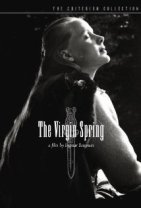
The Virgin Spring    Woman in the Dunes   Les Cousins

下周末的三天里,平均每一天都将有一部重量级作品出场。伯格曼的奥斯卡最佳外语片《处女泉》(1960, 89min, 8.1, 8.3),夏布罗尔的柏林金熊奖作品,“新浪潮”代表作之一的《表兄弟》(1959, 112min, 7.9, 7.4)和日本导演敕使河原宏的嘎纳评审团大奖作品《沙丘之女》(1964, 123min, 8.3, 8.3),个个来头不小,却又风格迥异,在评论界获誉无数,同时也是在市面上极少有机会能一睹其风采的(尤其是后两部)。想想整座纽约城,也就只有MoMA有如此气魄能一口气拿出多部这种级别的作品做单场放映的了。

_____________________

附放映时间:

May 16 (Fri): The Life of Oharu (7:00); The Virgin Spring (8:00); The Merchant of Four Seasons (9:20)

May 17 (Sat): Les Cousins (1:30); The Merchant of Four Seasons (2:30); Woman in the Dunes (8:00)

May 18 (Sun): Blow-up (2:00); The Merchant of Four Seasons (4:45).

【拜仁0比1皇马】仍有可期

也不能说就因为这一场比赛暴露出来的问题就忧心忡忡,空有控球,光打雷不下雨,破密集防守无力,这些顽疾其实一直都在,只不过被这样一场零进球的失利给放大罢了。本场毕竟是180分钟比赛的第一回合,瓜帅在客场战略上求稳是很明显的,里贝里罗本串联不频繁,用拉姆小猪克罗斯三后腰,禁区里只留曼朱季奇一个点,甚至说还原丹特和博阿滕的中卫组合,都能从侧面印证出瓜帅本人应该也不会对这个比分过于失望。从马丁内斯和穆勒被换上场这两步棋来看,瓜帅是清楚手里握有什么牌并且知道怎么去用的,现在只能理解为,时机未到而已。赛前德媒传出本场首发将重现小猪和马丁内斯的“海帅组合”,本来心里为之一振,可实际上却还是上的拉菲尼亚,直接导致右路罗本孤立无援(这个问题已经不用再重复了,我现在对这条右路组合已经几近无语状态)。

反观皇马,群星虽然不是个个都非常闪亮但整场下来,一步一步都走得非常扎实,莫德里奇和阿隆索的中路非常干脆合理——其实本场拜仁中路本就偏软,很少出现正面交锋刺刀见红的情形——下一场比赛需要更加压迫这两个人才行。受战术所致,皇马的锋线威慑力也一般,那个丢球虽然是典型的反击套路,但多少也拜我们自己后方的立足未稳所赐。

下一场比赛需要的是进球和不丢球,单独来看,两者都不难,但合在一起却并不容易,就看瓜帅和全队将士能不能被这场比赛的过程和结果激发出足够的热情和专注。还是那句话,我们知道我们手里有什么牌,我们也知道对手想干嘛,到时就看主帅的魄力和球员在场上是否能像前些年那样群狼扑食般在主场打出属于自己的比赛了。

加油!

Economist Apr 19th 2014

(乌克兰局势进一步升级,长长短短一共五篇文章,把政治策略,制裁利弊,经济影响,和军事实力一一做了个详述)

《Insatiable

  • Infiltration to Eastern Ukraine; not quite invasion;
  • Reasons why Russia might want to destabilize Ukraine: stop presidential elections? justify overt Russian intervention? civil conflict that destroys the authority of Kiev;

There is nothing wrong with federalism in principle, but this would be a formula for Russian domination.

《Boys from the Blackstuff

  • The occupations have shown how little authority Ukraine’s government has in the east;
  • Moving military against Ukraine is costly for Putin: salaries, pensions, subsidizing coal mines, would cost twice as much for Donetsk as in Crimea;
  • (Alexander Dugin, Russia’s most vocal imperial nationalist and anti-American ideologue) Maidan revolution in Kiev was an American plot to drag Ukraine into the EU and NATO; having failed to make this happen, America is now trying to provoke violent clashes to justify NATO military bases in Ukraine;

《Turning off the Taps

  • Start with finance, because of the pre-eminence of the dollar;
  • Such sanctions have been used increasingly since the 1990s: helping nudge Pyongyang back to the negotiating table; helped soften Tehran’s stance over its nuclear program;
  • The Treasury has been deliberately vague about how strong such links have to be:

If one bank or company stops doing business with an entity, so does everyone else. No one wants to be an outlier.

  • Sanctions also invite countermeasures: hit Rosneft and you hurt BP, ExxonMobil as well; Russia could 1) choose to investigate foreign investors for tax “irregularities”; 2) enlist hackers to destabilize American banks and exchanges, as it proposed to China back in 2008;

《From Bad to Worse

  • Sanctions are pretty limited on paper, but they have created a “scare factor” that is magnifying their effect;
  • … could also create openings for competitors (Chinese firms);
  • Russian firms are casting around Asia and elsewhere for new customers: Rosneft is seeking to treble its exports of oil to China;
  • Losing access to foreign loans – what it will mean for investment, productivity, and growth;
  • Weak currency will be an advantage for local brands? Not actually, many Russian manufacturers depend on imports for inputs and equipment;

(中国部分一共四篇文章,涵盖了城市化、独立记者、旅游和“屌丝”这个新兴词汇,中规中矩,但某种程度上还像是拿着万花筒在窥探这个神奇的国度)

《China’s Losers

  • (Analysys International) More than 90% of programmers and journalists and about 80% of food and service industry and marketing workers said they saw themselves as diaosi; civil servants least identified with being losers in the survey;

《Coming to a Beach near You

  • Next step: get visa easier; tailor language, products and services to the Chinese market – “They are very afraid of being treated as second-class”;
  • “Authentic”, “limited edition” or “VIP” have always appealed to the Chinese;
  • Getting noticed is the toughest step;

(亚太和新兴市场方面,主要文章有日本安倍首相在奥巴马即将访日之际开始采取温和的“中间”政策;印度大选,莫迪及其代表的反对党继续占据优势,还有的就是下面这篇关于巴西人如何效率低下的报道。一直觉得Economist的拉美部分总带着些不失严肃的小幽默,本篇的取材也不例外)

《The 50-Year Snooze

  • “The moment you land in Brazil you start wasting time.”

Few cultures offer a better recipe for enjoying life.

  • TFP is lower now than it was in 1960; Brazil invests just 2.2% of its GDP in infrastructure; low quality education; badly managed companies; protectionism;
  • Preferential tax treatment (for firms with turnovers of no more than $1.6m) discourages companies from growing;
  • Two salutary examples: deregulated agriculture in 1990 and institutional reforms in financial services a few years later;

《Status Shift

Social networks promised marketers a revolution, but what they have delivered is just boring traditional ads.

一种关注(十五)

拉斯·冯·提尔,阿伦诺夫斯基,大卫·林奇,这一串名单下来,恐怕很难还会有哪一个周末的阵容可以与之媲美。这三个名字,虽说有些以偏概全,但这也足以称得上是当今影坛最具创造力和感官冲击力的导演代表群。还是 Museum of Moving Image 的“cinematic vitality”一词概括得好,直切要害,这三位导演的风格,既不是好莱坞商业片那般圆油,也不是欧洲文艺片那般干涩,更不是我们熟知的东亚电影那般温雅;他们就是以他们的名字命名的那种风格本身。

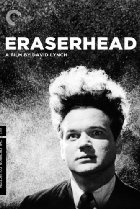
丹麦人拉斯·冯·提尔的新作《女性瘾者》(2013, 118min, 7.5, 8.0)近期已开始在美国陆续上映,两部中的第一部本周五登陆纽约Landmark Sunshine Cinema。当然了,从名字也不难看出这是一部“十八禁”电影。Museum of Moving Image 本周末开始阿伦诺夫斯基回顾展,为其新作《诺亚方舟》暖场,其中涵盖了《梦之安魂曲》《黑天鹅》《摔角手》等名作,当然值得一提的是阿伦导演的处女作《死亡密码》(1998, 84min, 7.5, 7.6),一部当年仅以16mm做拷贝却又摘得圣丹斯最佳导演的小成本电影。IFC 中心的周末午夜场本周上演大卫·林奇的处女作《橡皮头》(1977, 85min, 7.4, 8.1),有意思的是该片是林奇导演唯一一部入选Criterion Collection的作品,但只能在Hulu上播放,没有dvd版本。

Nymphomaniac     Pi    Eraserhead

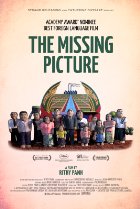
本周作为为配角的将是意大利钻石级导演赛尔乔·拉翁内的经典西部片《西部往事》(1968, 175min, 8.7, 8.6),以及同在BAM 玫瑰剧院上演的《阿尔及尔之战》(1966, 121min, 8.2, 8.4),这两部电影均为BAM “The Music of Morricone” 小系列的选片。此外,今年奥斯卡提名作品,来自柬埔寨的电影《残缺影像》(2013, 92min, 7.5, 7.8)也将从本周三开始在Film Forum 上映,本片以独特的玩偶形式讲述了这个东南亚国家的一段苦难史。

Once Upon a Time in the West     The Missing Picture     The Battle of Algiers

附:放映时间

  • Fri: The Battle of Algiers (2:00, 7:00)
  • Fri & Sat: Eraserhead (12:00a)
  • Sat: Once Upon a Time in the West (2:00, 5:30, 9:15); Pi (4:30);
  • Starting Fri: Nymphomaniac: Vol. I (whole day)
  • Starting Wed: The Missing Picture (1:00, 3:15, 5:45, 7:45, 9:45)

Economist Mar 8th 2014

《Kidnapped by the Kremlin》

(Economist连续第三周以乌克兰局势开篇,随着双方进一步对立,杂志的笔锋也更多开始转向对普京的抨击,而对乌克兰西部的建设性意见依然停留在纸面)

Giving in to kidnappers is always dangerous: those who fail to take a stand to start with often face graver trials later on.

  • Kremlin has a duty to protect Russians and Russian-speakers wherever they may be – the logic that Hitler used when he seized parts of Europe in the 1930s.
  • Many powers, not least Britain, France and the United States, have sometimes broken the international law. But Mr Putin has emptied the law of significance, by warping reality to mean whatever he chooses.

《The end of beginning?》

(从文明的角度去解释了一番普京此次动武的缘由,不知道有朝一日中国在面对其周边地区出现类似状况时西方又会有怎样的解读)

There was only one thing missing: enemy

  • Ukrainian forces remain calm: Russia was hoping to follow the scenario of the Georgian war in 2008, when it managed to provoke the Georgians to fire first, it flopped;

Putin is “in another world”

  • Influenced by Ivan Ilyin – in this world of view, Ukraine’s revolutionary bid to escape to the West is a betrayal of Slavic brotherhood, and Russia should attempt to “save”
  • more likely, Putin intends to use it as a destablising factor and leverage for splitting Ukraine further, stop the country from moving towards the West;

《Sixes and sevens》

(分析了下西方手中都有哪些能打的牌,牌桌上的每个人其实都在暗暗掂量自己手里的筹码)

Mr Obama has a freer hand

  • relatively tiny amount of trade that America does with Russia – ten times lower than that between Europe and Russia;
  • indifference of American public

The opposite view taken but the doves

  • led by Germany, owe quite a lot to the importance of trade relationship – about a third of gas and oil Germany imported last year came from Russia;
  • Britain, shown no great enthusiasm for sanctions;

Long-term cost

  • future leaders of Ukraine will face even greater popular pressure to turn West;
  • a NATO with a new sense of purpose
  • and Russian stock market: its economy is now vulnerable to investor sentiment, a much quicker comeback than sanctions

《Let the sun shine》

For makers and users of solar power, the future looks bright.

  • growing rapidly (albeit from a small base); and cost has fallen so quickly – photovoltaic installations are the future
  • a biggest test will come in 2017, when the federal solar-investment tax credit drops from 30% to 10%;

Distributed solar power – generated from rooftop panels – undermines traditional centralized utility model

  • in 2013, third-party-owned systems accounted for most solar installations in CA, AZ, CL and MA
  • some utilities campaigned but were defeated;
  • though makes utilities skittish, many have rushed to embrace it on the supply side;  also, low installation and labour costs, clean power delivery at peak hours and a hedge against fuel-price volatility

《The burden of empire》

(本篇出现在Leaders的栏目中,并以一副批驳民族政策的口吻行文,观点谈不上新颖,但个别用词略煽动)

Xinjiang and Tibet (and Inner Mongolia) are still China’s colonies, their pacification under the Communist Party’s a continued imperial project. Were it not for the Dalai Lama’s restraining influence, violence in Tibet might be as bad as it is in Xinjiang.

《Not so sunny》

China’s first domestic bond default

  • Shanghai Chaori Solar Energy Science and Technology Co
  • panic will be limited, since not backed by local government;
  • (Fitch) “long-term positive for the market”

《Submerging hopes》

Rich-world firms with above-average exposure to emerging economies have lagged America’s storkmarket by about 40% over the past three years;

What went wrong?

  • some did not take risks seriously enough
  • bad management – too many overpaid for acquisitions;

A decade of low interest rates and rampant Chinese demand allowed all developing countries to grow at turbocharged rates – even those that were badly run. Now the global environment is less forgiving.

To improve:

  • should screen their portfolios for strategic relevance and financial returns
  • borrowing in local markets, shift more production to the emerging world, consider acquisitions to boost market shares;

《Emerge, splurge, purge》

(是一篇论据多于论点的综述,有趣的是其中援引的例子以印度、拉美甚至俄罗斯居多,鲜有中国)

The companies suffering a slowdown profits come in three buckets:

  • suffered a gentle weakening in demand and a currency drag: consumer firms;
  • cyclical and capital-intensive industries face a sharper slowdown and those firms with mismatches (costs or debts in firm currencies but sales in depreciating ones);
  • firms with idiosyncratic problems: China’s war on graft, Russia’s periodic crackdown on alcoholism;

The process accelerated dramatically by the mid-2000s, and subprime and euro crises made it irresistible;

A rule of thumb: half of the deal destroys value;

《One phone, many countries》

(非常有意思的一篇小文章,从iPhone 5s在拉丁美洲各国的销路来一窥每个国家所面临的的经济困境,语气轻松,不知本国读者又会作何感想了)

Brazil: the dearest in dollar terms, of the countries where Apple has stores (a 16G 5s costs $1,076)

  • Brazil cost: the exorbitant cost of doing business in the country, largely due to tariffs and state and federal taxes on imports; also high labour costs and expensive commercial rents

Venezuela: huge gap between the official and unofficial exchange rates, goods that are imported at the black-market rate are out of reach to most;

Argentina: devices that are assembled in the Patagonian province benefit from a 60% reduction in excise taxes but Apple refused to play ball like Samsung and Blackberry;

Pacific Alliance – Chile, Columbia, Mexico and Peru – things are easier, but what’s lacking if purchasing power

Obtaining a smartphone contract in Peru similarly involves lots of queuing, lots of paperwork, and the waste of a few hours. The hassles do not end there. Customer service is poor and flaunting your new toy risks theft. That is true of other countries in the region, too. Diverse as it is, Latin America does have some things in common.


【拜仁2比1勒沃库森】赢在不紧张

一场平淡的胜利,进球也是为数不多的闪光点。总体来看对手的防守还是很到位的,这样一支四平八稳的球队也难怪年年都能拿到欧冠席位(但难以走远就是了)。如今的拜仁在场上似乎进入到了一种“自治”的状态,有点当年巴萨的感觉,教练的意图是什么,对手的战术是什么,也变得不那么重要。所以到头来我也不知道,曼朱基奇的强力头槌,和小猪的圆月弯刀,到底算是球星的灵光一现,还是因为球队整体太强,最终总有那么一两个人冒出来承担进球的使命。

《远离电影》三篇

按:应好友寻帕慕克《伊斯坦布尔》读书笔记,倒也费了一番周折。从已删除账号里再找拿回此文已是不可能的事情,好在旧电脑依然坚挺,能容我把底稿翻出,以往昔人,跃然纸上,也是幸事一桩。

远离电影(2

2009-06-14 02:02:48

《伊斯坦布尔》是我许久之前就放在书架上的一本书

翻开看是2007年3月第一版第一次印刷的

我想我买下它也大概就是那时候


先花些笔墨描述我的书架

其实叫做书柜

我码书的方式没有特别的规律

不完全按照读过的顺序

或是作者的不同

有时候我会根据封面书脊的颜色

把相似的书放在一起

《伊》深灰色的封面

夹在《香水》《时间旅行者的妻子》《朗读者》《南回归线》中间

(注:老版的《朗读者》是深色封面)

显得沉稳而安静

老实说

我很喜欢这样的组合

就像剪辑胶片一样

排列的过程也是一种创造

有时候我会呆呆地看着它们

不知是期待着它们彼此间发生些什么奇妙的反应

还是想像着这些相似的颜色融合在一起时是什么样子

总之

这种肤浅的的娱乐

往往占据了我也许该用来读它们的时间


想想当时正是帕慕克红火于各大书店的时候

这却是我唯一一本他的书

我最初没有选择《我的名字叫红》

也许是因为这本比较薄的缘故

不过相比而言

伊斯坦布尔这个名字才是真正的原因

在书店挑选书的过程其实就是一种寻找与碰撞

到头来看看是谁触碰了你的神经末梢

我一直觉得

带着目的去书店或者是卖盘的地方是件很无趣的事情

所谓目的

就是告诉店员你要的是什么

接着用手接过他递过来的

然后或驻足或离开

我从不这样

就算是为了给这个世界平添一分偶然


有时候命运的确很精巧

2007年1月我刚听闻有《香水》这本书时

在西单的架上

我果然在不经意间看见了它

那种喜悦与得意

平凡而真切

当然也有到头来都是一场空的时候

也许我本不该找

因为它压根就不存在

也许它存在

只是我疏于发现

不管怎样

当我离去的时候

这两种可能依旧孤独而相互平行地延续着

正如一开始那样

没有谁抹杀了其中任何一个


对于这样的空

我不遗憾

我甚至视之为那“令人愉悦的悲伤”

可能这东西

或许从一开始就是被捏造出来的

现实的苍白之上

有就是有

没有就是没有

容不得半点含糊与平行

这世上并没有偶然

然而与路不同的是

这偶然

走的人多了就越是没有


我的题已经跑得很远了

伊斯坦布尔

与上述的悲喜无关

这世上有许多像这样中立而坚固而高大的形象

就好比麦卡勒斯笔下的聋子辛格

永远不会崩塌

永远值得依靠

我们赖以生存的城市也是这样

我有一种不知从何时建立起来的“大地情结”

从迷恋立交桥

到书写“人杰地灵”

从初三时就感慨过的安静地仰卧在黑夜中的三环路

到后来的卡尔维诺、城墙、废墟

从小学时候周末挂着月票满世界转悠

到后来的梦境中

俯贴在广袤的土地上

似乎在沉浸着而又等待着什么

一呼一吸间

我难以述清这种感受

我只知道伊斯坦布尔这简单的五个字

散发着无穷的魔力

班头曾经说

你看拜占廷、君士坦丁堡这些名字多好听

我很高兴还有许多人都有类似的通感

冒昧地说

通感是我们身之为人最为伟大而奇妙之处

它塑造了这个世界的千变万化

拓宽了感官的维度


现在看其实我一直都没跑题

从开始到现在

我说的都是一件事

那便是精神花园的建立

书的码放堆叠

像找寻宿命一般的买书过程

还有仅仅与书名交织在一起却可以打通任何感官的模糊情感

这一切

都像是在喃喃述说着我对现实的某种渴求与欲望

现实是一面冷冰冰的镜子

我站在它面前

却发现背后居然还藏着这样一个繁花似锦的天地


当无形的脑和心

像双手一样做着实实在在的事情

我会深深感到自己身处在一种平凡的幸福之中


远离电影(3

2009-06-14 10:28:41

美景之美,在其忧伤

帕慕克在故事开始前的这段引用

深沉而空旷

我瞬间就被这八个字拉到了伊斯坦布尔的风华之中

可以这样概括

全书着眼的是帕慕克还未成为帕慕克的那段年少时光

因为在最后的结尾

帕慕克自己说道

我不想当画家

我要成为作家

然而与之相对的是

故事中的伊斯坦布尔

始终是一位安详和蔼的老者

伴随在作者成长的左右

就这样

一种奇妙的感觉被营造出来

帕慕克笔下的忧愁感伤

我不知是源于他自己

还是来自伊斯坦布尔本身

伊斯坦布尔的命运就是我的命运

我依附于这个城市

只因她造就了今天的我

帕慕克在封面上如是说


我想先说的是科丘

作者笔下一位疯狂的作家

他的野心让我赞叹不已

科丘想要在有生之年编纂一部伊斯坦布尔的《百科全书》

按照字母表的顺序

通过搜集各种趣闻轶事

向世人呈现一个生动的伊斯坦布尔

然而

工程浩大

十多年过去当第一卷完成时

书依旧停留在字母B

到最终的最终也只不过到字母G而已

看到这里

我似乎看到了另一个疯狂追日的夸父

孤独而又固执地走在自己的路上

不知回头


我该很清楚这样的感受

从A到Z

故事不仅仅是这26个字母那么简单

每一个字母都会延伸出或多或少的小径

小径依然会分叉

最后这些分叉还会互相交接

彼此不分你我

我想这位一心编百科全书的科丘定不是一个严谨的学者

不懂得抑制

只知放纵自己的情感与冲动

我行我素

我在想

其实他就是那个挣扎于我们心中的欲望

如果能把心掏出来

也许它就会像这科丘一样跃然于纸上

生活的音符、旋律

也不过如此


在这次动笔之前

大概有半年之前吧

我曾策划着想要写一连篇题为《身边的诗人》的文字

如果成行

那记录的也是我身边这样或那样的科丘

记得我打开空白的word文档

一下子罗列出八九个名字

并排好了顺序

可最终这篇名为“身边的诗人”文档里仍旧只有这几个名字

即便如此

正如前文所说

名字一样富含诗意


我把俊宏放在了第一个

甚至视之为当仁不让

现在想来

我当数学和英语课代表

没准也算作命运的精巧安排

国红改变了我从不去办公室找老师的习惯

而俊宏

虽然始终若即若离不容接近

但每当我现在想起他

放那首starry starry night的时候

我就会深知其实我们是如此的接近

一个连自己都说或许不该成为老师的人

每次忆起他那些音容笑貌

那些根据我们当初乐此不疲的模仿而生成的音容笑貌

我总是抑制不住狂笑

狂笑不止

这也许是回忆的高境界(容我删去了一个“最”字)

癫狂

悲怆

因为我分明感受到了一种撼人心魄的力量

因为同样的感受

我喜欢“泪奔”这个词

一样的力量


若要我在想像中描述科丘的样子

我会说他就跟爱因斯坦一般

狰狞的脸

蓬乱的头发

还有尖锐的双眼

事实证明这不是我的想像

《伊斯坦布尔》里的确有一张他的大头照

凝视着正在读他的我


远离电影(4

2009-06-14 14:16:48

2009年1月放假的第一个工作日

说白了就是周一(其实还是假日)

我跟大师在西单

吃着不知道是她从什么时候就欠下来的请客

我跟她虽然身处同一个校园

但每一次见面都禁不住感叹

我怎么好久都没看见您了(这学期成了“您又憔悴了不少”)

是啊

也许正因为如此

我们每次见、闲聊的时间都格外长

虽然仔细想想

说的一大车话每次都说的是同样的话题

除了彼此的情况

剩下的话也总是针对那几个人

但是

从来都不会索然无味

虽说有时我都说完了告别的话连脚步都准备迈开了

但到头来看

那时只不过刚进行了一半而已


我俩在餐桌上

从边啃东西边说话

到边喝饮料边说

最后就是干说

时不时伴着两个人的狂笑声

还是这狂笑

畅快淋漓

到后来

也许是觉得该换换姿势

于是我们便走在回家的路上边走边说

沿着夜幕降临的长安街

一口气从西单一直延伸至大望路

这条生硬地串起我的高中和大学的直线

其实走一遭下来

胸中倒也格外坦荡


我当然记不清一路上所有的话题

倒是途径东单时的情景印象格外深刻

走在东单那座银色的天桥上

大师跟我说

您啊,还是该找个安静一些的

我在桥上的夜幕下沉默了一会儿

深吸一口气

冲自己点了点头

“恩,您说的是”


行走是个永恒的主题

我曾因“行者无疆”这个好名字买下了第一本余秋雨的书

在写给忘了是谁的同学录上

我在“最想成为”这一栏上填的就是“行者”

而在电影那一栏写的是“21克”

(与行者无关,只为印证那时的我已身处电影时代)

帕慕克笔下的伊斯坦布尔

同样有他本人不停地行走的足迹

那些长话连篇的所谓“呼愁”与废墟

我并不陌生

在我看来

他行走的闪光之处在于博斯普鲁斯

宽广的海面本身就是一个绝佳的隐喻

尤其是这将欧亚大陆拦腰截断的博斯普鲁斯海岸

加之

那沿岸或精致或颓败的帕夏宫殿

(岸边其实有许多,恕我除了海只记得这个)

消除了相较之茫茫大海的险恶感觉

我想

这一定是伊斯坦布尔最美丽的地方


我有个大学同学

她想在烟花四月下踏江南

去过一段行走如度日的生活

然而终究如最初预料的

计划搁浅

我想

一经下定决心

谁都可以挣脱心里面的束缚

但正如大海的空旷险恶

外在环境无不令我们每一个人望而却步

从这点上看

能够行走在博斯普鲁斯沿岸的帕慕克无疑是幸福的

还有那个斯文的余秋雨

走在千禧之路上的他

一定也是戒卫森严

最起码

有个能跟伊拉克海关吵架的陈鲁豫


还有一段行走不可不提

刚上大学的一个周末

不知何故

与她一同从学校走着回家

最后到大望路实在是累得不行(事实上这段路程要短许多)

我还记得一路上我都叫嚣着要去吃串儿

在loft面酷门前还炫耀了一个刚背的托福单词

(那个词当然不是loft)

不过这都不是重点

全程我都在抒发着由许多状态杂糅在一起的情感

我抛给了她(不如说是黑夜)各种各样的问题

有些同样是以“为什么”为开头

有时候

我又低头陷入沉思

等待着听者附和上一句合时宜的回应

面对大地

我毫无保留地将一个个文件夹打开

(其实不可能毫无保留,文件夹一直打开到最近才告一段落)


那段时期

平时一个人回学校

走在西门的天桥上

炽烈的阳光总会激起我莫名的悲伤和流泪的冲动

与当年2月的每个下午走出家门时不无两样

而两个人行走在一段黑夜中

我不知道

我心中所感究竟是与之相似还是不同

但为君故,沉吟至今

我觉得这两句话用来形容那个晚上的迷离状态倒很贴切


这个晚上的结尾让人惊讶

拖着疲惫的双脚回到家

眼睛无意间扫到日历

2007年9月21日

我猛然意识到

第二天就是她的生日

时光飞快

我不但已然身处在电影时代

有我而没有你

而且

再过几个小时的第二天

我的双脚就将要从你生日的这一天默默地迈过去


现在想想

不过是些遥远的事了

经历过和大师一起时而沉默时而狂笑的另一段行走

我深知帕慕克在那一章节结尾处写到的

生活也没什么大不了的

无论发生什么事

我随时都能漫步在博斯普鲁斯沿岸

Economist Mar 1st 2014

How the West can help

A MAN goes bankrupt, Ernest Hemingway wrote, gradually, then suddenly. Autocrats lose office the same way, as the fate of Viktor Yanukovych, Ukraine’s deposed president, dramatically illustrates.

Lessons from Orange revolution

  • vital that the presidential election in May is clean (20024: an event that seemed to herald a democratic future, but instead merely reshuffled an entrenched elite);
  • will need help and not just the financial kind – without a proper underpinning, emerging democracies can slip back into misrule;

Putin: he will doubtless do his best to stop the country becoming an independent democracy.

The February revolution

The revolution was not just about getting rid of one kleptocrat

  • the post-Soviet order which prevailed in Ukraine has not been uprooted;
  • the Maidan was not the only player in the revolution;
  • worrying civil order and economic abyss;
  • the two parts (east and south) complicates the future and the successive government failed to find a vision or narrative with which to unite the country;
  • Putin’s take in Crimea;

But although Mr Yanukovych provided oligarchs and Maidan with a common enemy in the run up to the revolution, the allies could well turn into adversaries in the aftermath. The oligarchs and their political place-men are creatures of the dysfunctional state that Maiden rejects; some will surely seek to use the revolution to regain their lost interests and restore the pre-Yanukovych status quo.

A memo to Obama

America not a mobile place: a child born in the poorest fifth of society has only a 9% chance of making it to the top fifth;

The solutions: to incentivise work in other ways

  • (Marco Rubio) wage subsidy, a reverse payroll tax that would strengthen the connection to work;
  • minimum wage would cost around 500,000 jobs, can be counteracted through the EITC;
  • intensive counselling and training to the long-term umemployed (as Britain experimented);
  • Disability Insurance become more generous (number of beneficiaries from 1.5m in 1970 to 8.9m in 2013), key is to persuade them not to apply;
  • spent only 0.1% of GDP on “active” labour-market programmes, compared to OECD average 0.6%;
  • Better to concentrate the money on the smaller, younger, truly disadvantaged group of children.

One way no more

China’s currency has long been a source of controversy, but it is rarely a source of uncertainty;

“Carry trade”: speculators borrowed cheaply in dollars, then lent in yuan, eluding China’s capital controls in the hope of benefiting both from higher Chinese interest rates and the yuan’s appreciation;

These fundamentals (export earnings and foreign-direct investment) both suggest the yuan should rise again. But by wrongfooting the speculators, the authorities hope that the expectation of appreciation will not remain a cause of that appreciation.

Foe or frenemy?

online funds that are offering returns that are 15 times higher than conventional deposit accounts;

China’s cap on deposit rates is causing money to flood into shadow-banking products such as those offered by “trust;”

Alibaba launched Yu’e Bao, then Baidu and Tencent entered the fray;

Impact:

  • indeed hurting the banks: sucking away money – bank deposits fell by one trillion yuan in January;
  • Not possible to lead to massive disruption of the sector: even if a tenth of bank deposits flee to online products (a heroic assumption), it might cut the net interest margin at banks by just 0.1%.

Government coughers

The prevalence of smoking is greater in countries like Austria and Russia;

starting to take notice of the problem – Mao Zedong smoked like a chimney but it is rare to see a senior leader smoking in public now;

restrictions on smoking in indoor public places – has hardly kicked the habit

  • In fact, the revenues of the Chinese cigarette-manufacturing industry shot up from 285 billion yuan in 2005, to 757 billion yuan in 2012;

The most powerful measure is tax

  • this approach works in both South Africa and France;
  • Chinese cigarettes are taxed so lightly (cheapest pack in rural areas sell for just two yuan, five yuan in cities);

Another great obstacle is tobacco lobby

  • In 2012, the tobacco industry turned in 6% of official revenue – as big in Beijing politics as petroleum and property;

Now or Naver

almost 80% of Korean search market, making the country one of just three where Google is not top (the other two are Russia and China);

still rising – online advertising sales grew by 7.7% last year;

has began to exhibit some of the least attractive traits of the chaebol (industrial conglomerate)

  • buying up smaller potential rivals;
  • using its market power to stop other portals getting access to content;

South Koreans now spent more on KakaoTalk than they do on Naver;

real strength abroad – its decade of experience in the portal business

  • “doing everything” from games to shopping to online newspapers;
  • Line: makes 70% of money from games and electronic “stickers”

一种关注(十四)

  • Wed: Letter from an Unknown Woman (7:00)
  • Thu: Mean Streets (4:30; 7:00; 9:30)
  • Fri: Raging Bull (2:00; 4:40; 9:45); The Third Man (7:00); Days of Heaven (9:30)
  • Sat: Letter from an Unknown Woman (1:30); Raging Bull (7:00; 9:45)
  • All time: The Grand Budapest Hotel

Bull    Mean   Grand Hotel

如果把伍迪·艾伦暂且比作纽约街角跃动的音符,那么马丁·斯科塞斯才是纽约真正的魂。本周中开始,BAM 玫瑰剧院将推出一期特别的“side by side”双导演系列——“Under the Influence: Scorsese/ Walsh”。老马丁久负盛名的黑帮电影,如《穷陋街巷》(1973, 112min, 7.5, 7.6),《愤怒的公牛》(1980, 129min, 8.3, 8.4)等,其实是深受上世纪二三十年代的美国导演Raoul Walsh影响,如《穷陋街巷》来自一部叫做《Regeneration》的作品——描写纽约街头移民生活景象的头几部影片之一;而响当当的《愤怒的公牛》里面搏击的场面,则是源于Walsh另一部作品《Gentleman Jim》。如果有机会能够真正”side by side”地品评这些出自两个不同的年代却又情境相通的电影,相信会别有一番收获。

Heaven   Letter   Man 

MoMA 的奥地利专题系列仍在进行中。本周惹人关注的有德国导演马克斯·奥尔菲斯的《一封陌生女人的来信》(1948, 86min, 8.0, 7.8),当然这部作品由于出自奥地利作家茨威格的短篇小说而更显得亮眼许多。此外,女主角也是一大看点——奥斯卡影后,同时也是另一部文学改编电影《Rebecca》的女主演琼·方丹。

英国导演卡罗尔·里德的作品《第三人》(1949, 93min, 8.4, 8.1)也是讲述发生在维也纳的故事。本片荣膺当年嘎纳电影节评审团奖和1951年奥斯卡最佳摄影奖,电影奇才奥逊·威尔斯也在其中有着短暂而精彩的出演。

此外,Rubin Museum of Art 周五晚间的“歌舞场”系列本周迎来美国导演泰伦斯·马力克的《天堂之日》(1978, 94min, 8.0, 7.7),同样是一部同时获得嘎纳奖项(最佳导演)和奥斯卡最佳摄影的作品。而在主流院线上,韦斯·安德森的新作《布达佩斯大饭店》(2014, 99min, 8.4, 8.5)也格外引人注目,本片是今年二月新鲜出炉的柏林银熊奖得主,应该也是目前市面上唯一一部在映的柏林影展获奖作品。

Economist Feb 22nd 2014

《Putin’s inferno》

  • “Kiev is one of the few European cities where the European Union is synonymous with good government and the rule of law.”
  • Virtually all of Ukraine’s established politicians have discredited themselves: the protesters have no clear champion – one reason the violence may prove difficult to stop;

《Europe’s new battlefield》

  • Ukraine’s elites understood independence as right to pillage their country;
  • compounding the problem: Russian-speaking, industrialized east of the country and Crimea, and the nationalist-minded western Ukraine – the core of the protesters;
  • an issue of a free-trade agreement with the EU or a customs union with Russia suddenly becomes an existential choice between a corrupt and authoritarian post-Soviet system of governance and a European one;
  • Russia has long coveted Crimea.

《How to make the world $600 billion poorer》

  • Mr Obama now appears to be surrendering to protectionists within his own party
  • Congress must approve the trade agreements,  however, a fast-track vote before November seems unlikely;
  • Tea Party Republicans: loth to grant Mr Obama the authority to do anything;
  • Democrats: the idea that they will not do much to help the economy; brand themselves as the anti-inequality party;
  • Mr Obama could have explained more … mentioning that cheap imports help reduce inequality of consumption;
  • “America cannot turn inward,” the Obama of 2008 said in Berlin. The Obama of 2014 is now responding:” Yes we can.”

《Taking aim at imports》

  • America’s continent-spanning economy is more self-contained than many people realize – imports and exports amounts to 23% of GDP, compared with 26% for the EU or 46% for China;
  • last time was in 2002, even so, 183 Democrats voting no, and moreover, the deal was small;
  • Compared to mid-1990s NAFTA, the level of scepticism is probably higher – citing NAFTA as the lessons;
  • Opponents requires more policy-making transparency – 1,150 meetings on the Asia deal alone is apparently insufficient;
  • a large group that likes the trade in theory but not in practice – “recent presidents have seized Congress’s constitutional trade authority” and ask for it to be returned;
  • It is hard to oppose greater transparency without sounding sinister.

《The politics of little bricks》

  • fits the old stereotype of Hollywood peddling anti-capitalist propaganda to kids, but hold on, the film is also an hour-and-a-half-long commercial for costly toys made by a multinational, a commercial that people must pay to see;

《Bridging the fiscal chasm》

  • at the end of 2013, liabilities of local governments: $1.8 trillion, one third of China’s GDP;
  • Guizhou, biggest fiscal chasm, liabilities 80% of its GDP;
  • some of the backing is implicit: if these guarantees are booked at their expected cost, Gansu’s debt burden falls from 44% to 19% of GDP;
  • debts look heavy compared with taxes: Yunnan and Qinghai, 260% and 370% of their budget revenues; however, China’s provinces do not have to rely on revenues, other funds – transferred from central government, land sales;

《Getting the messages》

  • Two profound trends that are transforming the technology landscape: rapid growth of web-connected smartphones and dramatic decline in the cost of building start-ups;

《Here, there and everywhere》

  • Dutch advantage: balance power between management, the board and shareholders, no meeting required to approve resolutions, few requirements on compensation – Europe’s Delaware; ability to issue “loyalty” shares;
  • British advantage: tax.

Economist Feb 15th 2014

《The parable of Argentina》

  • Embraced Washington consensus in the 1990s but the crunch in 2001 left it permanently suspicious of liberal reform
  • Argentina’s decline has been largely self-inflicted: protectionism, prefer quick-fix rather than thorough reform of the country’s schools

《A century of decline》

Three deep-lying explanations:

  • Rich but not modern 100 years ago: low literacy rates, lowest secondary-school attendance;
  • Being out of sync with the rest of the world, trading policy: the divide between farmers and workers;
  • Not evolving political apparatus, short-termism;

《The petrostate of America》

  • Franking: should have added 2-4% to American GDP;
  • Oil boom, owed less to geological luck than enterprise, ready finance, and dazzling technology;
  • Foreign policy might not change, but energy policy should: lift the oil export ban, getting permits of gas export more easily; generating cash to pay foreign policy dividends; also might cause domestic gas prices to rise a little;

《Saudi America》

  • Turn America into a swing producer; make both dollar and the economy less sensitive to oil prices;
  • Back to stabilizing role it played in the 1960s;
  • Crude-oil could start more or less straight away; but the political debate is only in its infancy;

《TV star》

  • Advocating of consolidation: more power to negotiate with content companies; margins only 50% compared to broadband 100%;
  • Financial discipline, better control cost than conventional Hollywood boss;
  • “Not the best at innovating, but the best at scaling others’ innovations”

《Fixing forward guidance》

  • Specific threshold of Fed and BoE: 6.5% and 7%; they are muddying them now;
  • Fed downplayed; BoE scrapped the unemployment threshold – a clearer message;

《Closing the gap》

  • Gap between actual and potential output, hard to discern; three different indicators tell different stories;

《The growth paradox》

  • No link between economy growth per capita and stock market returns: “value” effect; stock market not a perfect representation of the domestic economy (real dividend growth more slowly than the economy);

《No profits, we promise》

  • JD is pursuing an “asset-heavy” model that puts scale and market-share above short-term profits;
  • Two big questions: logistic infrastructure and local rivals (Tencent and Alibaba)

《A number of great import》

  • Current account surplus narrowed to only 2% of GDP last year; but by far the largest services deficit in the world (already helped by less competitive yuan, which rose over 7% last year);

Economist Feb 8th 2014

《The worldwide wobble》

  • Necessary correction of market
  • More like a wobble than a tumble
  • No reason to expect a sudden spending slump
  • Slowing rather than slumping china
  • More easing on Europe and Japan

《Goldilocks and the bears》

  • Increase in short rates far from imminent
  • The worst-hits have been those with specific problems
  • As money flows back to US, let exchange rate slide and risk inflation, or increase interest rates and risk a recession?
  • No sign of problems in corporate results yet
  • Equities look expensive, positive for government bonds

《My country is right or righter》

  • NHK seek to follow the government’s line
  • For Abe and LDP, rebooting the media is a strategic priority
  • Pacifism still remains popular at home

《Search over》

  • How link works: Google Shopping scored 36.7% of clicks, against 5% for rivals;
  • Now it will show links to rivals alongside;

《News you can lose》

  • CNN: no glory in the role of unbiased “referee” between partisan networks (left-leaning MSNBC, and conservative Fox News); “Nobody goes to the game to see the ref.”
  • More people turning to the internet: “there is a ‘ceiling’ to how many people are getting their news from television today.”
  • what works today is entertainment;
  • CNN’s costs are also high: it has more bureaus than MSNBC and Fox News; “in produce business,” “News comes and goes so quickly.”

《Countervailing motion》

  • Fed’s shift to less expansionary monetary policy is only half the story: Central bank in Euro area and Japan are still moving in the opposite direction – “not conducting synchronized tightening”;
  • “If Japan is confronting the ghost of deflation past, the euro zone is spooked by deflation yet to come.”
  • BOJ started asset purchase $70bn a month, far greater relative to Japan’s economy – pushed up headline inflation to 1.6%, with core inflation (energy and food) entering into positive territory and rising at fastest pace since 1998;
  • Abe’s resuscitation plan – encourage hiring and raise wages;
  • Turmoil from EM: as global investors seek refuge in financial havens, the yen has started to appreciate again – make Abe nervous about raising the consumption tax;
  • Euro zone: core inflation only 0.8%, one notch up from the record low 0.7% at the end of 2013;

《Down to 1.4 and 17》

  • 20% of performance fees and 2% of management fees down to 17% and 1.4%;
  • Hedge funds as a whole undershot just about any benchmark in recent years;
  • Another factor: rush of new investors (pension funds, endowments, sovereign funds), greater negotiating power

Economist Feb 1st 2014

《The Triumph of Vladimir Putin》

  • Good year: protests seen off; Syria; NATO frustrating in Afghanistan;
  • Ukraine matters much to Putin

《Sochi or Bust》

  • Most expensive in history – corruption, inefficiencies;
  • Tight security;
  • As vulnerable as 1980s: oil & gas rent – use them to consolidate power; problem is excess of money and lack institutions; repression or democratization? Widespread dissatisfaction and discontent among elites.

《Too Big to Fail, But in a Good Way》

Koc and Sabanci: more than a quarter of Turkish market cap;

  • Short positions in FX provide hedge;
  • Untrammeled access to a market in EU;
  • Despite of conglomerate discount, global indexes prefer to own holding company;
  • Resist the vanity of owning news media and out of public facilities, governments have left them to get on with doing business – “long may that continue.”

《Deal or No Deal?》

  • Polarization of two parties, obama’s promise to bypass legislature – things are getting better;
  • Several deals are possible: minimum wage vs income tax credit; immigration; promoting free trade.

《The Odd Couple》

New Komeito and LDP – relations hit a low point:

  • Conflict in Yasukuni shrine;
  • Self defense constitution;
  • Nuclear reactors;
  • China policy;
  • Economy

Votes: bind this odd couple together – 8m members of Buddhist, Soka Gakkai.

《Physician, Heal Thyself》

  • A system that inflates the cost of medicine;
  • Public hospital is actually not public, doctor underpaid & higher than OECD spending on medicine;
  • Kickbacks account for more than 20% of final retail price
  • Promoting generic brands is difficult in China – Provincial bidding system, squeezes margins of drug companies, they would rather not make or supply the drugs

《Less Amazing than Amazon》

  • Walmart New CEO, an inflection point: open more smaller stores, step up its counterattack on Amazon – But it is chasing a fast-moving target;
  • Aims to – build up the market ecosystem that pulls together shops, warehouses, delivery, fleets, and technology.

《Fixing a Flat》

The departure of Lanxess CEO

  • One quarter of revenues from types and auto parts;
  • Oversupply when doing well causes fall in prices;
  • It needs a disciplined manager to cut costs (New CEO from Merck);
  • One solution: produce abroad or keep pushing those high-end products

《Don’t Panic》

  • Most EM are far less vulnerable than they were in 1997.
  • Risk factors: rising rates in America; slower growth in China.
  • Policy makers used market turmoil to push through more reform;
  • Yet not wholly in control, the flow of capital has more to do with what happens beyond their borders.

《Locus of Extremity》

  • Rising rate impact on the Fragile Five: reducing demand for EM assets;
  • As group, EM actually net exporters of capital: smoked the foreign currency but did not inhale, while some of them breath deep
  • Countermeasures: ban imports, taxed luxuries, let currencies fall;
  • Anticipating a more normal world – pension funds can meet their obligations and investors more reluctant to venture into anything exciting abroad.

《The Coin Has Two Faces》

  • Currency traders have had little to get their teeth into;
  • Policy dampens fluctuations;
  • Long term investors shifted to dollar buyers;
  • Last period of dollar strength was late 1990s – Internet booms, now linked to potential of shale gas;
  • Negative consequence: EM struggled to peg, difficult for American exporters, and for commodity importers;
  • Good news: US bonds more attractive

《The Price of Getting Back to Work》

America recovered quickly but lower in employment rate, reversed trends in UK;

Productivity puzzle:

  • Falling productivity cushioned against job losses in recession, while resulted in high inflation;
  • Declining productivity is consequence of falling real wages: lower real wages encouraged firms to use more labors and less capital, causing productivity to fall but popping up employment;
  • In US, milder inflation, discourages hiring, leading to rising productivity and weak employment growth.

Economist Jan 25th 2014

《China Loses Its Allure》

Things getting harder for foreign companies:

  • Government’s restrictions;
  • Competition – local firms joining the fray;
  • Some companies leaving; some struggling;
  • Sino-dependent firms worse than peers;

Challenges ahead:

  • Enhance productivity;
  • Improve governance – Chinese consumers more active;
  • Respond to local tastes.

《Doing It Their Way》

World shaped by china’s rush to consumerism:

  • stated goal;
  • increasing in absolute terms;
  • urbanization;

Sophisticated markets:

  • skewed to expensive;
  • online from the start: heavily reliance on peer reviews
  • brand switching: first – mover becomes old-fashioned;
  • go abroad;
  • creative marketing and advertising.

《In Three Parts》

Chinese economy: three forms of growth – supply, demand, and credit;

  • Supply: demographic turning point;
  • Demand: Not overheating;
  • Credit: in three categories: (1) adds to both supply and demand; (2) add nothing to capacity but to demand; (3) adds little to economic growth;

Chinese pattern of investment remains a worry, but at least enjoys a re-balancing of incomes and production, also the shift in production – more in services than industry.

《Patch-up Job》

Internets giants engage in breathtaking tax gymnastics:

  • France: buzzing with Internet-tax proposals; culture tax;
  • Italy, pass law to curb profit-shifting;
  • Chile: tech giants’ clients are in taxman’s crosshairs.

《Grease-Proof Taper》

  • Fragile five – BRL, INR, IDR, ZAR, TRY; Brazil most overheated, while Turkey and South Africa are running more current-account deficits, and much smaller FX reserves;
  • In 2014, demand commodities likely to remain restrained, affecting AUD and CAD.

《Fighting the system》

  • Lionsgate: lean, bolder, freer to pursue opportunities, keep looking for new franchises.

一种关注(十三)

不知与情人节有什么关联,BAM Rose在这两个星期将会颁出一个名为“Vengeance is Hers”的系列,长达十部作品,以荧幕上(某一种)令人过目难忘的女角色为主线串成——女性在复仇。以下是BAM网站上的简介:

From screwball proto-feminism to witchy gothic horror to cerebral auteurist classics, this series gathers some of cinema’s most unforgettable heroines and anti-heroines as they seize control and take no prisoners.

这个系列自然与女权主义思想分不开,不过第一眼看上去充满了更多黑色与暴力的元素。当然有意思的是,正如“女性的肉体是纯粹的肉体,男性的暴力是纯粹的暴力”一样,将Her与Vengeance组合在一起,势必会引发观者更多形而上的思考。果不其然,网站所附的博客上张贴了“女性视觉语言的集大成者”劳拉·穆尔维以及尼采的语录(下图)。

回到电影本身,本周令人关注的有二:芬兰导演阿基·考里斯马基《火柴厂女工》(1990,  68min, 7.7, 8.3)和日本导演新藤兼人《黑猫》(1968, 99min, 7.8, 7.8)。尤其前者,是数得上的芬兰电影佳作,在两个月前林肯中心“Ozu and His Aftelives”的系列里,该片也曾被挑选出来放映过。

Je t'aime Je t'aime    Kuroneko    The Match Factory Girl   Alphaville

Film Forum 是新浪潮“左岸”与“手册”两派的主战场。本周的前四天,戈达尔柏林金熊奖作品《阿尔法城》(1965, 99min, 7.3, 7.5)压阵,而阿伦·雷奈的《我爱你,我爱你》(1968, 91min, 7.5, 7.3)将在周五情人节上映迎头赶上。这两部作品大致都处在“新浪潮”晚期(甚至都不归属于“新浪潮”),两位导演的的风格也相继定型——必然少了早期时候的张扬和锋芒,但是对自身电影语言的信心和坚持,显然是更多了。网站上对《阿尔法城》如此介绍:

Godard creates an eerie sense of sci-fi alienation with striking b&w shooting — sans artificial light — by the great Raoul Coutard on the all-location-shot wintry streets of Paris ’65.

(End)

MET – Balthus: Cats and Girls — Paintings and Provocations

Viewed in Metropolitan Museum of Art, New York in Fall 2013.

Balthus (Balthasar Klossowski). Brother and Sister (Hubert and Thérèse Blanchard), 1936
Balthus (Balthasar Klossowski) . Thérèse Dreaming, 1938
Balthus (Balthasar Klossowski) . Thérèse, 1938
Balthus (Baltusz Klossowski). The Living Room, 1942
Balthus (Baltusz Klossowski). The Golden Days, 1944-46
Balthus (Balthasar Klossowski). Sleeping Girl, 1943
Balthus (Balthasar Klossowski). Still Life with a Figure, 1940
Balthus (Balthasar Klossowski). The Room, 1947-48
Balthus (Balthasar Klossowski). Nude with Cat, 1949
Balthus (Balthasar Klossowski). Girl at a Window, 1957
Balthus (Balthasar Klossowski). Nude Before a Mirror, 1955

The Jewish Museum – Chagall: Love, War, and Exile

Based on museum audio guide. The number of each painting corresponds to the actual item number in the museum.

200. Time is a River without Bank

Marc Chagall. Time is a River without Bank, 1930-39

Up till now I still think of this painting by Chagall in his early period as the most poetic and romantic one in this exhibition. Perhaps this is also why the museum placed it at the front of the hall. In this painting, we see a wide and peaceful river which of course represents Chagall’s hometown; while the flying fish is his father. Chagall himself and his wife, Bella, which are the only two “live” figures in the picture, sit at the corner, holding each other and cherishing the moment being together. This painting is about time, memory and loss, as said by the commentary, which I cannot agree more. Time is like a river, which is always moving and never stops. The grandfather clock in the middle, which is a more obvious symbol of time, in my opinion, is more of a implication of the objectiveness about time and we as human beings have to sit aside to either embrace or withstand the memory and loss that the times brings to us.

201. The Lovers

Marc Chagall. The Lovers, 1937

To understand this painting, it is important to know that bouquet was rare in Russia but plenty in Paris back in 1930s. This helps us understand the inner passion and spiritual energy that drive Chagall to grow and grows his flowers to essentially the whole canvas. The background color of this image is similar to the last one, and also from the lower right-hand side we see the houses the sheep representing Chagall’s hometown and his nostalgia while living in Paris and enjoying his sweet life at the same time. The contrast between these two color palettes and the emotions behind them make this bouquet look so special and joyful.

202. Untitled (Old Man with Beard)

Marc Chagall. Untitled (Old Man with Beard), 1931

203. Study for the Revolution

Marc Chagall. The Study for Revolution, 1937

204. Solitude

Marc Chagall. Solitude, 1953

205. The Fall of the Angel

Marc Chagall. The Fall of the Angel, 1923-33-47

206. Obsession

Marc Chagall. Obsession, 1943

208, Exodus

Marc Chagall. Exodus, 1952-66

209. Calvary

Marc Chagall. Calvary, 1912

210. Descent from the Cross

Marc Chagall. Descent from the Cross, 1941

211. Christ in the Night

Marc Chagall. Christ in the Night, 1948

212. The Flayed Ox

Marc Chagall. The Flayed Ox, 1947

213. Soul of the City

Marc Chagall. Soul of the City, 1945

214. The Wedding Candles

Marc Chagall. The Wedding Candles, 1948