一种关注(二十三)

  • Tue (1/2) to Thu (1/5): Tampopo (12:30, 6:00); Cameraperson (10:20)
  • Thu (1/5): Silent Night (3:30)
  • Fri (1/6): The Portrait of a Lady (4:00); After the Storm (7:00)
  • Sun (1/8): Cameraperson (4:30); The Portrait of a Lady (5:00); Silent Night (8:00)
  • All days and nights: Lion


年度最佳纪录片的有力候选《持摄像机的人》(2016, 102 min, 7.6, 8.9)在 IFC 中心热映,本片作者就是一位纪录片专家,克斯汀·约翰逊作为摄像师参与过多部纪录片的拍摄,早期包括《华氏911》这一部罕见的作为非虚构类作品摘得戛纳金棕榈奖的佳作,前年的奥斯卡最佳纪录片——讲述爱德华·斯诺登故事的——《第四公民》,她则是主摄影师。这一次,她亲自上阵,作为导演从“局内人”的视角,讲述镜头背后故事与真实之间的微妙关系,是又一部“电影人拍什么是电影”的好片。

林肯中心以今年的最受好评的独立电影《月光男孩》为由头,邀请该片导演巴里·詹金斯择选出他自己的电影清单,作为《月光男孩》的副本。这个清单里的电影都极具个人风格,它们来自不同的国家,不同时期(港台的两位文艺片“大腕”王家卫和侯孝贤也在列),不过或多或少都触及到同一个母题:离群的,不受关注的局外人。除了上述大师的作品(《春光乍泄》《最好的时光》)之外,来自墨西哥导演卡洛斯·雷加达斯的2007年戛纳评审团奖得主《寂静之光》(2007, 136 min, 7.3, 7.4)也十分值得关注。

林肯中心同时在上映的还有日本大师伊丹十三的名作《蒲公英》(1985, 114 min, 7.9, 8.3),这部电影设置在一家拉面馆中,在美食的大背景下讲述爱的故事,是一部积极向上的励志喜剧。


河岸另一边的 Museum of Moving Image 在跨年期间藏着不少“硬货”,马丁·斯科塞斯的回顾展(第一部分)刚刚结束,另两个系列 Curator’s ChoiceFirst Look 2017 足以看出展方的用心,在后一个系列的独挑大梁的是日本导演是枝裕和的最新作品《比海更深》(2016, 117 min, 7.7, 8.6),这部去年戛纳的参展作品目前只在各大电影节里出现过,美国大规模上线要等到三月中旬,因此这是为数不多的另一次“窥其真相”的机会。是枝裕和作品的主题有一定的重复性,近年来的《步履不停》《如父如子》包括去年的《海街日记》,都是同一个外壳下一类主题的不同变式,这部《比海更深》也不例外。真正喜欢这位导演的观众,想必是不会看厌的。

纽约独立影院新锐 Metrograph 轰轰烈烈的张曼玉回顾展终于告一段落,影院的“开张大礼包” Welcome to Metrograph: A to Z 还在继续,这里面储藏了各种各样风格难以归类和定义的小众电影,是猎奇和“查漏补缺”的好地方。本周末上场的除了阿涅斯·瓦尔达和保罗·托马斯·安德森之外,还有一部女导演简·坎皮恩(《钢琴课》的导演)的作品《淑女本色》(1996, 144 min, 6.3, 7.1),本片最吸引人的地方其实是它的原作,它改编自20世纪最伟大的小说家之一亨利·詹姆斯的长篇作品《一位贵妇的画像》,出演的包括妮可·基德曼和约翰·马尔科维奇这样的“大咖”,还有时年仅22岁的克里斯蒂安·贝尔。

既然提到了妮可·基德曼,在大院线正在上映的影片里自然也找得到她。新人导演加斯·戴维斯的处女作《雄狮》(2016, 118 min, 7.9, 7.4),妮可是其中的女二号,她也凭借本片出现在了本年度金球奖的提名名单中。值得一提的是在这部不知名导演的首部作品中,演员阵容出奇得强大,妮可之外,女一号是《卡罗尔》中的鲁妮·玛拉,男二号戴夫·帕特尔我们也不会陌生——《贫民窟的百万富翁》的主角马利克。电影本身也受到了肯定,成功登上金球奖最佳剧情片的提名榜单。

Life is Brief – #16

【写在前面】“我们常说激情是短暂的,爱的激情的确短暂,对于生活的激情却可以很长。”

#16 杜布罗夫尼克 (Dubrovnik)

Regardless of whether you are visiting Dubrovnik for the first time or the hundredth, the sense of awe never fails to descend … … Indeed it’s hard to imagine anyone becoming jaded by the city’s marble streets, baroque buildings and the endless shimmer of the Adriatic, or failing to be inspired by a walk along the ancient city walls that protected a civilised, sophisticated republic for centuries. 

— Lonely Planet

image source: Aegean Airlines

【拜仁5比0沃尔夫斯堡】高分给比达尔和穆勒

这场比赛也就是友谊赛的强度,本赛季乱成一团的狼堡没能给拜仁制造太多威胁。周中还原了4-3-3的主队重新打回4-2-3-1,阿拉巴继续出任中卫,顶替因病缺阵的胡梅尔斯,贝尔纳特连续两场比赛首发出场。拜仁轻松获胜的同时,收获如此大的比分也有不少运气成分,五个进球三个来自折射,贝纳里奥实在是苦得没话说。

本场比赛比达尔发挥得十分出色,由他领衔的中场线十分厚实耐抗,除了出色的体能和强硬的作风以外,比达尔最出色的地方还在于防守意识和选位,本场比赛有好几次狼堡由守转攻的机会,都被他扼杀于摇篮之中。好的防守不是非要横身铲球,就好比布冯门守得好不是靠扑救一样,卡位意识这一点,目前拜仁阵中的中场球员还真无人出其右。

穆勒延续了高光表现,不进打破了进球荒,更重要的是在属于自己的阵型自己的位置上如鱼得水,他就是这支拜仁中前场的“润滑剂”和“二传手”,多次为罗本里贝里两个边路做墙,并且在中场向前推进的过程中做背身衔接,还能在防反中扯到边路撕开对手的防线。安帅没有食言,我们确信他对怎么使用穆勒了然于胸。

拜仁从十一月末的阴影中走了出来,一波三连胜,连续两场不失球,也是十足的好气象。另一边莱比锡阴沟翻船,意外输给垫底的因戈施塔特,拜仁提前重返榜首。至少可以带着个好心情去关注一下欧冠十六强抽签了。

王小波《寻找无双》

王安老爹说,创世之初,世间就有两种人存在。一种人是我们,另一种是奸党。到了大唐建元年间,世上还有两种人存在,一种人依旧是我们,另一种依旧是奸党。这是老爹的金玉良言。到了今天,世上仍然有两种人,一种还是我们,另一种还是奸党。老爹还说,王仙客就是个奸党,虽然他有两个臭钱,他依然是奸党。在这个世界上,冰炭不同炉,正邪不两立。一个人不是我们,就必然是奸党。


我们知道,王仙客第一次到宣阳坊来找无双是一无所获。他说无双是怎样怎样一个人,人家却说没见到。他又说,无双住在一个院子里,人家却说,那院子里住的是鱼玄机。王仙客对这些现象一直是这么解释的:宣阳坊里的人记性很坏,需要帮助。但是他们那些乱糟糟的记忆也不是毫无价值,所以他也相信鱼玄机和无双之间一定存在着某种未知的关系。后来他忽然听到了另一种解释:记性很坏的原来是他,他需要帮助。他只是一个人,对方却是一大群。所以王仙客就开始不相信自己了。


在酉阳坊里,王仙客经常梦见鱼玄机,梦见她坐在号子里中间那一小片阳光洒到的地方。这时候他不再觉得鱼玄机也是一个梦,而是和回忆一样的东西;或者说,对他来说,梦和回忆已经密不可分。也许根本就没有真正发生过的事,只有更深一层的梦和浅一层的梦。


王仙客临终时说,他始终也没搞清楚什么是现实,什么是梦。在他看来,苦苦地思索无双去了哪里,就像是现实,因为现实总是具有一种苦涩味。而篱笆上的两层花,迎面走来的穿紫棠木屐的妓女,四面是窗户的小亭子,刺鼻子的粗肥皂味,以及在心中萦绕不去的鱼玄机,等等,就像是一个梦。梦具有一种荒诞的真实性,而真实有一种真实的荒诞性。除了这种感觉上的差异,他说不出这两者之间有什么区别。


以前我在地下室里住时,有时候感到寂寞难当,日子难熬,就想道:一定有个什么人,或者什么东西,应该对我的存在负责,所以他也该对我现在的苦恼负责任。所以我就对他(你可以叫他我的上帝,我的守护神,或者别的什么)抱怨一番:你瞧你把我放这个地方,到处都是笨蛋!叫我怎么活呀!这样想了以后,很快就得到了回应:你少唠叨两句吧。我也烦着哪。

以前希腊有个老瞎子荷马,喜欢讲特洛伊的故事。故事里特城战士一方,雅典战士一方,杀得你死我活。天上的战神爱神支持一方,神后和雅典娜支持一方,也是斗得七死八活。我们和奸党的分歧,天上地下到处都有。在那个故事里,古代的战士们身负重伤,行将毙命时,就向自己一方的神抱怨说:你怎么扔下我不管了。而神却说,这里的奸党厉害,连我自己都快保不住了,还有能力救你啊。


后来王仙客就带着他的人离开了宣阳坊,继续去找无双。到底找到了没有,我表哥还没告诉我。但是他说,掖庭宫是皇宫大内,王仙客虽然IQ185,也很难进去。但是无双在那里,不管她想得开想不开,生命是有保障的。假如宫里的女人想死就死得了,皇帝身边就没人了。除了这一点好处,其他都是不好处。何况尘世嚣嚣,我们不管干什么,都是困难重重。所以我估计王仙客找不到无双。

【拜仁3比1美因茨】谁是解药?

尽管诺伊尔的零封任务依然没能完成,但球队终于从之前偏离的轨道上扭转回了一些。纵观整场比赛和最近拜仁的状态发展,如下因素多怕是破局的关键:一,安帅终于变阵4-2-3-1,新赛季莱万-穆勒-罗本-里贝里这四个人首次同时先发出场;二,国家队比赛日挂掉的罗本和比达尔(替补出场)伤愈复出;三,阿隆索没有出场。

先说4-2-3-1,穆勒无疑是这一变化的最大受益人,这一点已经不用赘述。只有在两个边路有两柄尖刀而莱万也同时在场的前提下穆勒才能在中路发挥最大威胁。本场比赛我们多次见到他在右路肋部和罗本的传切配合,不再一味死守边路的穆勒得到了进一步解放。这场比赛他更多的还是承担串联任务,而非进入禁区包抄抢点,所以不出意外,进球还是未能到来。

蒂亚戈和拉姆的双后腰组合在刚开场的前十分钟还是很让人心惊胆战的。两个“瘦腰”的拦截面积十分有限,一时间拜仁的腹地十分空虚。而这也是安帅撤下一名中场顶上穆勒所需承担的代价。在拉姆两次漂亮的铲球之后,战局总算稍微缓和了些,不过一场90分钟的比赛不能总靠后腰在本方禁区前沿的滑铲来解决问题,比赛的后半段,拉姆的体力下降很明显。安帅及时用比达尔换下基米希,而非直接替换队短本人,既留了面子,又稳固了中场防线,一举两得。

表面上看,4-2-3-1是拜仁最近僵局的一副解药,实则未必,大腿的归来或许才是真正的万能钥匙。过去几场比赛的艰难,与罗本和比达尔在国家队比赛日挂彩归队关系不小,有了罗本似乎才能激活莱万,而有罗本在的右路基本上不会送出传中。而这一点也是左路里贝里与科斯塔之间的高下之分,目前看来,里贝里-罗本这对“老当家”依旧是拜仁前场创造力的源泉,科斯塔下半场替换里贝里上场后,左路威胁大大减弱,与其进攻手段过于靠近边路和底线不无关系。

第三个因素不如前两个那么明显,但是本场比赛是难得的一场拜仁祭出全主力却没有上阿隆索的比赛。拉姆打后腰无法持续B2B九十分钟,但是和阿隆索相比很突出的一点在于他的跑动穿插能力。有了拉姆替代阿隆索作为中后场出球点的拜仁明显提升了攻防转换速度,和一般站着传球的后者相比,拉姆的持球推进能力也是这支拜仁的中场非常需要的。在比达尔回到首发之后,安帅怎么为其选择中场搭档,值得一看。是继续把拉姆留在后腰,还是将其撤回到右后卫给蒂亚戈腾位置,考验着老帅的眼力。当然,这一切都是建立在拜仁不立刻改回4-3-3的前提下。

最后,不得不说一句,胡梅尔斯现在拜仁后防线上状态最出色最稳定的球员,有他在这支防线才有底气说一句放心。马丁内斯在开场被对方过掉以后逐渐找回了感觉,他能给这支拜仁带来几分强悍和硬度。希望安帅不要再屡次轮换中后卫组合了,毕竟不同于中前场,后防线的信心和状态是要通过连续不丢球建立起来的。

王小波《红拂夜奔》

那座土坯筑成、墙皮剥落的小庙正在她心里变成杨府的后花园,那地方我们已经说过,是石头筑成的,反射着阳光,惨白一片,在她看来是死气沉沉的。她时刻准备从一个死气沉沉的地方逃出去,就如植物的种子随风飘走,换个地方开始生长。我也想变成头顶秃光光的犹太教授,忍受一下法国人的傲慢;或者到香港什么大学里去当个长了啤酒肚的教授,不尴不尬地讲几句带粤语味的英文。我甚至很想变成红拂,穿着被露水打湿了的百褶裙在草地上走路,透过自己的发香闻到李卫公身上浓烈的汗臭味。不管是什么人,都会感到时光在身上流动,受到这种启迪之后,自己也想像风中的芦花、水里的浮萍一样流动。但是我把这种流动深藏在心里,不让它表现出来。在表面上,我像虬髯公一样木讷、可以信任。我也不想当什么领导。作为一个普通数学教师,这样就足够了吧。


在我看来,大千世界芸芸众生,无不在做白日梦。乞丐在做黄金梦,光棍在做美女梦,连狗都会梦到吃肉而不吃屎。一个数学家梦想证出个大定理,也是合情合理。在这个世界上总有一点可能好梦成真,但也可能不成真就到了梦醒时分。我们需要这些梦,是因为现实世界太无趣。我现在已经没有了梦想,但还活在人世上;因此风尘三侠逃出了洛阳城,故事还远没有结束。


这件事使我想起了十六岁时离开家到云南插队。插队这件事对于十五六岁的孩子来说是足够糟糕的,因为它意味着从此吃不饱,得不到医疗上的照顾,不适应的气候条件等等。去了以后不久,就死了一些人。不管怎么说,一种条件能让实验动物中一部分死去,对于活着的动物来说就是足够恶劣的了。但是我们这些人离开家前去插队时全无悲戚之情。我们以为自己离开了北方,到了热带地方,以后就该遇上一些有趣的事情了。这说明我们都太年轻。


在我看来,这个故事一点都不怪诞。我不过是写了我的生活——当然这个生活有真实和想象两个部分,但是别人的生活也是这样的吧。生活能有什么寓意?在它里面能有一些指望就好了。对于我来说,这个指望原来是证出费尔马;对于红拂来说,这个指望原来就是逃出洛阳城。这两件事情我们后来都做到了。再后来的情形我也说到了。我们需要的不是逃出洛阳城或者证出费尔马,而是指望。


到目前为止,没有一件事能让我相信我是对的,就是人生来有趣,过去有趣,渴望有趣,内心有趣却假装无趣。也没有一件事能证明我是错的,让我相信人生来无趣,过去无趣现在也无趣,不喜欢有趣的事而且表里如一。

【拜仁1比1霍芬海姆】是轮换就别非得要赢球

这场比赛是国家队比赛日之前的最后一场比赛,换句话说,也就是连续三周一周双赛以来的最后一场比赛。整支队伍的疲劳程度已经到了一个新的高度,上一次十月初拜仁在同样的情形下被科隆队1比1逼平。所以可以想见,这场比赛想要全取三分本来就不是件容易的事。

比赛的进程确实不出所料,整个球队在前二十分钟完全不在状态,传球失误率高得离谱,丢球的过程也看得出大家还没踩稳节奏。此后,逐渐稳住阵脚的拜仁渐渐把比赛的主动权抢回到自己手中,并创造了足够多杀死比赛的机会,但最终仍1比1战平,有运气的成分。安帅直到最后反扑的时候仍未把实力和状态明显差一截的两个替补边后卫(尤其是右边的拉菲尼亚)换下,也可以看出,在漫长赛季里,一场平局对于他来说也不算什么。

在拜仁最后发动总攻的二三十分钟里,安帅沿用了上一场对阵埃因霍温时的4-4-2阵型,只是这一次,用穆勒换下比达尔,将右边交给罗本,而不是另一套可选方案:用科曼换下比达尔,将罗本推置中路,科曼拉边。拜仁前场的选择太多,安帅也不可能把所有进攻球员都堆积在场上。可以说,他选择了前者,而穆勒在比赛的最后一秒没能用绝杀回馈安帅,不知道接下来主教练在面对类似的情况时,还会不会做这样的选择了。

看过比赛的都知道,由于不得不要上科曼,安帅在先祭出穆勒这一变招的情况下,不得不牺牲罗本。谁都看得出来连续两场被中途换下的老汉是有多么不快。我们别忘了拜仁队中的另一位大佬里贝里还坐在看台上,对于前场诸多人手之间的平衡,我们深知安帅的难处,但更希望他能够每次都做出最英明的选择。

霍村踢的很好,场上球员个个兵强马壮,尤其是对拜仁球员背身拿球第一下的限制和干扰,对拜仁的前场传切是很有效的限制。三个高中卫队小禁区的保护和门将鲍曼对传中的精准预判,导致拜仁大部分边路进攻都是无果而终。仅有的几次机会,由于球员的个人能力(拉菲尼亚)和运气(穆勒)均没能转化为进球,但是对于整支球队在最后时间内的精神面貌,还是值得赞许的。

【拜仁2比1埃因霍温】可圈可点

本场比赛检验了安帅和整支拜仁的临场应变能力,1比1的比分维持了大半个小时,拜仁的进攻套路早已被对手摸透,迟迟打不开局面的情况下,换上“科-科组合”并坚持把穆勒留在场上的变招立即收到了效果。在决心打边路的情况下,换上下底传中更为果断的科曼代替内切线路早被封死的罗本,左边上科斯塔激活半场下来一直孤立无援的阿拉巴,并与此同时把穆勒定位在禁区内抢点,而非忽中忽边,忽左忽右的游兵的套路,从实战来看确实是破密集防守的终极杀招。

本场比赛的首发其实有些让人出乎意料,安帅在穆勒和近来状态不错的科斯塔中间选择了前者,而基米希出现在蒂亚戈的位置。从比赛的进程来看,正是这两点暴露了拜仁在破密集防守时的能力缺陷,狭小空间内穆勒和基米希的撕扯能力和过人水平是远远不及另外两人的。在罗本被锁死的情况下,拜仁实在没有更多变招。

这场比赛另一个可看之处便是拜仁如何面对对手非常有针对性的防反。中锋卢克·德容的高点摆渡非常明确,埃因霍温在断球之后往往是一个大脚送到他头顶,接着通过后排插上的边路球员形成快速的局部三对三冲击拜仁在快速移动中退守的后防。应该说这样的机会不少,只是队员能力有限,最终只转化成了一个进球(还是个越位误判)。

在面对这种局面时,放下前场丢球的原因先不提,拜仁在退守中的第一道屏障往往形同虚设。归根结底还是和4-3-3这个阵型有关,全盘压上时,三中场对横向范围的覆盖程度肯定是不及4-4-2或是4-2-3-1中的双后腰的。在拜仁变阵成4-4-2后效果很明显,比达尔相比之前更靠近中路,与阿隆索形成双后腰搭配,对后防线前的保护大大提升。

有意思的是,安帅在领先之后用桑切斯换下穆勒,阵型又回到4-3-3。应该来说,这代表着未来拜仁的中场配置,比达尔和桑切斯两名B2B球员在拖后中场的左右两侧,他们强大的个人能力和硬度是支撑4-3-3阵型里三中场攻守平衡的前提。

莱万两个进球,三次中柱,在十月份的球荒之后又强势复苏,一个保持着稳定进球率的中锋,当今欧洲足坛,也就在那几支顶级豪门里能找得到。所以,赶紧续约吧!

Mario Vargas Llosa – Notes on the Death of Culture

Metamorphosis of a Word

Before developing my own argument, I would like to explore some of the essays that have focused on [culture] from different perspectives. Although they are very different from each other, they do share a common denominator in so far as they all agree that culture is in deep crisis and is in decline.

a) T.S.Eliot: Notes Towards the Definition of Culture

  • [He] offers a penetrating criticism of the cultural system of his time, which, according to him, is becoming ever more distant from the ideal model that it represented in the past.
  • T.S.Eliot states that what he calls ‘high culture’ is the domain of elite, and he justifies this by asserting that ‘it is an essential condition of the preservation of the quality of the culture of a minority, that it should continue to be a minority culture’.
  • The naive idea that, through education, one can transmit culture to all of society is destroying ‘higher culture’, because the only way of achieving this universal democratization of culture is by impoverishing culture, making it even more superficial.
  • We should not confuse culture with knowledge … … Culture is something that predates knowledge, an attribute of the spirit, a sensibility and a cultivation of form that gives sense and direction to different spheres of knowledge.
  • Culture and religion are not the same thing, but they are not separable … … Religion, ‘while it lasts, and on its own level, gives an apparent meaning of life, provides the framework for a culture and protect the mass of humanity from boredom and despair’.

b) George Steiner: Castle: Some Notes Towards the Re-definition of Culture

  • Steiner is disturbed that the great poet of The Waste Land could have written a treatise on culture just three years after the end of the Second World War without linking his discussion in any way to the extraordinary of the two world wars, … … the culmination of a long tradition of anti-Semitism within Western culture.
  • In Steiner’s account, … … the Old Continent [Europe] fell prey to … … a sense of frustration, tedium and melacholy, mixed with a secret desire for explosive, cataclysmic violence … … For Steiner, European culture did not simply anticipate but it also desired the prospect of a bloody and purging explosion that took shape in revolutions and in two world wars. Instead of stopping these bloodbaths, culture desired to provoke and celebrate them.
  • In his final chapters, Steiner sketches a rather gloomy picture of how culture might evolve, … … Traditionally, ‘spoken, remembered and written discourse was the backbone of consciousness’. Now the word is increasingly subordinated to the image.
  • The most polemical part of Steiner’s essay is where he argues that postmodern society requires all cultured men and women to have basic knowledge of mathematics and natural science so that they can understand the notable advances that the scientific world has made … … This proposition is as utopian as those that Steiner decries in his essay.

c) Guy Debord: La Societe du spectacle

  • Debord defines ‘spectacle’ what Marx called ‘alineation’ … …, a condition caused by commodity fetishism, which has taken on such a central role in the life of consumers that it has displaced any other cultural, intellectual or political reality. The obsessive acquisition of manufactured products, which keeps commodity production actively increasing, brings about the ‘reification’ of individuals, turns them into objects. Men and women become active consumers of objects that fashion and advertising impose on them, emptying them of social, spiritual or even human concerns … …
  • These ideas of the young Marx, which he never managed to develop in his mature writings, are at the basis of Debord’s theory of our times.
  • Debord’s book has a number insights and intuitions such as the idea that replacing life by representation, turning life into a spectator of itself, leads to an impoverishment of human existence … … ‘The real consumer becomes a consumer of illusions’. This lucid observation has been amply confirmed in the years following the publication of Debord’s book.
  • This process leads to a sense of futility … … and the disappearance of freedom because any social or political changes that occur are not due to the free choices of individuals, but rather to ‘the economic system, the dynamic of capitalism’.

d) Gilles Lipovetsky and Jean Serroy: La cultura-mundo: Repuesta a una sociedad desorientada

  • It puts forward the idea that there is now an established global culture – a culture-world … … This culture, unlike what had previously been defined as culture, is no longer elitist, erudite and exclusive, but rather a genuine ‘mass culture’ … … This mass culture is based on the predominance of image and sound over word … … Not only has information broken through all barriers and become accessible to all, but almost every aspect of communication, art, politics, sport, religion, etc., has felt the reforming effects of the small screen.
  • Some assertions of La cultura-mundo seem questionable, such as the proposition that this new planetary culture has developed extreme individualism across the globe. Quite the reverse: the ways in which advertising and fashion shape and promote cultural products today are a major obstacle to the formation of independent individuals … … Rather than developing individuals, the culture-world stifles them, depriving them from lucidity and free will, causing them to react to the dominant ‘culture’ with conditioned, herd mentality.

e) Frederic Martel: Mainstream

  • … … Mainstream culture has swept away the cultural life of a small minority that had previously held monopoly over culture; it has democratized it, putting it within everyone’s reach … …
  • The accounts and the interviews collected by Martel are instructive and quite representative of a reality that, … … the great majority of humanity does not engage with, produce or appreciate any form of culture other than what used to be considered by cultured people, disparagingly, as mere popular pastimes, with no links to the intellectual, artistic and literary activities that were once at the heart of culture. This former culture now is dead.
  • The essential difference between the culture of the past and the entertainment of today is that the products of the former sought to transcend mere present time, to endure, to stay alive for future generations, while the products of the latter are made to be consumed instantly and disappear, like cake or popcorn.

I   The Civilization of the Spectacle

a) What has caused the West to slide towards [the civilization of the spectacle]?

  • The material well-being that followed the years of privation during the Second World War … … at the same time, there was a notable extension of moral parameters. Well-being, a freer lifestyle and the increased time given to leisure in the developed world gave an important stimulus to leisure industries, promoted by advertising, the insipiration and magical guide for our times.
  • Another, no less important factor has been the democratization of culture … …This commendable philosophy has had the undesired effect of trivializing and cheapening cultural life, justifying superficial form and content in works on the grounds of fulfilling a civic duty to reach the greatest number.

b) Feature of our time

  • … … The culture we live does not favour, but rather discourages, the indefatigable efforts that produce works that require of the readers an intellectual concentration almost as great as that of their writers. Today’s readers require easy books … …
  • It is true that the more serious newspapers and journals still publish reviews of books, exhibitions and concerts, but does anyone read these solitary paladins who try to map a scale of value onto the tangled jungle that contemporary culture has become? In the days of our grandfathers and great-grandfathers, criticism played a central role in the world of culture because it helped guide citizens in the difficult task of judging what they heard, saw and read.
  • In the civilization of our time, it is normal, and almost obligatory, for cookery and fashion to take up most of the culture sections, for chefs and fashion designers now enjoy the prominence that before was given to scientists, composers and philosophers.
  • The vacuum left by the disappearance of criticism has been filled by advertising … … [which] plays a decisive role in forming taste, sensibility, imagination and customs.
  • Massification, along with frivolity, is another feature of our time … … today the major football games, like the Roman circuses, function mainly as a pretext for irrationality, the regression of individuals to the tribe, to being a part of a collective, where, in the anonymous warmth of the stands, spectators can give free rein to their aggressive instincts, to the symbolic conquest and annihilation of the opposition.
  • Today, drugs are not used to explore new sensations or visions for scientific or artistic purposes. They are not an expression of rebellion against established norms by nonconformists looking to adopt alternative forms of existence. Today, the mass consumption of [drugs] is a response to a social environment that pushes men and women toward quick and easy pleasure, that immunizes them against worries and responsibility, allowing them to turn their backs on any self-knowledge that might be gained through thought and introspection.
  • Superficial and glitzy culture, which is playful and an affectation, cannot replace the certainties, myths, mysteries and rituals of religions that have stood the test of centuries. In today’s society narcotics and alcohol offer a momentary spiritual peace, and provide the certainties and respite that, in earlier times, men and women could find in prayer, confession, communion and sermons.
  • A notable feature of contemporary society is the waning in importance of intellectuals.
  • A further characteristic of this civilization is the impoverishment of ideas as a driving force of cultural life. Today images have primacy over ideas.
  • … … sometimes on the margins, and sometimes in the mainstream, great talents would emerge, which, despite difficult conditions in which directors always had to work because of budget constraints and dependence on producers, were capable of making films of great richness, depth and originality, with a distinctive personal style. Today’s society … … no longer produces creators such as Ingmar Bergman, Luchino Visconti or Luis Bunuel. Who is today’s cinema icon? Woody Allen, who is to David Lean or Orson Welles what Andy Warhol is to Gauguin or Van Gogh in painting or Dario Fo is to Chekhov or Ibsen in theatre.
  • The disappearance of any minimal consensus about aesthetic value means that in this field confusion reigns and will continue to reign for a long time, since it is now not possible to discern with any degree of objectivity what it is to have talent or to lack talent, what is beautiful and what is ugly, what work represents something new and durable and what is just a will-o’-the-wisp. This confusion has turned the art into a carnival where genuine creators, sharp operators and conmen all intermingle and it is often difficult to tell them apart.

c) In what ways has journalism influenced, and been influenced by, the civilization of the spectacle?

  • [¡Hola! Magazine], which is now published not just in Spanish, but in eleven languages, is avidly read by millions of readers across the globe, who enjoy reading news about how the rich, the famous and the winners in this vale of tears get married, get divorced, remarry, dress, undress, fight, become friends, spend their millions, listing their likes, their dislikes, their taste and lack of taste.
  • While they are acting in this way to meet the demands of their public, the organs of the press are unwittingly contributing more than anyone else to consolidating this ‘light’ civilization that has given frivolity the supremacy previously accorded to ideas and artistic creation.
  • Of course the big press corporations are not mere weathervanes that decide their editorial stance, their moral behaviour and their news priorities simply on the basis of opinion polls on public taste. Their function is also to offer direction, assess, educate and clarify … … But to perform this function, they must have an audience.
  • It is not in the power of journalism by itself to change the civilization of the spectacle that it has helped to create. This reality is deeply rooted in our time … … we who are the fortunate citizens of countries in which the democracy, liberty, ideas, values, books, art and literature of the West have afforded us both the privilege of turning fleeting entertainment into the supreme aspiration of human existence as well as the right to view with cynicism and disdain everything that is boring or worrying, and remind us that life is not just entertainment but also drama, pain, mystery and frustration.

d) Evolution of modern art

  • The most unexpected and disturbing consequence of the evolution of modern art and the myriad experiments feeding it is that there are no longer any objective criteria that make it possible to qualify or disqualify something as a work of art or situate it within a hierarchy. The possibility began to disappear with the cubist revolution and disappeared entirely with abstract art.
  • Under the guise of modernity, the experiment – the search for ‘new means of expression’ – in reality documented the terrible dearth of ideas, artistic culture, dexterous craftsmanship and authenticity and integrity that marks a good portion of the artistic work of our times. There are exceptions, of course. But it is extremely difficult to locate them, because, contrary to the way things happen in the field of literature – where there aesthetic codes that permit the identification of originality, novelty, talent and mastery, or crudity and fraud, have not yet collapsed completely … … in the case of painting the system is rotten to the core.
  • In Bathers at Asnieres, that perfection astonishes and, in a way, overwhelms us: the repose of the figures sunning themselves, bathing in the river, or contemplating the scenery, beneath ta midday sun that seems to dissolve the distant bridge, the locomotive crossing it, and the chimneys of Passy into the dazzle of a mirage. This tranquility, this balance and this secret harmony between man and water, cloud and sailboat, costume and oars, are certainly manifestations of a total command of the medium, the sureness of line, and the use of colour, all achieved by dint of effort; but they also represent an elevated and noble conception of the art of painting as a means of spiritual fulfilment and a source of pleasure in and of itself, in which painting is understood as its own best reward, a metier in the practice of which one finds meaning and joy. … … The admiration it arouses in us derives from more than technical skill and meticulous craftsmanship. Beyond all that, and somehow supporting and fostering it, is an attitude, an ethic, a manner of surrendering oneself to the service of an ideal, which a creator must embrace in order to transcend and extend the limits of a tradition, as Seurat did. This way of ‘choosing to be an artist’ seems lost for ever to today’s impatient and cynical youth, who dream of seizing glory any way they can, even if to reach it they must climb a mountain of pachydermatous shit.

II   A Brief Discourse on Culture

a) Mikhail Bakhtin’s Rabelais and His World

  • The Russian critic argues what he calls ‘popular culture’ serves as a sort of counterpoint to official and aristocratic culture. Popular culture satirizes official culture, with incidents that expose and exaggerate what is hidden and censored, and contrasts this bawdy ‘bad taste’ to the so-called ‘good taste’ of the dominant classes.
  • This is more radical than the division between highbrow and lowbrow culture: they gave lack of culture due dignity, showing that what might be seen as crude, vulgar or slovenly could be redeemed by its vitality and humour and the uninhibited and authentic way it represented the most basic of human experiences.
  • In this way the borders that separated culture from lack of culture appear politically incorrect. Now we are all cultured in some way.

b) An era of specialization and the collapse of culture

  • In the past, culture at least allowed [people] to establish hierarchies and preferences in the fields of knowledge and aesthetic values.
  • T.S.Eliot in his Notes Towards the Definition of Culture argued that we should not identify culture with knowledge, because culture precedes and sustains knowledge … … something akin to a moral design.
  • It would be wrong to attribute identical functions to science and to the arts: one cannot say of literature, painting and music, as one can say of chemistry and alchemy, that the latter replaces and supersedes the former. A literary and artistic work that achieves a certain level of excellence does not die with the passing of time; it continues living and enriching new generations and evolving with them. That is why, [they] were the common denominator of culture, the space where communication between human beings was possible despite differences in language, traditions, beliefs, and eras.

III   Forbidden to Forbid

a) An end to ‘authority’

  • Michel Foucault (and his ideology of May ’68): in the Western world education had always been one of those ‘structures of power’ put in place to repress and domesticate the social order, establishing forms of compliance and alienation to ensure that the dominant groups could perpetuate their privileges and power.
  • Teachers: stripped of credibility and authority since then; lost the respect of parents and revolutionary philosophers.
  • The impoverishment and disorder suffered by the state education in France has given private education. Effectively Michel Foucault and his unwitting disciples instead contributed to a great education revolution, which ended up with the poor remaining poor, the rich remaining rich … …

b) The delusion of deconstructionism

  • Jacques Derrida: literature does not describe the world, it merely describes itself … …[In the end] nothing exists outside language, which constructs the world that we think we know, but which is nothing more than a fiction woven of words.
  • According to Foucault, power uses languages to control society and to nip in the bud any attempt to undermine the privileges of the dominant elites — If we were merely the languages that power imposes on us, political liberty would not have been born, no historical evolution would have taken place, and literary and artistic originality would not have blossomed.
  • Lionel Trilling and his essays: [he] saw literature as the ultimate witness to the ideas, myths, beliefs and dreams that make a society function and to the secret frustrations or stimuli that explain individual behaviour. [Indeed], the worst and the best of the human story could always be found in books.
  • … … The field of literature encompasses all of human experience because it reflects it and shapes it in decisive ways, and that it should thus be the patrimony of everyone, an activity that is nurtured in the shared experiences of the species, to which we can ceaselessly refer as we search for order when we seem mired in chaos, or look for relief when we are downhearted, or explore doubts and uncertainties when reality seems to safe and reliable.

c) The Islamic veil

  • From the outset, from a liberal perspective, the respect for individual rights demands that any person should be able to dress any way they like without the state getting involved in their decision.
  • The issue of Islamic veil is not so simple if examined more closely and from within the framework of institutions that guarantee democracy, pluralism and freedom.
  • The first, irrevocable, requisite of a democratic society is the secular nature of the state which is the only way of guaranteeing the preservation of the common interest over individual interests … … in the nineteenth century, secular public schooling was a great step forward towards the creation of an open society and it offered a stimulus to scientific investigation and artistic creativity, … …  the development of a critical spirit and of a deep spirituality. A secular state is … … a state that, in order to preserve the freedom of its citizens, has removed religious practice from the public sphere into the private sphere.
  • This process of secularization has made democracy possible. Unlike Christianity, Islam has not experienced this process in any integral fashion.
  • The girls sent by their families and communities to French state schools wearing the Islamic veil are something more than they appear: their objective is to gain recognition for their right to be different, to enjoy, in public spaces, a civic extraterritoriality compatible with what these sectors consider their cultural identity, supported by their beliefs and religious practices. This cultural and political process is one of the most potent challenges that the culture of freedom faces in our time.
  • This argument, taken to extremes, is endless. Or rather, if it is accepted, it will create powerful precedents for the acceptance of other practices that are so fictitiously ‘essential’ in their own culture, such as arranged marriages, polygamy and , as an extreme, even female circumcision.
  • All cultures, beliefs and customs should have their place in an open society so long as they do not collide head on with those human rights and principle of tolerance that are at the heart of democracy. The human rights and public and private freedoms guaranteed by democratic society offer a wide variety ways to live one’s life that allow for the coexistence of all religions, beliefs, but these, in many cases, must give up, as Christianity has done, the most fundamentalist aspects of their doctrine, in order to gain a democratic place in an open society.

IV   The Disappearance of Eroticism

a) The masturbation workshops in Spain

  • The initiatives designed to demystify sex, making it something as common and everyday as eating, sleeping and going to work, might have the effect of making future generations feel prematurely disillusioned by sex. For sex would lose its mystery, passion, fantasy and creativity and would become banal, a gymnastic workout.
  • The ideal thing in this respect would be for the boundaries within our sex lives unfold to broaden sufficiently for men and women to act freely, exploring their desires and fantasies without feeling threatened or discriminated against, but within certain cultural forms that preserve the private and intimate nature of sex, so that sex lives do not become banal or animalistic. That is eroticism. With its rituals, fantasies, its clandestine nature, its love of form and theatricality, it emerges as a product of high civilization, a phenomenon inconceivable in primitive or rudimentary societies or people, because it is an activity that requires refined sensibility, literary and artistic culture and a certain propensity for transgression.

b) Catherine Millet’s account on her own sex life

  • This book confirms what all literature that focuses on sex has shown over and over again: that, if separated from all other activities and functions that make up our existence, sex is extremely monotonous, so limited in its scope that, in the end, it is dehumanizing.
  • It is essential, as Georges Bataille has explained, that certain taboos and rules that can channel and limit sex should be preserved, so that physical love can be lived – enjoyed – as transgression.

V   Culture, Politics and Power

a) The loss of prestige in politics

  • In our era those negative aspects of political life have often been magnified by the press, with the result that public opinion has become convinced that politics is an activity full of amoral, inefficient and corruptible people. The frantic search for scandal and cheap gossip with which to launch attacks on politicians has mean that, in many democracies, what the public knows about its politicians are their worst features.
  • There is no way out: muckraking journalism is a perverse stepchild of the culture of freedom. We cannot curtail it without dealing freedom of expression a mortal blow.
  • The root of all this is in the culture, in which the supreme value now is to amuse oneself and amuse others … … to forget serious, deep, disquieting and difficult things and to indulge in light, pleasant, superficial, happy and sanely stupid pursuits. Politics is one of the main victims of the ruling value of postmodern life: stupidity.
  • Another consequence is how little the majority of people react to levels of corruption in developed and developing countries that are at perhaps their highest levels in history. Furthermore this moral laxity has reached such a level of complexity that the supervision of power that any society can achieve is much more difficult than in the past.
  • Of course culture cannot be held solely responsible; another reason is because public office is usually badly paid.

b) Indifference to the law

  • This indifference presupposes that laws are the work of a power that is merely self-serving. Most people adhere to the law because there is no other alternative.
  • There is no better example of this general indifference to the law today than the widespread piracy of books, records, DVDs and other audiovisual products.

c) The disappearance of confidentiality

  • The prodigious transformations brought about by the Internet authorize Internet users to know everything and divulge everything that happens under the sun, dissolving once and for all the demarcation between public and private, is to take a giant leap that might not be an act of freedom but rather an assault on freedom itself.
  • Notes on Julian Assange: it is not about fighting against a ‘lie’, but rather about satisfying this morbid and unhealthy curiosity of the civilization of the spectacle, the civilization of our age, where journalism is guided by the need to entertain.

VI   The Opium of the People

a) Presence of religion in contemporary life

  • Religion shows no signs of disappearing: the resolve and engagement of Catholics have never before been so active in social campaigns, demonstrating against gay marriage, the legalization of abortion, contraception, euthanasia and secularism. Something similar can be said of Protestant churches in United States and Orthodox in Russia.
  • Is this good or bad for culture and for freedom?
  • Richard Dawkins (The God Delusion) and Christopher Hitchens (God Is Not Great): books against religion and in defence of atheism
  • Noble Prize winner for physics, Charles Tornes, who defend their religion beliefs

b) The function of churches and religions

  • Fear of death; however, the development of scientific and technological knowledge has not managed to do away with religions. Physical extinction has kept notions of transcendence alive throughout history.
  • A complementary belief: for this life to be bearable, it is necessary that there should be an authority where good is rewarded and evil is punished.
  • Also, so many of us suspect that if this idea were to disappear, then, sooner or later, social life would become barbaric, there would be a return to the law of the jungle and the rule of the strongest.
  • It is rather a feeling of abandonment and loss in this life caused by the mere suspicion that there is no other life, there is no place beyond where a being more powerful and wiser than humans know and determine the meaning of life, of temporal and historical order … … Despite all the advances it has made, science has not been able to reveal this mystery.
  • Positive aspect (private sphere): religion gives people a form of solace; it is a form of salvation that they cling to so as not to give in to the desperation that might undermine their capacity to react to and resist misfortune
  • Positive aspect (social sphere): church played a crucial role in the birth of democratic culture; they did help to alleviate the most brutal forms of exploitation, discrimination and violence … …

c) Church vs. development of secular society

  • While Christianity would serve democracy through the philosophy implicit in its doctrine, in societies that had not become secularized, it became one of the greatest obstacles preventing democracy from expanding and taking root
  • Religions accept and promulgate only absolute truths; every religion rejects the truths of other religions; they all aspire to conquer the hearts of human beings and to control their behavior. In power it became intolerant, dogmatic, exclusivist and fanatical
  • Secularization means unrestricted freedom of citizens to practice and live their faith without any hindrance, as long as they respect the laws of their parliaments and democratic governments
  • Catholicism and Protestantism reduced their intolerance and accepted coexistence with other religions, not because their doctrine was any less all-encompassing and intolerant than that of Islam, but because they were forced to change; in Christian societies, there was a process that forced religion to privatize and step back from state control
  • In an open society, religion belongs to the private sphere should not usurp the function of the state, for monopolies are always a source of abuse and corruption

d) Necessity of spiritual life

  • While I am firmly convinced that secularism is indispensable in a truly free society, I also believe with equal certainty that for a society to be free it is necessary for there to be an intense spiritual life
  • There are examples of secular morality, but they could be found only in small groups … … It is still an incontrovertible reality that, for the great majority, religion is the first and the main source of the moral and civic principles that buttress democratic culture
  • It is in the economy that the evisceration of spiritual life are most visible: this system of free economy accentuates economic differences and encourages materialism, consumerism, the accumulation of wealth, and an aggressive, belligerent and egotistical attitude
  • All the great liberal thinkers  argued that economic and political freedom achieved its full civilizing function only when the spiritual life of a society was intense and fostered a hierarchy of values respected and adhered to by that society. The great failure, and the crises that the capitalist system faces again and again are not due to inherent faults in the institutions of capitalism themselves but rather to the collapse of moral and religious values, which act us a curb that keeps capitalism within certain norm of honesty, respect for one’s neighbor, and respect for the law.
  • And it is even worse if the person committing the crime is rewarded by media success

e) The case of German Constitutional Court

  • If the state doesn’t preserve its secular character, and gives in, democracy is lost, in the short or the long term
  • Churches would negate themselves – they would cease to exist – if they were flexible and tolerant and prepared to accept the basic principles of democratic life, such as pluralism, relativism, the coexistence of contradictory truths, the constant mutual concessions required to arrive at a social consensus

Final Thoughts

a) The idea of progress is deceptive

  • Never before have we lived in an age so rich in scientific knowledge and technological discoveries; never have we been better equipped to defeat illness, ignorance and poverty, and yet perhaps we have never been so confused about certain basic questions such as what are we doing on this lightless planet of ours, if mere survival is the sole aim that justifies life, if concepts such as spirit, ideals, pleasure, love, solidarity, art, creation, beauty, soul, transcendence still have meaning and, if so, what these meanings might be?
  • In the past, literature and the other arts were often the best way of attracting attention to such problems … … Now, by contrast, it is a mechanism that allows us to ignore problematic issues, distracts us from serious concerns, and immerses us in a transitory ‘artificial paradise’, … … , a brief vacation of unreality

b) A final query: will paper books survive?

  • Jorge Volpi: the arrival of electronic books will contribute in a decisive way to ‘the greatest democratic expansion that culture has been since the invention of the printing press’
  • [I suspect] something of immateriality of the electronic book will affect its content, as happens with the clumsy literature, without order or syntax, full of apocopes and jargon, sometimes undecipherable, that dominates the world of blogs, Twitter, Facebook and other Internet-based communication systems … … Television is to date the best demonstration that the screen makes ideas banal and tends to turn everything it touches into spectacle … … My impression is that literature, philosophy, history, art criticism, to say nothing of poetry, all the manifestations of culture written for the Net, will doubtless be ever more entertaining, that is, more superficial and transient. If this is the case, new generations of readers will find it difficult to appreciate the worth and significance of demanding works of ideas or literature … …
  • Molina Foix reminded Volpi that for many readers, ‘reading’ is an operation that as well as registering the semantic content of the words also means savoring the beauty that, like the sounds of a beautiful symphony, the colors of an unusual picture, or the ideas of a shrewd argument … … reading is not only an intellectual operation but also a physical exercise

c) The world of Internet

  • Nicholas Carr (and his The Shallows: How the Internet Is Changing the Way We Think, Read and Remember): his book is vindication of the theories of Marshall McLuhan who argued that the medium is important not just for its content, but that the medium itself has a surreptitious bearing on this content and, in the long run, changes how we think and act
  • There is evidence that when a person’s memory is not exercised because it relies on the infinite archive that a computer can offer, then it stiffens and weakens, like muscles that are no longer used
  • Dr Katherine Hoyle at Duke University: ‘I can’t get my students to read whole books any more’

d) The fate of literature

  • The power of literature: to help readers better understand human complexity, be alert to historical realities and to resist the manipulation of the truth by the powers
  • If literature is just about entertainment, having a good time, immersing ourselves in fantasy, free from the pettiness of everyday life, domestic hell or economic anguish, in a relaxed spiritual indolence, then literary fictions cannot compete with those supplied by our screens, be they big or small
  • Screen fictions are intense in their immediacy and ephermeral in terms of their effects: they seize us and then release us almost immediately … … what is important about reading good novels always happens after the event; it is an effect that lights up in one’s memory over time
  • Benjamin and Popper, the Marxist and the liberal, both heterodox and original within larger currents of though that they renewed and stimulated, are two examples of how, by writing, one can resist adversity, act and influence society

【拜仁3比1奥格斯堡】还是丢球了

“我们将继续采取轮换。”安帅在赛前信誓旦旦地说道。但是回过头一看,安帅怕说的是拜仁的中后卫组合,国家队比赛日后的四场比赛,安切洛蒂每场的中后卫首发都与上一场不同。如果加上复出的巴德斯图贝尔,那两两组合下来变数就更多了。

玩笑归玩笑,其实安帅对前场的排兵布阵还是相当清楚的。比达尔-阿隆索-蒂亚戈是三中场的首选,科斯塔-莱万-罗本则是锋线的排头兵。穆勒的首发位置正在逐渐被撼动,连续两场德甲都没有首发的他,下一场客战埃因霍温,可以进一步观察安帅的态度究竟如何。

这场比赛的进程十分清晰,奥格斯堡摆出大巴,几乎用六个人把守后防线,覆盖整个球场的宽度,拜仁的阵地战一时创造不出太多机会,反倒是通过由守转攻的几次反击机会把比赛杀死。莱万在进球前已经获得过一次极为相似的机会,可惜自己停球过大没能早点进球。

下半场主队开始把阵型前提,并采取高位逼抢策略,大比分领先的拜仁在压迫之下防线开始松动,诺伊尔没能完成“零封”也是个不意外的结果。中场阿隆索这个点的防守硬度始终是拜仁中后场的一个隐患。安帅的调整也很高明,用基米希换下罗本,干脆将上下疲于奔命有些力不从心的拉姆上提到前卫线,用更加灵动的基米希镇守右路,算是按下了对方一度势头起来的左路进攻。

本场比赛可以发扬光大的有两点:一是上半场掌控比赛时的专注度和耐心,在对方大巴面前的从容和有针对性的进攻;二是罗本和莱万之间的连接与配合,这两个人在互相传射之后进一步提升了信心,下半场初始阶段能看出来他们更敢于在对方中路做配合,这无疑丰富了拜仁的进攻手段。

一波四连胜,但主客奥格斯堡两战被两个韩国人进了两球,这是美中不足的地方。三天后客战埃因霍温,如何扎稳自己的防线是拜仁能够全身而退的前提。

Walter Benjamin – Illuminations

(Selected paragraphs from seven articles)

Unpacking My Library

I am not exaggerating when I say that to a true collector the acquisition of an old book is its rebirth. This is the childlike element which in a collector mingles with the element of old age. For children can accomplish the renewal of existence in a hundred unfailing ways. Among children, collecting is only one process of renewal; other processes are the painting of objects, the cutting out of figures, the application of decals—the whole range of childlike modes of acquisition, from touching things to giving them names. To renew the old world—that is collector’s deepest desire when he is driven to acquire new things, and that is why a collector of older books is closer to the wellsprings of collecting than the acquirer of luxury editions.

Of all the ways of acquiring books, writing them oneself is regarded as the most praiseworthy method. At this point many of you will remember with pleasure the large library which Jean Paul’s poor little schoolmaster Wutz gradually acquired by writing, himself, all the works whose titles interested him in book-fair catalogues; after all, he could not afford to buy them. Writers are really people who writes books not because they are poor, but because they are dissatisfied with the books which they could buy but do not like. You, ladies and gentlemen, may regard this as a whimsical definition of a writer. But everything said from the angle of a real collector is whimsical.

The book borrower of real stature whom we envisage here proves himself to be an inveterate collector of books not so much by the fervor with which he guards his borrowed treasures and by the deaf ear which he turns to all reminders from the everyday world of legality as by his failure to read these books. If my experience may serve as evidence, a man is more likely to return a borrowed book upon occasion than to read it. And the non-reading books, you will object, should be characteristic of collectors? This is news to me, you may say. It is not news at all. Experts will bear me out when I say that it is the oldest thing in the world. Suffice it to quote the answer which Anatole France gave to a philistine who admired his library and then finished with the standard question, “And you have read all these books, Monsieur France?” “Not one-tenth of them. I don’t suppose you use your Sevres china every day?”

The purchasing done by a book collector has very little in common with that done in a bookshop by a student getting a textbook, a man of the world buying a present for his lady, or a businessman intending to while away his next train journey. I have made my most memorable purchases on trips, as a transient. Property and possession belong to the tactical sphere. Collectors are people with a tactical instinct; their experience teaches them that when they capture a strange city, the smallest antique shop can be a fortress, the most remote stationary store a key position. How many cities have revealed themselves to me in the marches I undertook in the pursuit of books!

The Task of the Translator

Art, in the same way, posits man’s physical and spiritual existence, but in none of its works is it concerned with his response. No poem is intended for the reader, no picture for the beholder, no symphony for the listener.

Is a translation meant for readers who do not understand the original? This would seem to explain adequately the divergence of their standing in the realm of art. Moreover, it seems to be the only conceivable reason for saying “the same thing” repeatedly. For what does a literary work “say”? What does it communicate? It “tells” very little to those who understand it. Its essential quality is not statement or the imparting of information. Yet any translation which intends to perform a transmitting function cannot transmit anything but information—hence, something inessential.

Pannwitz writes: “Our translations, even the best ones, proceed from a wrong premise. They want to turn Hindi, Greek, English into German instead of turning German into Hindi, Greek, English. Our translators have a far greater reverence for the usage of their own language than for the spirit of the foreign works. . . . The basic error of the translator is that he preserves the state in which his own language happens to be instead of allowing his language to be powerfully affected by the foreign tongue. Particularly when translating from a language very remote from his own he must go back to the primal elements of language itself and penetrate to the point where work, image, and tone converge. He must expand and deepen his language by means of the foreign language. It is not generally realized to what extent this is possible, to what extent any language can be transformed, how language differs from language almost the way dialect differs from dialect; however, this last is true only if one takes language seriously enough, not if one takes it lightly.”

The Storyteller

The earliest symptom of a process whose end is the decline of storytelling is the rise of the novel at the beginning of modern times. What distinguishes the novel from the story (and from the epic in the narrower sense) is its essential dependence on the book. The dissemination of the novel became possible only with the invention of printing. What can be handed on orally, the wealth of this epic, is of a different kind from what constitutes the stock in trade of the novel. What differentiates the novel from all other forms of prose literature—the fairy tale, the legend, even the novella—is that it neither comes from oral tradition nor goes into it. This distinguishes it from storytelling in particular. The storyteller takes what he tells from experience—his own or that reported by others. And he in turn makes it the experience of those who are listening to his tale. The novelist has isolated himself. The birthplace of the novel is the solitary individual, who is no longer able to express himself by giving examples of his most important concerns, is himself uncounseled, and cannot counsel others. To write a novel means to carry the incommensurable to extremes in the representation of human life. In the midst of life’s fullness, and through the representation of this fullness, the novel gives evidence of the profound perplexity of the living.

Every morning brings us the news of the globe, and yet we are poor in noteworthy stories. This is because no event any longer comes to us without already being shot through explanation. In other words, by now almost nothing that happens benefits storytelling; almost everything benefits information. Actually, it is half the art of storytelling to keep a story free from explanation as one reproduces it. Leskov is a master at this. The most extraordinary things, marvelous things, are related with the greatest accuracy, but the psychological connection of the events is not forced on the reader. It is left up to him to interpret things the way he understands them, and thus the narrative achieves an amplitude that information lacks.

The storytelling that thrives for a long time in the milieu of work—the rural, the maritime, and the urban—is itself an artisan form of communication, as it were. It does not aim to convey the pure essence of the thing, like information or a report. It sinks the thing into the life of the storyteller, in order to bring it out of him again. Thus trances of the storyteller cling to the story the way the handprints of the potter cling to the clay vessel. Storytellers tend to begin their story with a presentation of the circumstances in which they themselves have learned what is to follow, unless they simply pass it off as their own experience.

A man listening to a story is in the company of the storyteller; even a man reading one shares this companionship. The reader of a novel, however, is isolated, more so than any other reader. In this solitude of his, the reader of a novel seizes upon his material more jealously than anyone else. He is ready to make it completely his own, to devour it, as it were.

The novel is significant, therefore, not because it presents someone else’s fate to us, perhaps didactically, but because this stranger’s fate by virtue of the flame which consumes it yields us the warmth which we never draw from our own fate. What draws the reader to the novel is the hope of warming his shivering life with a death he reads about.

Franz Kafka

“I remember,” Brod writes, “a conversation with Kafka which began with present-day Europe and the decline of the human race. ‘We are nihilistic thoughts, suicidal thoughts that come into God’s head,’ Kafka said. This reminded me at first of the Gnostic view of life: God as the evil demiurge, the world as his Fall. ‘Oh no,’ said Kafka, ‘our world is only a bad mood of God, a bad day of his.’ ‘Then there is hope outside this manifestation of the world that we know.’ He smiled. “Oh, plenty of hope, an infinite amount of hope—but not for us.’” These words provide a bridge to those extremely strange figures in Kafka, the only ones who have escaped from the family circle and for whom there may be hope. There are not the animals, not even those hybrids or imaginary creatures like the Cat Lamb or Odradek; they all still live under the spell of the family. It is no accident that Gregor Samsa wakes up as a bug in his parental home and not somewhere else, and that the peculiar animal which is half kitten, half lamb, is inherited from the father; Odradek likewise is the concern of the father of the family.

Some Reflections on Kafka

In speaking of the experience of the big-city dweller, I have a variety of things in mind. On the one hand, I think of the modern citizen who knows that he is at the mercy of a vast machinery of officialdom whose functioning is directed by authorities that remain nebulous to the executive organs, let alone to the people they deal with.

Kafka’s work presents a sickness of tradition. Wisdom has sometimes been defined as the epic side of truth. Such a definition stamps wisdom as inherent in tradition; it is truth in its haggadic consistency.

It is this consistency of truth that has been lost. Kafka was far from being the first to face this situation. Many had accommodated themselves to it, clinging to truth or whatever they happened to regard as truth and, with a more or less heavy heart, forgoing its transmissibility. Kafka’s real genius was that he tried something entirely new: he sacrificed truth for the sake of clinging to its transmissibility, its haggadic element. Kafka’s writings are by their nature parables. But it is their misery and their beauty that they had to become more than parables.

On Some Motifs in Baudelaire

Towering above this literature is Bergson’s early monumental work, Matiere et memoire. . . . The title suggests that it regards the structure of memory as decisive for the philosophical pattern of experience. Experience is indeed a matter of tradition, in collective existence as well as private life. It is less the product of facts firmly anchored in memory than of a convergence in memory of accumulated and frequently unconscious data. It is, however, not at all Bergson’s intention to attach any specific historical label to memory. On the contrary, he rejects any historical determination of memory.

Proust’s work A la Recherche du temps perdu may be regarded as an attempt to produce experience synthetically, as Bergson imagines it, under today’s conditions, for there is less and less hope that it will come into being naturally. Proust, incidentally, does not evade this question in his work. He even introduces a new factor, one that involves an immanent critique of Bergson. . . .[Bergson] leads us to believe that turning to the contemplative actualization of the stream of life is a matter of free choice. From the start Proust indicates his divergent view terminologically. To him, the memoire pure of Bergson’s theory becomes a memoire invoontaire. Proust immediately confronts this involuntary memory with a voluntary memory, one that is in the service of the intellect. The first pages of his great work are charged with making this relationship clear. In the reflection which introduces the term Proust tells us how poorly, for many years, he remembered the town of Combray in which, after all, he spent part of his childhood. . . . This his calls the memoire volontaire, and it is its characteristic that the information which it gives about the past retains no trace of it. “It is the same with our own past. In vain we try to conjure it up again; the efforts of our intellect are futile.” Therefore Proust, summing up, says that the past is “somewhere beyond the reach of the intellect, and unmistakably present in some material object (or in the sensation which such an object arouses in us), though we have no idea which one it is. As for that object, it depends entirely on chance whether we come upon it before we die or whether we never encounter it.”

If it were the intention of the press to have the reader assimilate the information it supplies as part of his own experience, it would not achieve its purpose. But its intention is just the opposite, and it is achieved: to isolate what happens from the realm in which it could affect the experience of the reader.

The crowd—no subject was more entitled to the attention of nineteenth-century writers. It was getting ready to take shape as a public in broad strata who had acquired facility in reading. It became a customer; it wished to find itself portrayed in the contemporary novel, as the patrons did in the paintings of the Middle Ages. The most successful author of the century met his demand out of inner necessity. To him, crowd meant—almost in the ancient sense—the crowd of the clients, the public. Victor Hugo was the first to address the crowd in his titles: Les Miserables, Les Travailleurs de la mer. In France, Hugo was the only writer able to compare with the serial novel.

The masses had become so much a part of Baudelaire that it is rare to find a description of them in his works. His most important subjects are hardly ever encountered in descriptive form. As Dujardin so aptly put it, he was “more concerned with implanting the image in the memory than adorning and elaborating it.” It is futile to search in Les Fleurs du mal or in Spleen de Paris for any counterpart to the portrayals of the city which Victor Hugo did with such mastery. Baudelaire describes neither the Parisians nor their city. Forgoing such descriptions enables him to invoke the ones in the form of the other. His crowd is always the crowd of a big city, his Paris is invariably overpopulated.

The Image of Proust

We know that in his work Proust did not describe a life as it actually was, but a life as it was remembered by the one who had lived it. And yet even this statement is imprecise and far too crude. For the important thing for the remembering author is not what he experienced, but the weaving of his memory, the Penelope work of recollection. . . . For here the day unravels what the night was woven. When we awake each morning, we hold in our hands, usually weakly and loosely, but a few fringes of the tapestry of lived life, as loomed for us by forgetting. However, with our purposeful activity and, even more, our purposive remembering each day unravels the web and the ornaments of forgetting.

Max Unold, one of Proust’s more discerning readers, fastened on the “boredom” thus created in Proust’s writings and likened it to “pointless stories.” “Proust managed to make the pointless story interesting. He says: ‘Imagine, dear reader, yesterday I was dunking a cookie in my tea when it occurred to me that as a child I spent some time in the country.’ For this he uses eight pages, and it is so fascinating that you think you are no longer the listener but the daydreamer himself.” . . . . Proust’s frenetically studying resemblances, his impassioned cult of similarity. The true signs of its hegemony do not become obvious where suddenly and startlingly uncovers similarities in actions, physiognomies, or speech mannerisms. The similarity of one thing to another which we are used to, which occupies us in a wakeful state, reflects only vaguely the deeper resemblance of the dream world in which everything that happens appears not in identical but in similar guise, opaquely similar one to another.

The eternity which Proust opens to view is convoluted time, not boundless time. His true interest is in the passage of time in its most real—that is, space-bound—form, and this passage nowhere holds away more openly than in remembrance within and aging without. To observe the interaction of aging and remembering means to penetrate to the heart of Proust’s world, to the universe of convolution. It is the world in a state of resemblances, the domain of the correspondances; the Romanticists were the first to comprehend them and Baudelaire embraced them more fervently, but Proust was the only one who managed to reveal them in our lived life.

“Proust approaches experience without the slightest metaphysical interest, without the slightest penchant for construction, without the slightest tendency to console.” Nothing is truer than that. And thus the basic feature of his work, too, which Proust kept proclaiming as being planned, is anything but the result of construction. . . . One must picture him in this state of weakness to understand how felicitously Jacques Riviere interpreted the weakness when he wrote: “Marcel Proust died of the same inexperience which permitted him to write his works. He died of ignorance of the world and because he did not know how to change the conditions of life which had bugun to crush him. He died because he did not know how to make a fire or open a window.” And, to be sure, of his psychogenic asthma.

【拜仁2比0门兴格拉德巴赫】敌疲我打

面对同样一周双赛而且是连续客场作战的门兴,继续驻守安联的拜仁未战便获得了体能优势,获得先发的道格拉斯·科斯塔,比达尔和拉菲尼亚三人在上半场前半段异常活跃,也是他们三人合力为拜仁早早奠定了两球领先优势,使比赛早早进入拜仁想要的节奏。

另一名轮换球员马丁内斯出任中卫与近来状态极好的胡梅尔斯搭档,在比赛中经常和阿隆索互换位置顶到中场参与转移球,但即便如此,还是看得出来安帅依然喜欢马丁内斯在中卫位置上能上能下的特点,不忍轻易把他定位在中场。

比达尔-阿隆索-蒂亚戈的三中场是目前安切洛蒂心目中的顶配,蒂亚戈和比达尔的人球结合能力和覆盖范围是关键,阿隆索只负责转移球和对对方进攻的第一下拦截。本场比赛门兴没有对阿隆索有针对性布置,因此拜仁的中场运转也相当流畅。蒂亚戈延续了对埃因霍温下半场时的良好状态,处理球极为自信。希望在面对超级强队时我们还能看到他这样的发挥。

两个边锋依然非常靠近中路,而且交叉换位的频率很高,相信这是近一段期间拜仁进攻的主要思路。阿拉巴的位置顶得非常靠前,而且本场的套边思路更坚决了一些,有意识地和科斯塔进行小范围传切,因此也收获了几次不错的传中。

莱万近期有些迷失,在中路的肌肉丛林里的确一场比赛下来不容易获得太多机会,而在和队友的配合方面,还需要进一步改善。不知道安帅在训练时有没有以莱万为中心特意设计一些战术配合,尽快把这个潜力挖开,对这支拜仁进攻层次的提升会有很大帮助。

【拜仁4比1埃因霍温】穆勒的救赎

重压之下,回到主场作战的拜仁终于恢复了元气。在欧战主场面对埃因霍温这种级别对手的比赛中,通过抢开局,争进球,扩比分,争取上半场就杀死比赛的策略屡试不爽。这场比赛拜仁踢了七十分钟的好球,而缺失的那二十分钟,就发生在上半场后半段。所幸的是埃因霍温只在狂轰猛打中进了一个球,试想如果上半场就被追平,那么结果还很难说。

之前几场比赛出现的几大问题有了不同程度的改善。一,穆勒的使用问题,大家纷纷给安帅支招,本场比赛我们终于又看见了二娃灵动的跑位,积极的穿插,活跃于左右两个边路。从场上局面发展来看,罗本是很重要的一个因素。本场比赛罗本的位置非常靠近中路,并且经常回撤到中圈附近拿球组织,而他的下一个接应点,往往就是穆勒。安帅似乎祭出了他最喜爱的圣诞树阵型,而莱万身后的穆勒和罗本则通过灵活的跑位以及各自和边路球员间的传切主导着拜仁的进攻。

二,阿拉巴的低迷问题。这场比赛防守压力不大,而且对方的爆点纳辛主攻拉姆那一侧,所以阿拉巴的防守状态不好评判。进攻方面,本场比赛和他在左路配合的主要是穆勒,或者是换位时的罗本。换句话说,他与三中场之间的进攻套路还是不甚清晰,可以想见,遇到强队和阵型紧凑的球队时,阿拉巴的助攻仍会被摁得很死。反观右路,罗本-基米希-拉姆之间的配合显然要更娴熟一些。

三,阿隆索和拉姆的老化问题。虽然4比1的比分很好看,但是这两人的力不从心还是能从比赛里的多处细节中得到印证。对方的进球来自阿隆索前场的丢球,拜仁唯一的黄牌来自拉姆,而他对冲击力十足的纳辛的突破和传中也毫无办法。在进攻端的威胁不如从前的同时,我们也要开始渐渐担心拉姆在防守端的隐患了。毕竟岁月不饶人。

而在赛季前半段中体现出的好的方面,比如进攻思路的简单直接,基米希的插上和抢点,都在本场比赛中再次收到成效。另外一个大喜讯便是安帅在最后十分钟的一个换人,马丁内斯时隔多年以后终于再次站在了中场线上,这算是现在这支拜仁最令人期待的一个战术变化。德国国家队中卫组合成为安帅的首选,理所应当,而胡梅尔斯延续了这段期间的高光状态,攻守端游刃有余,最后一个进球要不是他及时出现在阿隆索丢球的位置,也许最后进球的就不是罗本而是对方了。

周末面对本轮同样全取三分的门兴,两周后客场再战荷甲冠军,十一月中下旬与多特的较量,和欧冠末轮对克星马竞,将继续检验这支拜仁的稳定性和攻坚能力。

Things to Come 观影速记

《未来的事》是一部明快的法式小品,影片聚焦在伊莎贝尔·于佩尔扮演的一名中学哲学教师身上,讲述了这名已过中年的知识女性所面临的一系列危机:丈夫外遇,母亲辞世,子女日渐独立,而自己的精神追求也不断受到新思潮的冲击。生活的起伏一浪接一浪地涌过来,纳塔莉(女主片中名字)韧如芦苇一般地承受着,面对着,努力着,并进步着。这或许就是学习哲学,实践哲学给我们带来的?导演在片中把这个问题娓娓地抛给了我们。

影片节奏很快,每个镜头停留的时间很短,生活这本书一页一页不停地翻,像极了步履不停的女主本人。而她的情绪,心情,和波澜,在我们观众眼里也是稍纵即逝的。导演没有给我们太多静下来沉淀一会的时间,电影的配乐也只有屈指可数的几段,想必也是一样的用意。音乐基本都在承上启下处,明显章节收尾的意味也很有仪式感,以至于每当乐声响起,我们都知道导演要强调些什么了,而纳塔莉的生活也将要翻开新的一页。

这部不过百余分钟的电影其实信息量不小,怕也是因为上述结构上的原因。此外,哲学老师在课堂上的讨论,大量对哲学素材的引用,草坪上的师生对话,母亲葬礼上的悼词,甚至夫妻间餐桌上的对谈里,我们都可以找到不少似懂非懂的艰涩句子。它们好像是一个第三人称的上帝在另一个平行空间对纳塔莉的现实世界做出的注解,其中有多少是导演刻意为之借人物之口发自己的声,或许也不那么重要了。然而也正因为这样的随意性,影片内容的丰满程度也被稀释了。

导演米娅·汉森-洛芙是法国名导奥利维耶·阿萨亚斯的现任妻子,曾是演员出身,在阿萨亚斯千禧年的作品《情感的宿命》中还和当时就已如日中天的伊莎贝尔·于佩尔同台出演过,但不久便转做《电影手册》的撰稿人,后来成了导演,如今仍年纪轻轻的她已执导了五部长篇作品。我自己对她不是很了解,但《未来的事》里浓郁的书卷气息,流畅的情节和运镜,以及恰到好处的情感流露,无不透着女性导演的细腻以及法国人独具的对知识,文艺和情怀的浪漫定义。

Cristi Puiu – Sieranevada

克里斯蒂·普优极具个人色彩的一部作品,影片聚焦在罗马尼亚一个大家庭里十多个主要人物中间,在一间不算宽敞的住宅里,记录下不到一天之内发生的争吵,闹剧,仪式,和那顿直到影片结束都没吃上的午餐。大段的对白非常生活化,每一个出场的人物都刻画得十分生动,而镜头的择取和人物的走位,当然还有导演的调度,更是让人拍案叫绝。

这部喧闹的电影里面穿插了不少对时局,社会,宗教,当然还有家庭等话题的观点与批判,导演在叙事中并不急于表明姿态,而是采取一种“以柔克刚”的方式,重在刻画场面而非强调立场,重在描摹事物的复杂性,多面性而非施加某种权威和答案,重在理解而非妄议人性,是一部平易近人,“三观端正”却又言之有物的好电影。

IMDB评分8.0,豆瓣评分6.7。我的评分8。

Maren Ade – Toni Erdmann

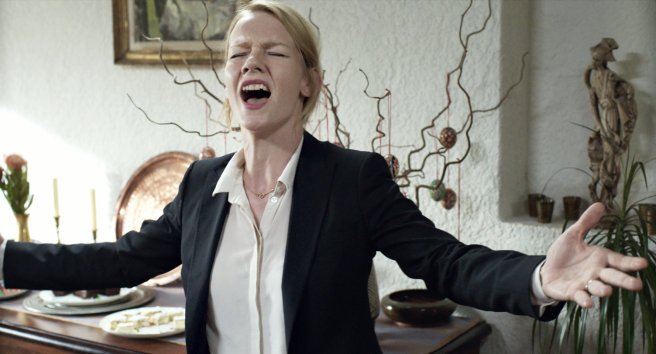
2016年广泛受到好评的一部喜剧,来自德国女导演玛伦·阿德,讲述一位就职于咨询公司的职场女性在父亲无端卷入自己生活后所面临的种种遭遇和难堪。影片在叙事过程中毫不避讳自己的主题——现代社会中人的异化,父亲和女儿两种迥然不同的价值观以荒诞的形式不断交锋着,这里面虽然少不了尴尬,但更多的是温情和背后导演冷静的思考。

影片的一大成功之处在于除了父亲和女儿这两个血肉饱满的角色之外,在有限的笔墨里,对其他次要人物的塑造也十分成功,整部电影是一幅极具讽刺的当代职场脸谱像。近三小时的时长里,影片的整体节奏是偏慢的,导演运用了不少定格来让观者沉淀情绪。与此同时,后三分之一部分的两个高潮段落无疑起到了画龙点睛的作用。

IMDB评分8.3,豆瓣评分8.4。我的评分8。

Cristian Mungiu – Bacalaureat

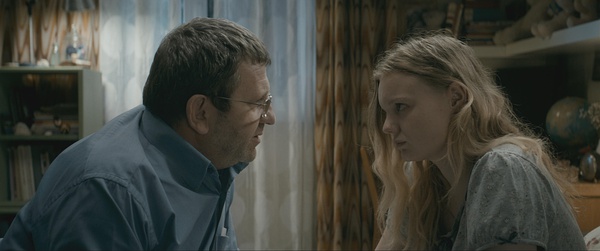
克里斯蒂安·蒙吉第五部长篇作品,获2016年戛纳最佳导演奖,讲述高考期间发生在一对父女之间的一段插曲。由于女儿的意外,一直恪守道德准则的父亲不得不做出违心的事以维护女儿的前途,他的行为不仅遭到了女儿的强烈抵触,而且也差点为自己和整个家庭惹来更大的麻烦。影片里的这个小家庭是当代罗马尼亚社会的一个缩影,不甚理想,甚至有些让人无可奈何,主角父亲对女儿的殷切期盼和“解决麻烦”的方式也是这个大环境下自然的结果。

和以往一样,电影剧本也出自蒙吉本人之手,并取材于真实的社会事件。影片在节奏上并不拖沓,镜头语言保持了一贯的冷静克制,但这一次亲情的题材,使影片的基调相较于导演先前的作品要柔和与明亮了许多,大部分场景来自室内,多以暖光为主,加上立场有些暧昧的结尾,使导演对话题本身的偏建设性态度不言自表。

IMDB评分7.9,豆瓣评分8.3。我的评分7.5。

克里斯蒂安·蒙吉在二零一六

克里斯蒂安·蒙吉的新作《毕业考试》是一部格局相当工整的电影,就拿上一部作品《山之外》来对比就不难发现,蒙吉在本片中变得更不偏不倚了,收起了锋芒,也收起了他赖以成名的长镜头,风格更圆润也更世故了。导演本人在访问中透露了一个细节,我们如今看到的结尾,其实并不是原剧本中的那个,并且暗示,原先的结尾比现在这个要突兀和残忍许多。说到这里也就不难解释为什么影片接近结尾处有一段莫名其妙的“恐怖片”桥段了。

在我看来,《毕业考试》最精华的地方在于剧本,戛纳颁给他最佳导演奖,(当然因为金棕榈和最佳编剧他都已经拿过了),多半也是冲着这个好剧本去的。一个其实可以压缩到100分钟就能把故事讲明白的剧本自然是很有魅力。教育,道德准则,社会机器的运转,知识分子对国家的期待和失望,太多或大或小的东西,都让蒙吉像包饺子一样捏合在这部电影里,让人不得不佩服他对罗马尼亚社会敏锐的观察和讲故事的能力。

我们从小写作文就被教育说要“以小见大”,但真正做到其实是很难的。尤其在电影这样的媒介中,如何在为观众呈现十足“生活化”“真实感”和避免流于肤浅说教的双重任务下做到见微知著,是很见功力的一件事。作为都经历过应试教育的我们来说,从《毕业考试》里找到共鸣不是难事,父母的殷切期待,他们在背后所做的努力,还有在个人愿望和父母“规划”之间的分歧,想必是每个家庭或多或少都经历过的时刻。

但我要说的“以小见大”并不仅仅着眼于此,当我们开始仔细分析罗密欧费尽心机也要把女儿护送到国外的根本原因时,你看到的不仅仅是一个父亲对女儿的呵护和关爱,还有一个知识分子对自己国家的复杂情感。影片中段,罗密欧向女儿倾诉,自己其实十分后悔当初回国的决定,导演在这里举重若轻地把个人,家庭和社会串联在了一起。也是从这里开始,《毕业考试》便不再仅仅是一部讲家庭讲教育讲父女关系的电影了。

其实导演本可以选择把这条暗线继续强化和发展下去,片中有不少和罗密欧一样身居要职可称作社会“中流砥柱”的“官人们”,他们大多身怀良知,更深谙处世之道,还多少明白“东方”与“西方”的异同,他们背后的故事又是怎样的呢?片中还有戏份不太多的母亲,一位被刻画成“坚守道德准则”而“失去”了其它东西的母亲,跟着罗密欧回到罗马尼亚的二十多年来,她的故事又是怎样的呢?蒙吉并未让影片朝这个方向发展,后半部分女儿男友 Marius 戏份开始增多,使整个故事发展继续“紧密团结在”父亲和女儿周围。我们这次看到的是一个野心不那么大的克里斯蒂安·蒙吉。

放映后的访谈,有一位东德背景的观众问到类似的问题,而蒙吉自己也说,罗密欧这样的角色的确是千千万万罗马尼亚那一代人的缩影,(我想他也在说他自己吧)。自1991年后,他们从对新国家满怀憧憬到渐渐地和社会“本来的规则”融为一体,不是一句简单的“无奈”就可以概括的。而这种源于理想主义的失落,又进一步融入到对下一代人生观的灌输和教育之中。然而,下一代的“花朵们”早已不像他们那样肩负那么多家国和情怀了。

在国家转型的过程中,人们追求的东西也在不断变化,两代人不同价值观之间的碰撞,蒙吉在《毕业考试》中通过教育这个母题,和“高考”这个切入点巧妙地给挖掘出来了。然而美中不足的是,虽然海报上是父亲和女儿两个人,但事实上片中只有父亲罗密欧一个主演,甚至几乎就是他的独角戏。不管是戏份还是表演功力,女儿的扮演者 Maria ——这位曾出演过迈克尔·哈内克《白丝带》的长在德国的罗马尼亚裔演员——都要逊色不少。没有一个血肉更加丰满的对手与罗密欧对戏,这比影片缺少一个强有力的结尾还要让人遗憾。

距离导演借《四月三周两天》摘取金棕榈已经过去了差不多十年,如果以伊纳里图的《21克》和《鸟人》,或者锡兰的《三只猴子》和《冬眠》,作比一个当代导演在十年里可以演变多少的标杆,那么蒙吉无疑是要失色几分。《毕业考试》是一部优秀的作品,或许放在十年前一样可以摘得金棕榈的桂冠。但今年只抱回最佳导演这个安慰奖,也算是说明了些什么了。

现代人的悲欢

现在似乎恍然明白了一些,影片《她》的台柱子伊莎贝尔·于佩尔之所以说这部电影非常具有现代性(原词是“contemporary”),其实是因为本片的“观感”优于电影文本本身。抛开别的不谈,《她》属于那一类即便笔记本屏幕上也可以一样看得津津有味的“现代人”电影。紧凑的情节,潇洒的节奏,当然还有 Isabelle 本人非常耐看的脸,以及内容本身的话题性,都是这部电影非常“抓人”的地方。在一个周末的夜晚,用这样一部几乎可以用惊悚片来归类的电影打发时间,不会是一个多差的选择。

都是些轻佻的玩笑话。不过在真正“批判一番”前还得重复一遍,(虽然已是路人皆知的事实),Isabelle 对于这部影片来说实在是太重要了。从放映后的问答环节就可以清楚看出,女主演比导演还要有地位,两百多名影迷观众前是如此,那么在片场里只会更甚。有一个问题问到保罗·范霍文,你在拍摄过程中是怎样把自己对角色的想法传达给 Isabelle 的,七十八岁的老人家也很坦诚,毕竟是“七十而从心所欲不逾矩”了,说其实关于角色本身他没有和 Isabelle 交流哪怕一句话。(可以想象此时那么见过世面的伦敦人还是一片愕然)。两位嘉宾最终还是巧舌如簧地把话圆回来了,譬如 Isabelle 就说,Michele 这个角色从始至终都带着某种模糊性(“obscure”),你不太能读得懂她每次行动背后的动机,但也正因为这种模糊,才让你慢慢觉得开始懂她,了解她,甚至开始为她的立场辩护。其实是很有道理的说法,我认同《她》的现代性正是通过角色和剧情发展的“非预设性”来表现的。或许正因为如此,保罗也不用在拍摄的时候跟 Isabelle 交代太多。

现代人的一大特征就是需要担当多种角色,并且在它们中间不停转换。和今年另一部着眼于现代女性的电影《托尼·厄尔德曼》不同,(那里的 Ines 仅被职场一项就折腾得焦头烂额了),《她》中的 Michele 无疑是更加“成功”的那一类——当然这里的“成功”并不是各种光鲜的外表。影片是由“受害者”这个标签串成的,刻画了米歇尔身为女儿,女人,情人,母亲,还有老板等等这些角色在受到攻击时是怎样应对的。她的反应其实很 Isabelle Huppert,有种固执,又有点神经质,但终究是随欲随心的,概括起来就是一种看上去不按常理出牌但又完全出自初心的我行我素。Isabelle 本人说 Michele 这个角色超出了我们对“女权”的传统定义,实际上是这样,在电影文本中对“传统家庭妇女”追求思想独立行为自由的刻画早就被视为“老掉牙”的今天,我们在《她》里面看到的 Michele,她身上的理智,坚毅,决断,以及背后隐抑的柔弱,仔细推敲起来其实和性别没有多大关系。但吊诡的是,大部分她所面对的不幸,却和整个社会的“男权思维”和“男权现象”密切相关。

这一点其实贯穿了影片始终。不管是“蒙面邻居”三番五次尝试对其性侵,还是公司里男同事和下属在背后对她的“物化”,都是(至少是在影片里刻画的那个)当代社会对女性角色定位的生动反映。是的,我们不再去探讨女性是否应当依附男权,是否应当经济独立,是否去追求性解放,但在这个“消费至上”的文化里,女人的身体以及背后所代表的东西其实从未改变。从这个角度看Michele,我们应当能嗅出几分“现代性”。她在应对这些事件中务实的处理方式其实并不意外,而也正是这些务实和尊重自己想法和欲望的态度,为所谓“现代女性”应该如何定位提供了新的可能。至于孰好孰坏,那就留给观者去体味了。

电影的名字是 Elle,法语中的她,她们,没有直接起名叫 Michele,想必导演想要借此把 Michele 和 Isabelle 身上的特质推广到更多人身上。看完电影后,我依然怀疑这是不是徒劳。Michele 身上让人难以忽视的距离感便是明证,这部电影拿不到好莱坞任何资金便是明证,没有哪个美国女演员敢出演这个极富挑战的角色便是明证——我们还是身处在这样一个保守的社会里。好吧,退一步说,这部讲“现代人”和“现代性”的电影其实也没用非常高明的技巧和缜密的构思来打动观众,更别说上述这些也许本是莫须有的条条框框和大道理了。留在我们脑海中的,除了那几个惊悚的挑逗的瞬间,稍纵即逝的新鲜感,片中眼花却不缭乱的男女关系,和它们所谓的姿态与生活,还有什么呢?大胆试想一下,如果保罗·范霍文当时拿到了美方的投资,并且也有美国女演员愿意出演,这部剧情算是相当狗血的电影怕未必会有现在的高度吧。

这次电影节目前为止,所有去过的活动中这部《Elle》收到了最好的临场效果,保罗和 Isabelle 侃侃而谈,言之有物,掌声前所未有的热烈,而也感觉得到观众是相当用心地在听他们发言。过节嘛,明星嘛,其实就应该是这样一副祥和的气氛,别的什么都是次要的。我想这就是现代人的悲欢。

吃不上的宴席

在三个小时的片长面前,任何电影爱好者都会再三掂量一下自己的决心,但是回过头来看,超过两个小时的电影也易出精品,不仅因为导演可以在充足的时间里把故事说透,演员和角色有足够的空间把戏份做足,而且从“选择性偏差”(selection bias)的角度讲,所有敢把电影拍成三个小时那么长的导演里面,应该大多数都是有两把刷子的。

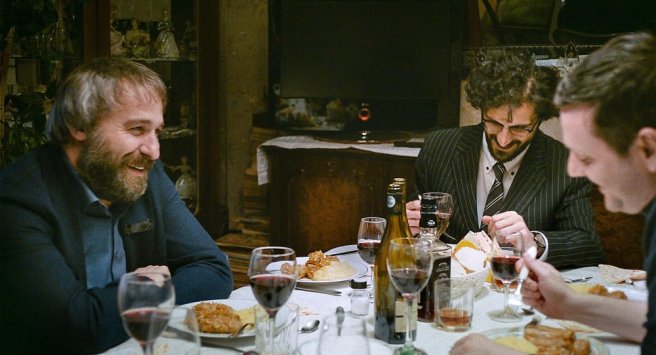
很幸运,罗马尼亚导演克里斯提·普优的作品《雪山之家》就符合这样的描述,而且更加难能可贵的是,这部送展戛纳的东欧电影并没有受“戛纳”和“东欧”这两个标签影响,全无高冷气质,Vue West End 容纳得下两三百人的放映大厅里座无虚席,观众随着剧情的进行笑声就没有停过。我中间看了有四五次表,倒不是因为想要电影早点结束,而是通过记时间来默默推敲一下全片的段落结构。

三个小时大致分成四段,第一个小时属于舞台搭建,是观众认识角色,了解剧情的过程,更重要的是给全片定调,从男主人公拉瑞在左右摇摆的镜头里被各种琐事的牵扯中,和多起一言不合就从聊天变成争吵的对话里,我们清楚地预感到这顿“家庭聚餐”注定将不太平。而影片里十多个主要人物轮番出场(当然是以很自然的方式),他们之间关系的交代让位于角色性格的刻画,每个人身上都有自己的特质。在这部以对话而非“表演”作为主导的电影里,角色的特质大多数时候就等同于她/他背后的立场和观点,关于9/11和新旧罗马尼亚社会的讨论(甚至争吵)贯穿始终,正是为了刻画角色而服务的。

这也是这部《雪山之家》的之所以好看,耐看,至少不会让观众睡着背后最主要的原因。回顾这部电影,表面上似乎是议论多于叙事,(因为不同观点之间的交锋几乎从未停过),但在我看来,它仍是叙事为主,议论为辅,甚至进一步讲,议论其实是全力为叙事服务的。在喋喋不休当中,不管说的是政治阴谋论,还是其他社会问题,导演其实从头到尾都没有对这些讨论本身是否有价值而发表态度,更别说他自己是究竟站在哪一边了——如果非要说有的话,在我看也是否定多于肯定。剧中不止一个人不止一次表达出“你们都别再跟这瞎BB,老子要吃饭”的无奈和愤懑,而从主人公的妈妈和姨妈两姐妹对待家庭和丈夫不忠的态度不同也可以看出,导演其实还是更倾向于“不管谁对谁错,日子一样还得过”的务实态度的。

接下来的半个小时是一段精彩的过渡,为接下来第三阶段的剧情高潮作准备。久等了的神父终于姗姗来迟,导演也不遗余力地全程记录下了整个纪念仪式过程。由于第一个阶段扎实的铺垫,每个角色的形象都在这半个小时里愈发生动和可爱起来,全片的幽默氛围也渐渐达到顶点。不晓得别人如何,反正我是在这半个小时里开始喜欢上这部电影的。

此后的一个小时是第三阶段,大致对应了一家人前后两次坐到餐桌上之间发生的所有事情,搅局者(托尼)的介入,争停车位的小插曲,还有拉瑞回忆父亲的长段倾诉,有张有弛,把影片的情绪推向新的一个高潮。我们也在这一个小时里面越来越看明白导演想要给我们拍什么,漫长而琐碎的生活中,其实还有许多事情和“想吃顿饭却一直吃不成”这个经典的“布努埃尔命题”一样,让人烦恼,疑惑,而且久而久之便不想再去寻找确切的答案。作为医生的拉瑞不想去回答自己姨妈的症状是否危险,并用了十分程式和职业化的“官方口吻”来回复姨夫的问询,“我们有消息了再通知您”,也许是暗暗在说,生活到最后也成了我们朝九晚五的工作一样,没有多余的情感,没有绝对的价值观,没有高尚的追求,只剩下一些不得不去重复和遵循的习惯,和应尽的责任与义务罢了。

这是一部十足的在讲生活的电影。如果说前一个半小时导演还在拿政治,宗教,社会问题作幌子的话,那么在接下来的这一个小时里,生活这本书终于被翻开,我们开始逐字逐句去评点它上面写的究竟有没有道理。

第四阶段是最后半个小时,风雨后的平静,以没有对话的空镜头为主,即便是对话,也以毫无情节推动意义的“来,给我盛一勺土豆泥”这样毫无养分的内容居多。三兄弟最后坐在餐桌前面面相觑,直至每个人看着对方开始哈哈大笑起来,影片就这样以一种非常简单而又饶有意味的方式结尾,举重若轻,大气,毫无扭捏做作之感。我们也由此看到了导演的些许真诚。

总的来说,这部以布努埃尔《资产阶级的审慎魅力》的主题为蓝本,用典型罗马尼亚电影的长度,通过单空间多人物密集对话和场面调度来讲故事的电影,还是很值得一看的。电影的名字《雪山之家》很其貌不扬,甚至有些误导效果,因为这一家子既不像冰雪一般冷酷,也不是山里人那样闭塞和不通晓世故。正正相反,我们看到的这一家(也可以说是几家)从老到小,每人身上都有不一样的活力和热情,在种种不顺心和起伏面前,依然敢于用自己认为最正确的方式积极面对,即便是“不作为”也是由于顾全大局而绝非一味消极。人物性格的饱满,他们对待生活(甚至命运)的态度的饱满,支撑起了这部饱满的影片。

《纽时》在影评里介绍说《雪山之家》和很多其他 NYFF 的电影一样,也是在讲人性(humanity),这里讲的是自私,因为自私也是人性里很重要的一部分。写到这里我似乎有点明白了作者的意思,生活从来都不是水到渠成的,十之八九也都容不得你既来之则安之那样潇洒,该争取时争取,该坚持时坚持,做好自己,对得起自己,也许就是这种自私背后真正积极的一面吧。

Life is Brief – #15

【写在前面】“我们常说激情是短暂的,爱的激情的确短暂,对于生活的激情却可以很长。”

#15 《借我》

借我瞻前与顾后,借我执拗如少年。

— 木心

image source: www.a-site.cn/article/253795.html

Jan Morris – Spain (Chapter Ten)

第十章 理发师的铜盆

在菲利普二世把马德里立为这个国家的首都之前,这里不过是一个小村庄,人们说这个城市最初的由来是因为摩尔人要搭建城堡,那个时候,西班牙中部的卡斯蒂利亚高原,还是一个蛮荒之地,北方是基督教文明,南方是伊斯兰文明,马德里的建成更多是出自军事用途。这里并不是哪条交通大动脉的交汇,也没有大河流经,更没有富饶的地矿资源,或者特殊的历史意义,菲利普国王选择这里,就像后来巴西的首都被定在巴西利亚一样,是国家统一的象征。马德里地处伊比利亚半岛的正中央,把它作为中心和统一的符号,自然是再合适不过了。而且, 西班牙人也喜欢这种象征。

曾经,马德里人自己曾自豪地打趣道,天堂里一定要能看得见马德里的风景才够完美。这个城市雄踞在卡斯蒂利亚高原之上,视野好的地方你能清楚地看见在郊野的尽头,是一毛不拔的荒漠和土地,是的,如果和卡斯蒂利亚大多数其他地方作比,马德里的确算得上是天堂了。但是现在,这个城市已经不再那样有影响力,对于世界上大部分其他国家来说,马德里的命运和未来不再是值得他们关心的话题,而马德里自己也成了其他大都市的附庸,潮流和品味来自巴黎,伦敦,或是纽约,街上响着的也是流行了有些时日的歌曲,诞生的艺术多半是受外界影响,而整个城市也几乎看不见一栋夺人眼球的现代建筑。

但是,放眼全欧洲,马德里还是那个最嘈杂,最喧闹,最具种族色彩的首都,因为在这里,经济比政治发挥着更大的作用。城市的中央逐渐被拔地而起的高楼大厦占据,它们多半是大银行的总部,占据着阿尔卡拉大街上曾经属于咖啡馆的地盘——在旧时代,不同的群体是要去不同的咖啡馆的,有属于斗牛士的,有属于知识分子的,有属于诗人的,还有属于将军们的。除了银行,你还能看见美国跨国企业的办事处,各大旅游代理的总部,正是由于他们的不懈努力,马德里这个由菲利普国王钦选的首都,仍吸引着世界各地的游客,并在这人来人往中走向物质和现代化。

西班牙的工业落后导致这个国家早早地被周边邻居甩在了后面,在六十年代以前,人们的习俗仍保持着工业社会之前的状态,人与人之间的交流方式,远未受到机器和大规模就业的影响,因此,那个时候的西班牙人,即便是在佛朗哥统治时期,仍怀着对个体和个人的极大拥护和尊重。西班牙人的尊严背后正是这种心态,而他们曾经长时间贫穷的背后,或许也是同一种心态吧。现在,整个国家迎来了改变的机会,每一年都有大量年轻人涌进城市,技术培训学校把农民培养成“更有用”的工人,生活水平的提高,进一步刺激了工业的需求,而眼界开阔了的西班牙人,在目睹了周围邻居的生活状况之后,也渐渐地不再固执,开始打开国门。虽然很多产业还在起步阶段,但如今在西班牙,你已经分明嗅得到唯物主义的气息,新建的公路,铁路,水坝,钢厂,电站,就是这个时代的哲学。

在外交上也是如此,她已经清楚地意识到,这个国家不能靠自给自足而活下去。早在佛朗哥死去之前,西班牙就已经开始接受外面的世界。有趣的是,现代化在西班牙的发展过程,并不是出自经济上的野心,宗教权力的解体,或者对执政者的失望,而是由看上去毫不起眼的旅游和贸易带起来的。正是从络绎不绝的游客身上,西班牙人看到了自己的未来,因为他们意识到,生活其实还有很大可以改善的空间。与此同时,人们的生活方式也在悄然变化,相比于葡萄酒,现在的西班牙人更倾向于喝啤酒,周末的休闲娱乐活动也从看斗牛变成了看足球比赛,弗朗门戈已经不再是最受欢迎的音乐了,年轻人更热衷于摇滚,甚至在塞维利亚的狂欢节上,你都能找得到不少情侣踩着迪斯科的鼓点起舞,而不是安达卢西亚的传统音乐。中产阶级的比例不断上升,而且越来越富裕。在很多服务区里的洗手间,女士的门牌告示是一只长手套和玫瑰,而男士的则是一顶礼帽和拐杖。西班牙人开始习惯每周日去洗车,商店里摆满了洗衣机,而每家每户的房顶上也插满了天线。

所以说,时间可以改变一切,西班牙人,曾经那么庄重,那么讲礼,那么热情,又那么保守,现在和你我也没有什么两样了。进步的过程自然会伴随着民族特性的流失,而过不了多久,前往龙塞斯瓦耶斯的朝圣之旅也注定将不再那么有趣。相信西班牙人在这过程中是收获而不是失去了更多吧。但对于我们来说,毫无疑问只有失去。每个国家都有自己的桑丘,但堂吉诃德只来自西班牙。

(全书终)

Jan Morris – Spain (Chapter Nine – Part II)

第九章 四个城市(接上篇)

塞哥维亚就是另一个世界了,尽管她距离阿维拉仅有四十英里,而且还身处同一片山脉。如果说阿维拉只是一个空的躯壳,那么塞哥维亚则全都是核仁,她怕是卡斯蒂利亚高原最完整的一个城市,如果比作一个人,那么塞哥维亚全身的器官都还完好无损,而且丝毫没有随着岁月的更迭而萎缩。从美食的角度看,阿维拉的特色是由修女制作的小蛋糕,而到了塞哥维亚,则是烤乳猪,它身上的脂肪带着浓浓的征服者的气质。

塞哥维亚是城市规划的典范,她绵延在起伏的丘陵地带,南边是一条叫作克拉默雷斯的小河,北边是埃雷斯马河,水流更加丰沛。想要一窥塞哥维亚的全貌,你得先登上阿维拉附近的一座小山,(最好是早上),在那里你会发现不远处的塞哥维亚是如此美丽而且恰到好处。太阳从高原的一端升起,整个城市突然就被染成了红色,三维的轮廓一下子就变成了一维。城市的中央是一座高高的大教堂,它左边是城堡,浪漫的塔尖,保留着十九世纪的原貌,炮塔,锥形塔,还有错落有致的窗户,和谐地分布在一整片悬崖上。而这梦幻的另一边,则是无比雄健刚硬的古罗马大水渠,它的强势和不朽甚至让人有整个山丘其实是由它撑起来的错觉。这三足鼎立的建筑中间,密布着有些乱七八糟的狭窄而陡峭的小路,偶尔被一两座尖塔和广场打乱,包围着城市的城墙则在居民房屋群中时隐时现。站在阿维拉看塞哥维亚,她就好像是一艘轮船,在这个美好的清晨,扬起了最饱满的风帆正要远航。

在历史上,塞哥维亚这座城市被注入了不少力量和挑战。就在那座城堡,卡斯蒂利亚的女王伊莎贝尔曾击退了围攻她的一群暴徒,也是在那座城堡,我们可爱的阿方索国王,曾经在书本中寻求真理,质疑是否太阳真的是围绕地球旋转,而在那座造型有些奇特的维拉克鲁兹教堂,圣殿骑士曾守护着它整整一夜。就连天灾人祸在塞哥维亚也有些哄闹的气息:城堡的旧址在1862年被一场大火付之一炬,但据说这场大火是当时在那里的炮兵学校的学员放的,因为他们希望把学校迁到马德里去。

最初来到塞哥维亚的人是幸运的,他们在卡斯蒂利亚高原上最好的一块地方搭建起自己的家园,我自己也一直忘不了来塞哥维亚第一个晚上在老街上漫步的美妙感觉。那是一个略带湿气的夜晚,街道被暖而模糊的路灯点亮着,我在绵绵细雨中毫无目的地游走,来到大教堂附近的一个小广场,用当地人的话说它的名字叫“警报广场”。这个广场高出地面,建在好几级台阶之上,远远看去你还以为这是一幕歌剧的布景。在它左边,是可爱的古罗马风格的圣马丁庭院,中间则是一尊雕像,应该是塞哥维亚当地的一位爱国者,挥动着旗帜,而右边,爬上台阶,有一排迷人的小房子,鲜花和蕨类植物从阳台里纷纷探出头来。这就是塞哥维亚,一座充满灵气的城市。

最后,让我们来到托雷多。托雷多之于西班牙,就像京都之于日本一样,因为这里储藏着这个国家最古老,最自豪,也是最私密的心态和意识。当你想起古西班牙,便会记起托雷多,这里曾是西班牙的首都,一城之内,卡斯蒂利亚人,犹太人,摩尔人和他们的文化曾经相生相容长达几个世纪之久,也因此塑造了托雷多独有的包容和丰富的文明气质。埃尔·格列柯的画作让如今每个人都多少知道托雷多长什么样,就连最轻率的游客,也会觉得从马德里的计划中抽出一个下午来这里看看是必要的,毕竟过来很方便,即使下午出发也不会错过晚上的鸡尾酒会。

托雷多距离马德里只有四十英里,但是不管从哪个角度看它都是独立于马德里而存在的。塔霍河自然的拐弯将她团团围住,整座城市便建在这被包裹着的山丘上,河水相当湍急,每走几步你就能看见几个老式的石头做的风车,和美丽的石桥。托雷多的容貌是粗粝的,没有丝毫柔软和玩笑打趣的成分,就好似西班牙这个国家的性格。如果能拿城市和人来作比的话,托雷多就是格列柯笔下的人物,俊朗,高挑,不苟言笑,略带些悲伤,还似乎有点冷血。

教堂主宰着这座城市,它也无时不刻在提醒我们,这里的大主教往往比整个王室和政府还更有权力,红衣主教吉麦内兹·德·西斯内罗斯不仅支付了非洲探险队的全部费用,而且是亲自率队出征。托雷多城堡矗立在山尖,它的地下马厩如今还能装得下多达两千匹马。到了晚上,泛着灯光的托雷多异常美丽,被进一步照亮的教堂似乎直入云霄,连最坚定的怀疑论者或许都会因此而想到不朽。

走到城市里面去,依然到处都是精神和宗教的气息,犹太人的信仰和习惯在他们的会堂里妥善保存着;穆斯林的光辉基督清真寺,就是一座科尔多瓦大清真寺的翻版,虽然小了许多,但你依然可以找到马蹄状拱顶和尘土飞扬的小花园;穆萨拉布,也就是摩尔人统治时期仍保持基督教信仰的教徒,在这里也有不少回忆。托雷多是刀刃之城,这里曾经大量出产供圣骑士使用的宝剑。在圣托美教堂里面悬挂着一幅格列柯的名画《奥尔加斯伯爵的葬礼》,生动地刻画了在西班牙上帝和统治阶级是怎样和谐共生的。托雷多人奥尔加斯是一名虔诚的教徒,英年早逝,圣徒斯蒂芬和奥古斯汀决定来到人间亲手为其送葬,而这幅画就描述了他下葬时的场景。让人啧啧称奇的不是两位圣徒,而是他们身后的一群目光悲伤却又不失坚毅的西班牙男子,他们代表着这个国家的社会阶层,两位圣徒只不过和别的工人一样,在履行他们的职责罢了。在画的右侧,一位神父端着一本手册似的书籍在翻看,好像在审核每一道工序是不是符合要求。上方则是菲利普二世,虽然在格列柯作画的时候这位国王依然在世,但在画里,他已经和先辈一起身居天堂了。

圣马丁桥上的圣胡安-雷耶斯修道院在“光复运动”之后修建,是一座异常华丽的哥特式建筑,各种精妙和美轮美奂的细节,透着十足的胜利者的喜悦和自豪。这个城市的最高峰,托雷多大教堂,则象征着西班牙这个国家神圣的命运。托雷多的街道是狭窄而蜿蜒的,很多地方无法走车,有时甚至一辆卖橘子小推车都会挡住去路,可当你从不起眼的教堂外墙最终找到入口走进去,会发现自己一下子来到了另一个广袤的世界。二十八个礼拜堂分布在七个大殿底下,士兵,圣徒,英雄,教徒云集于此,在这里,西班牙人伴随着荣耀走向永恒。会议殿里挂满了历任大主教的画像,他们盯着你的眼神,跟军事博物馆里的将军没什么两样。这座教堂里也装满了无数珍宝,石制的天使像,国王和主教的灵柩,西班牙锻铁大师浇制的花格铁栅,出自法国,荷兰,和意大利的工匠的雕像和彩绘玻璃,还有数不胜数的大师的名画:鲁本斯,委拉斯凯兹,范迪克,戈雅,埃尔·格列柯,等等。

这四个城市都是无与伦比的古城,地球上很少能找得到相似或同类,而它们就密布在一个直径仅一百英里的圆圈里。尽管如此,哪怕身处万里之外,当你闭上眼睛回想起西班牙,回想起这四个城市的时候,你会发现它们的轮廓和身影是依旧那么清晰,那么光彩照人。

Life is Brief – #14

【写在前面】“我们常说激情是短暂的,爱的激情的确短暂,对于生活的激情却可以很长。”

#14 斯文·尼奎斯特

Few cinematographers have been as influential as Ingmar Bergman’s close collaborator Sven Nykvist … … A painter whose medium was natural light, a capturer of souls, Nykvist made every human portrait an X-ray, and every interior—whether austerely white or lavishly chromatic—an expressive canvas … … [He] used light, shadow, and camera to paint some of the most unforgettable images in all of cinema.

— Criterion Collection

image source: alchetron.com

Jan Morris – Spain (Chapter Eight and Nine – Part I)

第八章 基督就是国王

西班牙是一个基督教国家,这就好比沙特阿拉伯信奉伊斯兰教,缅甸人信佛,俄罗斯人信共产主义一样。虽然佛朗哥时期的政教合一一去不复返,但在历史上很多个时期,天主教堂都是西班牙的统治阶级。这个国家当初的统一,也是以基督的名义。格拉纳达大教堂里有一块浮雕,上面记述了当年最后一位摩尔人国王受降于伊莎贝尔女王和费迪南国王时的场景,站在他们中间的还有一个人,是三位胜利者中唯一戴着手套的,卡迪纳·门多萨,伊莎贝尔和费迪南的精神导师,象征着国家统一背后的宗教力量。犹太人和摩尔人被驱逐,背后是显而易见的宗教因素,大批登船探索“新世界”的勇士们,手里也都握着十字架,心怀基督教的信念并想要把它传至全世界。

但是,这并不意味着每个西班牙人都信教,在内战之前,大约有三分之一的人口公开声称是教徒,现在这个比例大约有一半左右,而且大多是女性。在西班牙,反宗教的情绪来源于反对教权,人们常常忌惮宗教背后的金钱和权力,对此嗤之以鼻。而人们对待宗教的态度也有很大差异,有些知识分子对之报以十分严肃的态度,怀着虔诚和端正的心态,而另一部分人,则有点把宗教和迷信混为一谈。走在西班牙,我们到处都能看见圣女画像,她们的故事依然在坊间流传,并时常被赋予治愈和保护的神秘力量。

在佛朗哥死后,西班牙的文化氛围逐渐开放起来,但这也是表象。旧传统,旧习俗只是不再流行,但并没有完全销声匿迹。如今西班牙还有不少神学院,那里有潜心学习拉丁文的学生,一年当中有多达一千五百多名圣徒被纪念,而且他们每一个人都有拥护和追随者。在阿斯托尔加大教堂的北塔,在萨拉戈萨皮拉尔大教堂,在巴塞罗那的圣家堂,所有这些基督教的伟大建筑,我们每天都能听得见建筑工人的锤子声和起重机的叮咚声。

第九章 四个城市

让我们来拜访四个西班牙城市,来看看他们之间的差异和统一是怎样塑造整个国家的。萨拉曼卡,是由砂石堆砌而成的,话说到这里,西班牙有意思的一点就是,人们喜爱强调各个城市的“原材料”:圣地亚哥是花岗岩,萨拉曼卡则是砂石。在整个伊比利亚半岛的所有名城里面,托尔梅斯河畔的“大学城”萨拉曼卡或许是最安静的一个,她把这个国家古往今来的激烈和动荡都默默吸收到了自己的年岁和文化当中。进入萨拉曼卡的必经之路上有一座罗马古桥,古老,坚实,饱经风霜,桥下的河水宽广而沉稳。站在桥中央的壁龛驻足一会,周围是那样简单和确切。桥另一头的灌木丛里,也许有个把头埋在书本里的学生,手里拿着瓶附近咖啡店买来的汽水,耳边是弗拉门戈音乐。稍微抬起点头向上看,不远处就是两座大教堂,萨拉曼卡好像还停留在中世纪——城市和乡村的距离是如此之近。

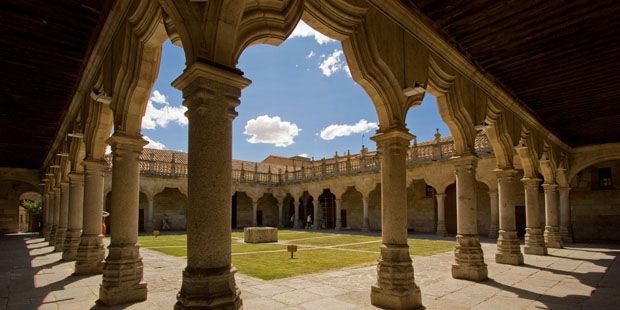
萨拉曼卡大学始建于十三世纪,在此后的四百年里一直是欧洲数一数二的思想中心,哥伦布的航海计划曾经交给这里的教授来审阅,国际法的概念也是从这里诞生的,新世界的头几个大学(在墨西哥和秘鲁)的校规也是参照这里的制度。几个世纪以来,很多雄伟的建筑围绕着校园纷纷建立起来,比如精美绝伦的埃斯奎拉斯庭院,这里刻着关于费迪南德和伊莎贝尔的铭文:国王和女王的大学,大学的国王和女王,由此不难看出萨拉曼卡大学重要的历史地位,和她在西班牙政治,王室,和宗教历史里的独特意义。十五世纪建起来的贝壳之家,据说是为了当地一位圣哲而造,是西班牙最妩媚的建筑之一,整面墙都装饰着轮廓分明的扇贝一样的造型。著名的马约尔广场,优雅,对称,颜色艳丽但却毫不俗气,没有哪个地方能比这里更能彰显出一种特别的带着学术气息的欢乐了。

萨拉曼卡是一座可爱的城市,但是就像很多其他西班牙可爱的事物一样,可爱背后都带着一丝悲伤。她曾经的辉煌早已沉睡许久了,那所曾几何时欧洲前三的学府,现在不仅只排在西班牙第七,而且丝毫看不到生气,也看不到叛逆的学生徘徊在马约尔广场周围的咖啡店里,而这里的图书馆和教室,怕一时也再没法孕育出新的哲学和理论。宗教审判时期萨拉曼卡就开始走向没落,到了当代,佛朗哥狭隘的心胸又捅了她一刀,这个国家的“精英们”似乎都对自由思想抱有天生的抵触,要想看到萨拉曼卡重复昔日的荣光,成为欧洲思想和启蒙的先锋,恐怕要再等上很长一段时日了。

这样的悲伤在阿维拉也可以看到,尽管呈现出来的是另一种形式。阿维拉是一座士兵的城市,从西边入城的话,你会看到一段长达近两英里的城墙,由八十八座塔楼和十扇威严的城门组成,到现在还保存得很完好,就像新建的一样,但是,城墙的背后并没有藏着什么珍奇异宝。阿维拉就像是一颗老掉的核桃,虽然外表还坚硬闪亮,可是里面早就被掏空。主城门附近的大教堂,墙面已十分斑驳,走进城里,中世纪的街道还在,但总让人感觉有始无终——因为行人太少了。在稀松的店铺里,高耸的教堂显得异常孤单。如今的居民,连同商铺和咖啡馆一起,统统迁移到附近的新城去了,坐在那里的餐馆向窗外望去,或者在搭乘公共汽车的时候,你还能看到不远处的城堡和绵延的城墙,一副守卫森严的样子,可吊诡的是,现在的阿维拉古城早已没有什么可值得守卫的了。

韶华易逝,看着如今的阿维拉,很难想象在最光辉的时候她也曾是多么阳刚。不禁要问,这里真的是圣女德肋撒出生的地方吗?这里真的是圣文森特烈士被斩首的地方吗?这座如今苍白而游客寥寥的城池,真的是曾经统治了整个帝国的胡安王子早年学习和受训的地方吗?这座一间书店都没有的城市,真的是伟大的阿方索·马德里加尔大主教每天都要写三页深刻文字的地方吗?这些记忆都已经十分遥远,哪怕在西班牙历史上最近一次动乱——内战时期,国民军也是未动一兵一卒就攻下了阿维拉。

(待续)

Life is Brief – #13

【写在前面】“我们常说激情是短暂的,爱的激情的确短暂,对于生活的激情却可以很长。”

#13 枫丹白露宫

In all of France, there was nothing remotely resembling the effusions of splendor and carnal beauty that grace its walls.

— Thad Carhart

Thad Carhart is the author of the memoir “Finding Fontainebleau: An American Boy in France” (Viking Penguin).

image source: New York Times

【拜仁0比1马德里竞技】还是完败

要不是格里兹曼踢飞了本该终结比赛的点球,这场比赛的最后十分钟就该像是德国0比2完败法国最后时刻的样子,空拿着球,但丝毫没有精气神,而且也踢不动了。指望新的主教练立刻找到对付马竞的办法实在是勉为其难,何况这位自己对马竞的战绩也好不到哪儿去。

拜仁面对马竞的最大劣势,并不在于无法招架对方凌厉的反击和野蛮的拼抢,而是自己的团队进攻和尖兵突击在对手严密的防线部署之下毫无施展。这个时候还谈控球率就太表面了,其实问题不在于拜仁的控球率是50%还是70%,因为不管是控球还是防反,都对快速配合过程中传球的精准度和队员在狭小空间里处理球的能力有极高的要求,而完成此任务的里贝里-阿拉巴和罗本-穆勒-拉姆两条线路都没能达到巅峰的水平。

尤其是后者,可以看出安帅本场在排兵和换人时思路的混乱,罗本上来后的前十分钟并没有与拉姆形成很好的联系,此后,拉姆令旗一挥,把基米希拉到右后卫这边自己去打右内锋,而罗本则充当了中锋的角色,不知道这是事先的部署,还是队员在场上求胜心切却又心有余力不足的结果。基米希换蒂亚戈应是本场的一个败笔。

这支拜仁还是我们熟悉的那支拜仁,面对马竞这样的对手时无法通过自身的效率来得分,亦不能在斗志上占据上风,唯一的办法就是在自己不先丢球的情况下和对方打消耗战,通过耐心和持续的压迫最终换取进球(参见欧洲杯德意之战)。一旦比赛的前半部分未能占据主动,让对方轻易打出了自己的特点并且阵脚越扎越稳,那么很难在下半场力挽狂澜。

输一场球并不算什么,但小组的局势开始出现微妙变化,再回到安联对阵马竞的时候,已经是最后一轮,那个时候不知积分的状况会是什么样子。自09年以来拜仁似乎从未以非小组第一的身份步入第六轮,不管怎样,接下来两战埃因霍温不能再有丝毫闪失。

Life is Brief – #12

【写在前面】“我们常说激情是短暂的,爱的激情的确短暂,对于生活的激情却可以很长。”

#12 萨拉曼卡大学

Salamanca University was founded in the thirteenth century, and for four hundred years was one of the power-houses of European thought.

— Jan Morris

image source: www.uq.edu.au

【拜仁3比0柏林赫塔】兵不血刃

首都球队防线退得很后,没有给拜仁施加太大的压力,达代也没有对拜仁的进攻点,出球点做出有针对性的部署,这也成全了连续一周双赛的拜仁兵不血刃地全取三分。里贝里异常活跃,一个人撑起了两条边路,莱万和穆勒继续不温不火,尤其是后者,射门靴始终没找到,如今鲁小胖在曼联的遭遇路人皆知,自家球员如何在不停更迭的体系和自己年岁增长的情况下永远保持刚出道时的活力,是各个球队都要面对的难题。

拜仁的三中场越来越有默契和思路,侧翼的两个人经常压得比两个边后卫还要靠后,进行衔接和串联的同时,更重要的是使边后卫和边锋的距离更进,贯彻集中火力从边路找突破口的战术方针。现在的拜仁不太在中场腹地区域和对手过多纠缠,中后场的长传球非常坚决,想必是,如果把对方压死在三十米区域内按着打,自己的活动空间反而受限。

罗本复出,博阿滕复出,都展示了良好的竞技状态,本赛季后防线上的真大腿马丁内斯继续被重用,对于安帅来说,下一个看点便是如何在胡梅尔斯和博阿滕都满血的情况下,释放马丁内斯在中场的潜力。

Jan Morris – Spain (Chapter Seven)

第七章 将士们

不知不觉西班牙步入和平时代已经有些年岁了,在漫长的历史长河中这可不多见,西班牙人是好战的,这个国家本身也像一座城堡一样。而事实上,城堡遍布西班牙的各个角落,安达卢西亚的贝莱斯布兰科城堡矗立在山尖,塞哥维亚附近的城堡像一块圣诞节蛋糕,贝尔蒙特有座博物馆样子的城堡,那里的守卫热情到送别你时会一直招手直到你走到山下。南边曾长期被摩尔人占领,那里的白色城市中也留下了他们建造的城堡,有些城堡则被改造成了酒店,临近葡萄牙边境的休达德罗德里戈城堡便是一例,有的城堡像村庄,贝尼多姆附近的瓜达勒斯特城堡的墙壁上还住着好多户人家。瓦伦西亚海边的潘尼斯科拉城堡则是一座大学的学院,里面有五湖四海的学生,马约卡岛上的城堡是圆形的,有的城堡还保持着城堡本来的功能,有炮台,有士兵站岗,有的城堡举世闻名,比如阿尔罕布拉宫。

这些城堡也在无形中提醒我们,西班牙就是由不停的战争建立起来的,城堡就是战场前线的堡垒,几个世纪以来,他们一点一点地向南开拓,而西班牙的国王也一点一点把他们的首都向南推进。内战对于西班牙来说就是家常便饭,很少有城市完全没有战争英雄可以缅怀吹嘘。尽管西班牙是一个由将士组成的国家,但是这个国家的当代国防装备却并不先进,那些在十九世纪俄罗斯油画里才能看见的军事场面,如今的西班牙仍能找到。西班牙的士官仍为自己的头衔而自豪,即便他在值完班的下午去银行做第二份工作的时候。它们的军舰出海时,上面依旧插着整齐漂亮的军旗,吹着有序的号角,保持着几百年来的传统。

从科托多尼纳向东北方向,穿过莫雷纳山脉和埃斯特雷马杜拉,你会来到一个名为特鲁希略的小城,这里是征服者皮萨罗的家乡。弗朗西斯科·皮萨罗,那个率领183个人只身打败整个印加帝国的英雄,在整个世界战争史上都是一个奇迹,他的雕像就在特鲁希略广场的中央。埃斯特雷马杜拉也是这样一个遍布着冒险家的地方,在那段人人向往着“新世界”的年代,衣锦还乡的他们至今仍被家乡人纪念,这个地区的每一块纪念碑,也提醒着人们西班牙曾经有那样一个辉煌时代。在阿拉贡省有一个小村庄叫作科雷拉,这里很少有游客问津,但是她特别的地方在于自己和“新世界”紧密的联系,几乎每一座大户人家都有或多或少关于南美殖民地的回忆,这一家出了后来的秘鲁首领,那一家出了后来战死沙场的一位著名将军。卡斯蒂利亚高地建在悬崖峭壁上的城市昆卡,虽然现在看上去有些灰头土脸,但它可是用当年从美洲殖民地运回来的黄金建造而成的。

打开世界地图,看着上面各路地名,布宜诺斯艾利斯,拉斯维加斯,洛斯阿拉莫斯,你不禁会感叹,曾几何时西班牙给整个西方世界产生了那么深远的影响,但与此同时,也不禁要唏嘘,曾经的辉煌是如此短暂。第一杯热巧克力,传说就是由西班牙人品尝的,西班牙人对头颅,骨骼,血液的崇拜,也据说是经阿兹台克人影响,现代西班牙建筑中的不少元素,比如马约卡岛上的石墙,是从印加文明学习而来,而阿尔罕布拉宫门外的警察穿着的羊毛雨披,则像极了玻利维亚的牧羊人。还远不止这些,在与拿破仑的战争里,蒙特塞拉特皇家教堂中的灯大规模损坏,但是,来自秘鲁,墨西哥,和阿根廷的西班牙王权拥护者纷纷把替代品寄了过来。来自拉丁美洲的大学生如今依然会远渡重洋来西班牙学习,北部海边的度假胜地圣塞巴斯蒂安,每到假日都云集了来自大洋彼岸的富人们。

我有一次在休达德罗德里戈,这个当年威灵顿侯爵击退拿破仑的地方,路经一座石像很想威灵顿将军,我向旁边的一位妇女确认,没想到她却说,这不是威灵顿,而是一位很有名的音乐家,是萨拉曼卡大教堂的风琴手。其实我不该惊讶,每一段音乐故事的背后,有可能都埋藏着战火和杀戮。在西班牙,战争的痕迹随处可见,萨拉曼卡的一座坟墓,男子一副中世纪武装,而女子身着尼姑的服饰,这类服饰是女人们在自己的男人前线拼杀奋战时才会穿上的。格拉纳达的一座不起眼的小清真寺,当年费迪南国王就是在这里接受了摩尔最后一位君主的投降。托雷多大教堂上镀金的玻璃,当年拿破仑打来时当地人为了掩人耳目,在上面又浇了一层铁,结果到现在也没有完全清除下来。当然,我们也不该忘记,就在这个世纪的前半叶,西班牙被一场最惨烈的内战肢解得四分五裂,遍体鳞伤,直到现在一些北方的小镇还是破旧不堪,格罗纳,维希,托尔托萨,那里鹅卵石铺成的街道,寒酸的房屋,似乎至今未曾从战败的阴影里走出来。